Aelfgarad: Difference between revisions
Robyn.Blaber (talk | contribs) No edit summary |
Robyn.Blaber (talk | contribs) No edit summary |
||
| (5 intermediate revisions by the same user not shown) | |||
| Line 1: | Line 1: | ||
{{Infobox region | |||
| region = [[Aelfgarad]] | |||
| world = Political - [[Otan]] | |||
| region_longname = [[Aelfgarad]] | |||
| caption = [[Aelfgarad]] (🔊 ALF-ga-rahd) is the northwestern, pine-forested home of the [[Friggaelf]]es, where life is meticulously structured around the pursuit of pure aesthetic perfection and masterwork craftsmanship. | |||
| cloud_image_id = https://imagedelivery.net/TNzzP2IqyQLYoHEs2ZN5aQ/f8694a84-80ea-4104-64f1-e59cf1a66000/wiki#.png | |||
| banner_image_id = https://imagedelivery.net/TNzzP2IqyQLYoHEs2ZN5aQ/7c228c03-e349-4abf-a179-fbb92f182c00/wiki#.png | |||
| banner_desc = | |||
| govt_type = Council | |||
| capital = [[Bealu]] | |||
| culture = [[Aelf]] | |||
| ruling_faction_id = | |||
| total_pop = 3386953 | |||
| urban_pop = 167981 | |||
| rural_pop = 3218972 | |||
| settlements = 18 | |||
| strain_mix = | |||
| area_g2 = 121944 | |||
| gdp_annual = | |||
| tax_revenue = | |||
}} | |||
[[Aelfgarad]], positioned along the rugged northwestern coast of [[Otan]], is a realm defined by its dense, whispering pine forests and an unyielding devotion to the sublime. It is the ancestral and cultural heartland of the [[Friggaelf]]es, who view their land not merely as a territory, but as a living canvas. The nation’s geography dictates a life close to the raw elements of the north, yet the society itself is meticulously refined, structured entirely around the pursuit and preservation of the pure aesthetic. | |||
At the center of this artistic domain stands the capital, the alabaster city of [[Bealu]]. Widely regarded as one of the most breathtaking jewels in all of [[Otan]], [[Bealu]] serves as the proud cultural capital of the nation. The [[Friggaelf]]es believe it to be the epicenter of enlightenment for the entire continent, a place where culture, philosophy, and art in every conceivable form are not merely celebrated, but woven into the very infrastructure of daily life. Every monument, facade, and public square in [[Bealu]] is crafted to evoke an emotional and intellectual response, standing as a testament to [[Aelf]]en sophistication. | |||
While the people of [[Aelfgarad]] face few powerful, centralized enemies, they are far from defenseless. The nation maintains a highly disciplined standing army and a swift, elegant navy, primarily tasked with protecting their borders from opportunistic raiders and the monstrous anomalies that occasionally drift out of the untamed wilds. They occasionally find themselves in territorial disputes with the [[Ara]]ldar Navy along the coast. Because both cultures possess a deep-seated martial pride, these naval standoffs are tense, though the shared discipline of both fleets ensures that these clashes rarely escalate to open bloodshed. | |||
== Population == | |||
{{LoreImage|https://imagedelivery.net/TNzzP2IqyQLYoHEs2ZN5aQ/372b44a7-13b2-433b-3399-f255aa444a00/wiki#.png|350px|left}} | |||
The demographics of [[Aelfgarad]] are overwhelmingly [[Aelf]]en, with a total population exceeding 3.3 million citizens. The primary cultural and physical fabric of the country is formed by the [[Friggaelf]]es, who make up roughly 75% of the population. The remaining citizenry is comprised of a 20% minority of [[Brimaelf]]es, with the final 5% consisting of small, scattered pockets of [[Dunaelf]]es, [[Wyrmaelf]]es, and foreign expatriates who have come to study or trade within the country’s borders. | |||
The [[Brimaelf]]es, the second-largest demographic, occupy a unique place in the kingdom's structure. Rather than dwelling in the pine shires or the marble districts of [[Bealu]], they reside almost exclusively beneath the waves off the northwestern shores. This vast, subsea region is known as [[Aelf]]mujit. To the surface world, it is an integral province of [[Aelfgarad]], but to many who live there, and to distant foreign sophists, [[Aelf]]mujit is spoken of with the reverence and distinction of a sovereign country in its own right. | |||
Despite the stark ecological differences between the terrestrial [[Friggaelf]]es and the aquatic [[Brimaelf]]es, the populations are deeply interconnected. All the substrains of [[Aelfgarad]] contribute seamlessly to the nation's robust economy and cultural prosperity. Whether hammering out exquisite glasswork in a surface forge or sculpting bioluminescent coral structures in the depths of [[Aelf]]mujit, the various substrains constantly collaborate, produce masterpieces, and fiercely compete alongside one another in national exhibitions. | |||
{{-}} | |||
== Culture == | |||
{{LoreImage|https://imagedelivery.net/TNzzP2IqyQLYoHEs2ZN5aQ/804680e6-19ed-4b52-a0ce-d31842398800/wiki#.png|350px|right}} | |||
For the [[Friggaelf]]es, existence without artistic expression is meaningless. They live for the pursuit of cultural refinement, holding a core cultural philosophy that handmade art represents the absolute zenith of human capability and the ultimate aesthetic. While outside cultures and more pragmatic strains across [[Otan]] do not always share or appreciate the intense, almost religious zeal the [[Friggaelf]]es hold for their masterpieces, [[Aelf]]en art is universally accepted across the continent as the absolute gold standard against which all craftsmanship must be weighed. | |||
The calendar year of [[Aelfgarad]] revolves entirely around the competitive artistic cycle. Each year, during the deeply revered Holy Week, the Council of [[Aelfgarad]] hosts the grand National Exhibition. This prestigious event serves to award the highest national honors to the finest artworks, performances, and architectural designs produced over the past year. Submission entries flood into the capital from the furthest inland shires and rise from beneath the waves of [[Aelf]]mujit, turning [[Bealu]] into a dazzling gallery of competitive genius. | |||
To ensure that only the truly sublime reach the capital, the selection process is rigorous. Throughout the rest of the year, various master guilds, small towns, and rural reeves hold a continuous series of smaller local exhibitions. These regional competitions serve as a filtering ground to determine which pieces possess the technical and emotional weight worthy of being entered into the National Exhibition. To win a prize at the National Exhibition guarantees an artisan an effortless life for at least a year; their material needs are fully sponsored, and wealthy [[Aelf]]es and foreign dignitaries alike clamor to purchase their works at exorbitant premiums. | |||
{{-}} | |||
== Politics == | |||
{{LoreImage|https://imagedelivery.net/TNzzP2IqyQLYoHEs2ZN5aQ/07792406-a314-45b5-ed34-5353fd635a00/wiki#.png|350px|right}} | |||
The [[Aelfgarad]] Council of the Arts governs [[Aelfgarad]], frequently called the Council of [[Aelfgarad]], which operates as a highly structured, pseudo-democratic oligarchy. Councillors are either democratically elected by their peers or directly appointed by the country’s leading patrician families. [[Un]]surprisingly, the power bases and ancestral estates of these elite families are tightly clustered in and around the capital city of [[Bealu]]. Each individual on the high council is not just a political administrator but the designated leader of a specialized lesser council, such as the Council of Martial Arts or the Council of Cerebral Arts. These bodies are further divided into concentric rings of smaller, hyper-focused committees, ensuring that every facet of bureaucratic life is micromanaged by specialists. | |||
The realm is geographically divided into six distinct subregions known as Reeves. Mirroring the national government, each Reeve maintains its own regional Council of the Arts, which is presided over by a Shire Reeve, or Sheriff. These six Sheriffs hold permanent, honorary seats on the national Council of [[Aelfgarad]], though the strictures of regional governance mean they rarely sit with the national body, save for the grand gathering of the annual National Exhibition. The sole exception is the Sheriff of [[Bealu]]; being local to the capital, this official makes regular appearances at the national Council to ensure the capital’s urban planning aligns seamlessly with the nation's broader strategic and aesthetic goals. | |||
At the apex of this political pyramid is the Prime Councillor, who, upon taking office, must divest themselves of all specific lesser council ties. The Prime Councillor is granted the informal, historical title of King of the [[Aelf]]es, or King of [[Aelfgarad]]. It is a title used with caution, as its sweeping nature frequently rankles the political sensibilities of the distant [[Wodaelf]]es, who maintain their own sovereign monarch. The King’s chief duty is to act as an aesthetic arbiter, ensuring that each major council performs its duties to the highest possible standard of beauty and intellectual purity. The Prime Councillor possesses the authority to intervene directly in lesser councils, stepping in to crush internal political infighting, administrative sabotage, or any petty disputes that threaten to compromise the nation's higher artistic vision. | |||
The Prime Councillor maintains final veto power over the direction of the Council of Martial Arts, a safeguard designed to ensure that tactical policies are never misinterpreted or handled clumsily. [[Aelfgarad]] prides itself on its calculated precision; the nation does not stumble blindly into war. However, when a conflict is formally declared by the state, the [[Friggaelf]]es pursue battle with a terrifying, single-minded devotion, mobilizing every resource, weapon, and drop of arcane or physical leverage the country can bear to achieve a flawless victory. Culturally, the King also presides over the National Exhibition. While the broader Council of the Arts collectively votes on the prize of the 'Highest Aesthetic' across the various categories, the Prime Councillor reserves the absolute, undisputed right to overturn any decision and crown a different work according to their personal judgment. | |||
{{-}} | |||
== Economy == | |||
{{LoreImage|https://imagedelivery.net/TNzzP2IqyQLYoHEs2ZN5aQ/40f75a7d-b701-4fea-175c-0572cee51400/wiki#.png|350px|right}} | |||
[[Aelfgarad]] operates as a dominant net exporter of luxury and fine goods. Because their entire culture is deeply steeped in aesthetic perfectionism, their artisans produce what are widely considered some of the finest weapons, masterwork armor, elegant vehicles, and intricate jewelry pieces in [[Otan]]. This obsession with beauty extends to almost any commodity involving the meticulous shaping of wood, metal, or glass. However, this uncompromising dedication to quality drastically restricts the volume of goods they can manufacture. Consequently, [[Aelfgarad]]’s exports are treated as rare commodities and are instantly snapped up by high-end wholesalers. Their chief international partner is the [[Kuulik]] Trade Company, which utilizes its expansive retail and shipping network to distribute these prestigious goods to elite markets across the continent. | |||
Conversely, the nation is heavily dependent on imports to sustain its high standard of living. They regularly import staple grains and various medicinal herbs, particularly those delicate species that cannot survive the colder, temperate climes of the northwestern coast. Rare, foreign spices are a particularly lucrative import, commanding incredible premiums from competitive [[Aelfgarad]] culinary artists who are perpetually locked in rivalries to engineer the next legendary recipe. Furthermore, while the rocky northern shires of [[Aelfgarad]] do possess a handful of localized mineral veins, the country remains a net importer of raw minerals, requiring a steady influx of everything from industrial iron ore to exotic raw gemstones to fuel their insatiable crafting forges. | |||
{{-}} | |||
== Geography == | |||
{{LoreImage|https://imagedelivery.net/TNzzP2IqyQLYoHEs2ZN5aQ/bef3e752-88c2-4851-c91e-9cb85fce4600/wiki#.png|350px|right}} | |||
[[Aelfgarad]] occupies the northwestern corner of [[Otan]], encompassing an expansive territory of 30,000 square Gorom (approximately 300,000 square kilometers). Its northern coastal waters are notoriously harsh, turning completely to thick sheets of ocean ice for four months out of the year. During this freezing lock, the northern maritime routes become entirely impassable to traditional seafaring vessels, leaving the regions accessible only by foot, specialized sled teams, or soaring airships. | |||
The western coast, by contrast, benefits from different maritime currents and remains completely open to sea travel and merchant shipping year-round. Geopolitically, the nation shares its eastern border with the structured [[Batis]] Republic, while its southern frontier directly abuts the volatile, anarchistic [[Free States]]. | |||
The topography of the country shifts significantly from north to south. The northernmost shires are rugged, characterized by rocky, wind-swept hills that conceal the country's limited mineral and ore deposits. Descending into the heart of [[Aelfgarad]], the landscape transitions into vast, unbroken pine forests, which provide both a profound sense of isolation and an abundance of fine timber for their master carvers. Finally, the southern reaches of the country soften into a picturesque mosaic of highly arable grasslands and dense deciduous forests, offering the nation its most reliable agricultural zones before giving way to the borderlands. | |||
{{-}} | |||
== History == | |||
{{LoreImage|https://imagedelivery.net/TNzzP2IqyQLYoHEs2ZN5aQ/746387aa-2228-4f85-27a9-5dba145ff000/wiki#.png|350px|right}} | |||
Modern [[Sop]]hists have found it exceptionally difficult to piece together the deep history of [[Aelfgarad]] due to the catastrophic cultural void left behind by the Great Erasure. Through meticulous examination of surviving fragments and linguistic shifts, scholars have deduced that an ancient, foundational schism occurred between the [[Friggaelf]]es and the [[Wodaelf]]es, ultimately driving their permanent geographic separation into two far-flung nations. | |||
This historical rift was born from a fundamental ideological disagreement over the definition of the pure aesthetic. The [[Wodaelf]]es maintained the conservative belief that unblemished nature provides the only true, uncorrupted aesthetic. The ancestors of the [[Friggaelf]]es counteracted that a pure aesthetic can only be achieved when raw nature is elevated, transformed, and perfected through the conscious application of the arts and intellect. | |||
This philosophical divide quickly fostered a profound religious reformation. The original [[Aelf]]en strain, as a creation of the god [[Woden]], historically heralded him as their principal and undisputed deity. However, the [[Friggaelf]] schism caused the northern separatists to deliberately shift their focal worship away from the All-Father, reorienting their devotion toward [[Frigg]], the goddess of the arts, craftsmanship, and refined wisdom. This ancient theological and cultural rift survived the Great Erasure entirely intact and continues to define the frosty diplomatic boundaries between the two cousin cultures to this day. | |||
The centuries following the Great Erasure have been remarkably stable, marked by very few internal upheavals or existential crises. [[Aelfgarad]] has historically preferred a policy of armed neutrality and artistic isolation, notably sending only a few specialized auxiliary units to succor [[Aelfwode]] during the brutal [[Grendel]] War, but otherwise evading direct involvement in [[Otan]]'s major military conflicts. | |||
Over time, the realities of their geography have forced the [[Friggaelf]]es to become far more pragmatic and open to foreign contact than their ancient laws might have encouraged. This open-door policy is most visible in their thriving commercial relationship with the [[Kuulik]] merchant cartels. While the culturally proud [[Friggaelf]]es privately view the mercantile [[Kuulik]] as a people completely bereft of true aesthetic sensibilities or spiritual refinement, they readily tolerate them, recognizing that the traders fulfill an indispensable need in keeping [[Aelfgarad]] supplied with the raw wealth of the world. | |||
{{-}} | |||
== Subregions of [[Aelfgarad]] == | |||
{{ | === [[Bealu Shire]] === | ||
| | {{LoreImage|https://imagedelivery.net/TNzzP2IqyQLYoHEs2ZN5aQ/17f834c5-8189-4c15-bf34-cfea11951900/wiki#.png|100px|left}} | ||
'''Capital:''' [[Bealu]] | |||
<br>'''Population:''' 720,402 | |||
| | <br>'''Area (sq. Gorom).:''' 28,608 | ||
{{-}} | |||
| | === [[Dreame Shire]] === | ||
| | {{LoreImage|https://imagedelivery.net/TNzzP2IqyQLYoHEs2ZN5aQ/1a94aed2-0eba-4843-5bbe-52095508fe00/wiki#.png|100px|left}} | ||
'''Capital:''' [[Dreame]] | |||
<br>'''Population:''' 365,888 | |||
<br>'''Area (sq. Gorom).:''' 28,124 | |||
{{-}} | |||
| | === [[Flitcri Shire]] === | ||
{{LoreImage|https://imagedelivery.net/TNzzP2IqyQLYoHEs2ZN5aQ/4c1a1896-75e6-4549-ad7a-5d3748e04d00/wiki#.png|100px|left}} | |||
| | |||
}} | '''Capital:''' [[Flitcri]] | ||
<br>'''Population:''' 233,403 | |||
<br>'''Area (sq. Gorom).:''' 3,684 | |||
{{-}} | |||
=== [[Gealdor Shire]] === | |||
{{LoreImage|https://imagedelivery.net/TNzzP2IqyQLYoHEs2ZN5aQ/98ed03f1-f77b-40aa-5d50-55694756fa00/wiki#.png|100px|left}} | |||
'''Capital:''' [[Gealdor]] | |||
<br>'''Population:''' 691,605 | |||
<br>'''Area (sq. Gorom).:''' 13,436 | |||
{{-}} | |||
=== [[Gerim Shire]] === | |||
{{LoreImage|https://imagedelivery.net/TNzzP2IqyQLYoHEs2ZN5aQ/372b44a7-13b2-433b-3399-f255aa444a00/wiki#.png|100px|left}} | |||
[[Gerim Shire]] (🔊 JER-im) is the northernmost shire of [[Aelfgarad]], with a rugged coast and a rugged people. Famous for its ice-fishing and frosty climate, it contributes more than its share of manpower to the [[Aelfgarad]] military. | |||
'''Capital:''' [[Gerim]] | |||
<br>'''Population:''' 574,360 | |||
<br>'''Area (sq. Gorom).:''' 10,692 | |||
{{-}} | |||
=== [[Leoth Shire]] === | |||
{{LoreImage|https://imagedelivery.net/TNzzP2IqyQLYoHEs2ZN5aQ/fbe9008c-34e4-49a6-e685-966771749300/wiki#.png|100px|left}} | |||
'''Capital:''' [[Leoth]] | |||
<br>'''Population:''' 801,294 | |||
<br>'''Area (sq. Gorom).:''' 37,400 | |||
{{-}} | |||
{{Copyright notice}} | |||
[[Category:Regions]] | |||
[[Category:Otan Regions]] | |||
Latest revision as of 21:41, 8 July 2026
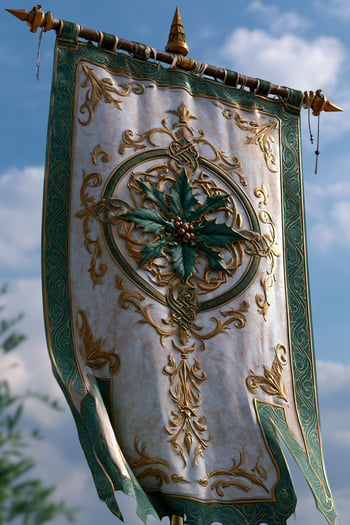
| General Information | |
|---|---|
| Capital | Bealu |
| Culture | Aelf |
| Government | |
| Government Type | Council |
| Demographics | |
| Total Pop | 3386953 |
| Urban Pop | 167981 |
| Rural Pop | 3218972 |
| Settlements | 18 |
| Geography & Economy | |
| Area | 121944 sq. Gorom |
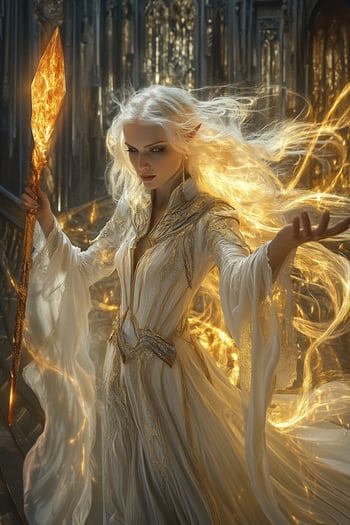
Aelfgarad, positioned along the rugged northwestern coast of Otan, is a realm defined by its dense, whispering pine forests and an unyielding devotion to the sublime. It is the ancestral and cultural heartland of the Friggaelfes, who view their land not merely as a territory, but as a living canvas. The nation’s geography dictates a life close to the raw elements of the north, yet the society itself is meticulously refined, structured entirely around the pursuit and preservation of the pure aesthetic.
At the center of this artistic domain stands the capital, the alabaster city of Bealu. Widely regarded as one of the most breathtaking jewels in all of Otan, Bealu serves as the proud cultural capital of the nation. The Friggaelfes believe it to be the epicenter of enlightenment for the entire continent, a place where culture, philosophy, and art in every conceivable form are not merely celebrated, but woven into the very infrastructure of daily life. Every monument, facade, and public square in Bealu is crafted to evoke an emotional and intellectual response, standing as a testament to Aelfen sophistication.
While the people of Aelfgarad face few powerful, centralized enemies, they are far from defenseless. The nation maintains a highly disciplined standing army and a swift, elegant navy, primarily tasked with protecting their borders from opportunistic raiders and the monstrous anomalies that occasionally drift out of the untamed wilds. They occasionally find themselves in territorial disputes with the Araldar Navy along the coast. Because both cultures possess a deep-seated martial pride, these naval standoffs are tense, though the shared discipline of both fleets ensures that these clashes rarely escalate to open bloodshed.
Population
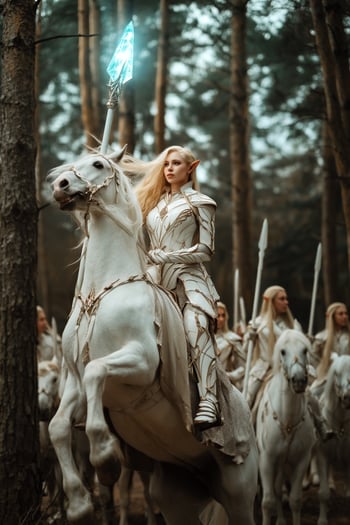
The demographics of Aelfgarad are overwhelmingly Aelfen, with a total population exceeding 3.3 million citizens. The primary cultural and physical fabric of the country is formed by the Friggaelfes, who make up roughly 75% of the population. The remaining citizenry is comprised of a 20% minority of Brimaelfes, with the final 5% consisting of small, scattered pockets of Dunaelfes, Wyrmaelfes, and foreign expatriates who have come to study or trade within the country’s borders.
The Brimaelfes, the second-largest demographic, occupy a unique place in the kingdom's structure. Rather than dwelling in the pine shires or the marble districts of Bealu, they reside almost exclusively beneath the waves off the northwestern shores. This vast, subsea region is known as Aelfmujit. To the surface world, it is an integral province of Aelfgarad, but to many who live there, and to distant foreign sophists, Aelfmujit is spoken of with the reverence and distinction of a sovereign country in its own right.
Despite the stark ecological differences between the terrestrial Friggaelfes and the aquatic Brimaelfes, the populations are deeply interconnected. All the substrains of Aelfgarad contribute seamlessly to the nation's robust economy and cultural prosperity. Whether hammering out exquisite glasswork in a surface forge or sculpting bioluminescent coral structures in the depths of Aelfmujit, the various substrains constantly collaborate, produce masterpieces, and fiercely compete alongside one another in national exhibitions.
Culture

For the Friggaelfes, existence without artistic expression is meaningless. They live for the pursuit of cultural refinement, holding a core cultural philosophy that handmade art represents the absolute zenith of human capability and the ultimate aesthetic. While outside cultures and more pragmatic strains across Otan do not always share or appreciate the intense, almost religious zeal the Friggaelfes hold for their masterpieces, Aelfen art is universally accepted across the continent as the absolute gold standard against which all craftsmanship must be weighed.
The calendar year of Aelfgarad revolves entirely around the competitive artistic cycle. Each year, during the deeply revered Holy Week, the Council of Aelfgarad hosts the grand National Exhibition. This prestigious event serves to award the highest national honors to the finest artworks, performances, and architectural designs produced over the past year. Submission entries flood into the capital from the furthest inland shires and rise from beneath the waves of Aelfmujit, turning Bealu into a dazzling gallery of competitive genius.
To ensure that only the truly sublime reach the capital, the selection process is rigorous. Throughout the rest of the year, various master guilds, small towns, and rural reeves hold a continuous series of smaller local exhibitions. These regional competitions serve as a filtering ground to determine which pieces possess the technical and emotional weight worthy of being entered into the National Exhibition. To win a prize at the National Exhibition guarantees an artisan an effortless life for at least a year; their material needs are fully sponsored, and wealthy Aelfes and foreign dignitaries alike clamor to purchase their works at exorbitant premiums.
Politics
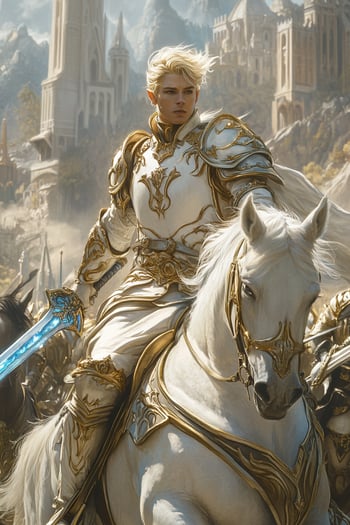
The Aelfgarad Council of the Arts governs Aelfgarad, frequently called the Council of Aelfgarad, which operates as a highly structured, pseudo-democratic oligarchy. Councillors are either democratically elected by their peers or directly appointed by the country’s leading patrician families. Unsurprisingly, the power bases and ancestral estates of these elite families are tightly clustered in and around the capital city of Bealu. Each individual on the high council is not just a political administrator but the designated leader of a specialized lesser council, such as the Council of Martial Arts or the Council of Cerebral Arts. These bodies are further divided into concentric rings of smaller, hyper-focused committees, ensuring that every facet of bureaucratic life is micromanaged by specialists.
The realm is geographically divided into six distinct subregions known as Reeves. Mirroring the national government, each Reeve maintains its own regional Council of the Arts, which is presided over by a Shire Reeve, or Sheriff. These six Sheriffs hold permanent, honorary seats on the national Council of Aelfgarad, though the strictures of regional governance mean they rarely sit with the national body, save for the grand gathering of the annual National Exhibition. The sole exception is the Sheriff of Bealu; being local to the capital, this official makes regular appearances at the national Council to ensure the capital’s urban planning aligns seamlessly with the nation's broader strategic and aesthetic goals.
At the apex of this political pyramid is the Prime Councillor, who, upon taking office, must divest themselves of all specific lesser council ties. The Prime Councillor is granted the informal, historical title of King of the Aelfes, or King of Aelfgarad. It is a title used with caution, as its sweeping nature frequently rankles the political sensibilities of the distant Wodaelfes, who maintain their own sovereign monarch. The King’s chief duty is to act as an aesthetic arbiter, ensuring that each major council performs its duties to the highest possible standard of beauty and intellectual purity. The Prime Councillor possesses the authority to intervene directly in lesser councils, stepping in to crush internal political infighting, administrative sabotage, or any petty disputes that threaten to compromise the nation's higher artistic vision.
The Prime Councillor maintains final veto power over the direction of the Council of Martial Arts, a safeguard designed to ensure that tactical policies are never misinterpreted or handled clumsily. Aelfgarad prides itself on its calculated precision; the nation does not stumble blindly into war. However, when a conflict is formally declared by the state, the Friggaelfes pursue battle with a terrifying, single-minded devotion, mobilizing every resource, weapon, and drop of arcane or physical leverage the country can bear to achieve a flawless victory. Culturally, the King also presides over the National Exhibition. While the broader Council of the Arts collectively votes on the prize of the 'Highest Aesthetic' across the various categories, the Prime Councillor reserves the absolute, undisputed right to overturn any decision and crown a different work according to their personal judgment.
Economy
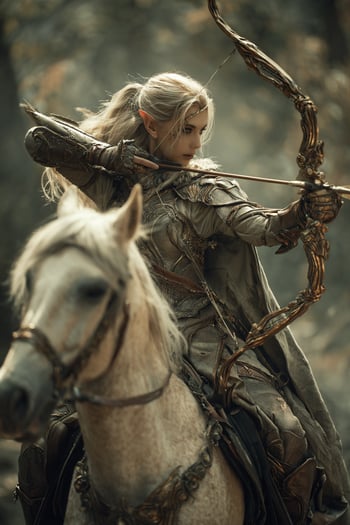
Aelfgarad operates as a dominant net exporter of luxury and fine goods. Because their entire culture is deeply steeped in aesthetic perfectionism, their artisans produce what are widely considered some of the finest weapons, masterwork armor, elegant vehicles, and intricate jewelry pieces in Otan. This obsession with beauty extends to almost any commodity involving the meticulous shaping of wood, metal, or glass. However, this uncompromising dedication to quality drastically restricts the volume of goods they can manufacture. Consequently, Aelfgarad’s exports are treated as rare commodities and are instantly snapped up by high-end wholesalers. Their chief international partner is the Kuulik Trade Company, which utilizes its expansive retail and shipping network to distribute these prestigious goods to elite markets across the continent.
Conversely, the nation is heavily dependent on imports to sustain its high standard of living. They regularly import staple grains and various medicinal herbs, particularly those delicate species that cannot survive the colder, temperate climes of the northwestern coast. Rare, foreign spices are a particularly lucrative import, commanding incredible premiums from competitive Aelfgarad culinary artists who are perpetually locked in rivalries to engineer the next legendary recipe. Furthermore, while the rocky northern shires of Aelfgarad do possess a handful of localized mineral veins, the country remains a net importer of raw minerals, requiring a steady influx of everything from industrial iron ore to exotic raw gemstones to fuel their insatiable crafting forges.
Geography
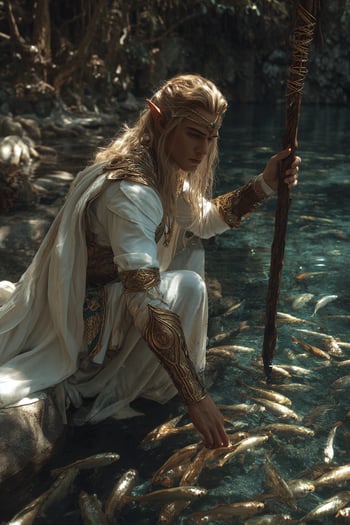
Aelfgarad occupies the northwestern corner of Otan, encompassing an expansive territory of 30,000 square Gorom (approximately 300,000 square kilometers). Its northern coastal waters are notoriously harsh, turning completely to thick sheets of ocean ice for four months out of the year. During this freezing lock, the northern maritime routes become entirely impassable to traditional seafaring vessels, leaving the regions accessible only by foot, specialized sled teams, or soaring airships.
The western coast, by contrast, benefits from different maritime currents and remains completely open to sea travel and merchant shipping year-round. Geopolitically, the nation shares its eastern border with the structured Batis Republic, while its southern frontier directly abuts the volatile, anarchistic Free States.
The topography of the country shifts significantly from north to south. The northernmost shires are rugged, characterized by rocky, wind-swept hills that conceal the country's limited mineral and ore deposits. Descending into the heart of Aelfgarad, the landscape transitions into vast, unbroken pine forests, which provide both a profound sense of isolation and an abundance of fine timber for their master carvers. Finally, the southern reaches of the country soften into a picturesque mosaic of highly arable grasslands and dense deciduous forests, offering the nation its most reliable agricultural zones before giving way to the borderlands.
History
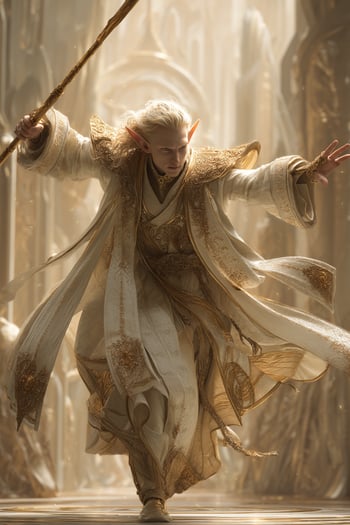
Modern Sophists have found it exceptionally difficult to piece together the deep history of Aelfgarad due to the catastrophic cultural void left behind by the Great Erasure. Through meticulous examination of surviving fragments and linguistic shifts, scholars have deduced that an ancient, foundational schism occurred between the Friggaelfes and the Wodaelfes, ultimately driving their permanent geographic separation into two far-flung nations.
This historical rift was born from a fundamental ideological disagreement over the definition of the pure aesthetic. The Wodaelfes maintained the conservative belief that unblemished nature provides the only true, uncorrupted aesthetic. The ancestors of the Friggaelfes counteracted that a pure aesthetic can only be achieved when raw nature is elevated, transformed, and perfected through the conscious application of the arts and intellect.
This philosophical divide quickly fostered a profound religious reformation. The original Aelfen strain, as a creation of the god Woden, historically heralded him as their principal and undisputed deity. However, the Friggaelf schism caused the northern separatists to deliberately shift their focal worship away from the All-Father, reorienting their devotion toward Frigg, the goddess of the arts, craftsmanship, and refined wisdom. This ancient theological and cultural rift survived the Great Erasure entirely intact and continues to define the frosty diplomatic boundaries between the two cousin cultures to this day.
The centuries following the Great Erasure have been remarkably stable, marked by very few internal upheavals or existential crises. Aelfgarad has historically preferred a policy of armed neutrality and artistic isolation, notably sending only a few specialized auxiliary units to succor Aelfwode during the brutal Grendel War, but otherwise evading direct involvement in Otan's major military conflicts.
Over time, the realities of their geography have forced the Friggaelfes to become far more pragmatic and open to foreign contact than their ancient laws might have encouraged. This open-door policy is most visible in their thriving commercial relationship with the Kuulik merchant cartels. While the culturally proud Friggaelfes privately view the mercantile Kuulik as a people completely bereft of true aesthetic sensibilities or spiritual refinement, they readily tolerate them, recognizing that the traders fulfill an indispensable need in keeping Aelfgarad supplied with the raw wealth of the world.
Subregions of Aelfgarad
Bealu Shire
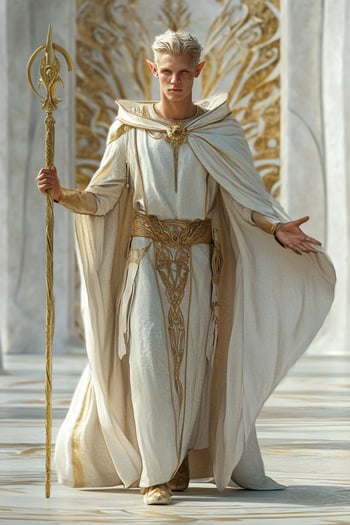
Capital: Bealu
Population: 720,402
Area (sq. Gorom).: 28,608
Dreame Shire
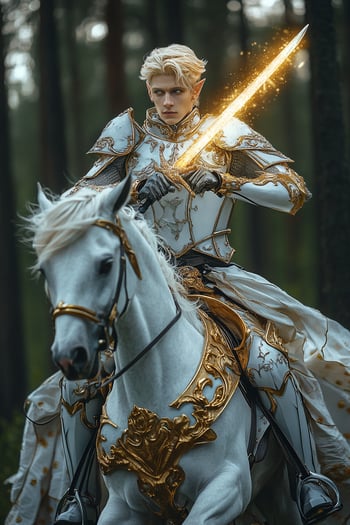
Capital: Dreame
Population: 365,888
Area (sq. Gorom).: 28,124
Flitcri Shire
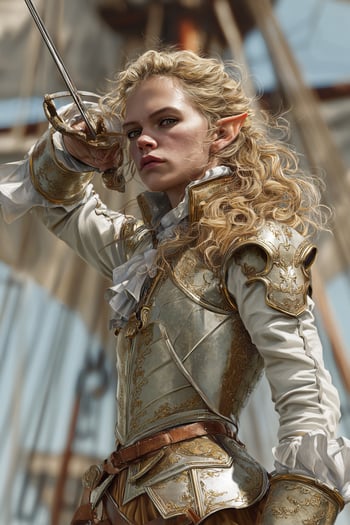
Capital: Flitcri
Population: 233,403
Area (sq. Gorom).: 3,684
Gealdor Shire
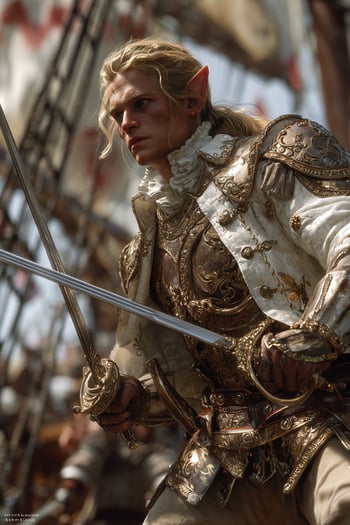
Capital: Gealdor
Population: 691,605
Area (sq. Gorom).: 13,436
Gerim Shire
Gerim Shire (🔊 JER-im) is the northernmost shire of Aelfgarad, with a rugged coast and a rugged people. Famous for its ice-fishing and frosty climate, it contributes more than its share of manpower to the Aelfgarad military.
Capital: Gerim
Population: 574,360
Area (sq. Gorom).: 10,692
Leoth Shire
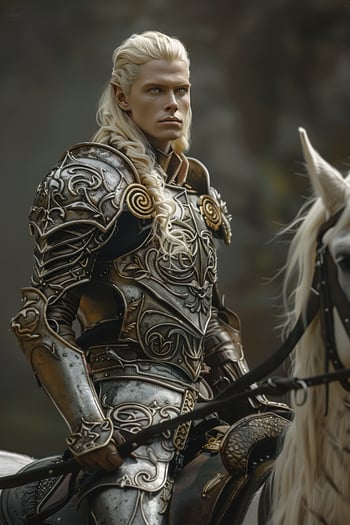
Capital: Leoth
Population: 801,294
Area (sq. Gorom).: 37,400
| Copyright © 2021-2026 by Robyn Blaber and Will to Power Games. All rights reserved. Content on this website may not be reproduced without written permission of the copyright owner. |
