|
|
| Line 1: |
Line 1: |
| {{Infobox strain | | "{{Infobox strain |
| | title = Aelf | | | title = Aelf |
| | subtitle = Player Strain | | | subtitle = Player Strain |
| Line 27: |
Line 27: |
| }} | | }} |
|
| |
|
| The Friggaelfes are the primary artistic and cultural branch of the Aelf strain (*Homo Aestheticus*), defined by a fundamental philosophical schism that likely occurred before the Great Erasure. While their kin, the Wodaelfes, believe that the natural world created by Woden the All-Father is the pinnacle of beauty, the Friggaelfes maintain that art is the dominant aesthetic. | | The Aelfes were created and scattered upon the lands of Otan by Woden the All-Father. The Aelfes soon found that they were driven by their preferences, and a schism developed between them. The Wodaelfes preferred the forests granted to them by Woden, decrying that nothing on Otan was more beautiful than Woden's creation. |
|
| |
|
| To a Friggaelf, nature provides only the raw tools; it is through sentient craftsmanship and the homage paid to the goddess Frigg that true perfection is achieved. This dedication to manufactured beauty is so deeply ingrained that even the loss of historical records during the Great Erasure could not diminish their innate drive to create.
| | The Friggaelfes had meanwhile come to the conclusion that art was the dominant aesthetic and that Aelfen art was certainly more beautiful than Woden's creation; Woden simply provided the tools to create art. The schism advanced until the two main tribes separated completely. Wodaelfs stayed mainly in the forests while Friggaelfes preferred coastal shores. |
| | |
| In practice, Friggaelfen society is entirely structured around this pursuit of aesthetics, with its government, the Council of the Arts, prioritizing visual and symbolic excellence above nearly all else. This cultural mandate extends even to the most utilitarian tasks; for instance, a military fortification in their northwestern nation of Aelfgarad is rarely built for defense alone. Instead, engineers are required to ensure that blockades and defensive positions are "visually interesting," treating a battlefield as a canvas for symbolic expression.
| |
| | |
| This fixation on high art and rigid theory eventually led to further internal rifts, such as the Dunaelfes, who broke away to pursue a more whimsical style of creativity.
| |
| The Dunaelfes are a striking contrast to their Friggaelf kin, defined by a mahogany-dark complexion and a cultural obsession with the higher aesthetic of engineering. While they share a lineage with the Friggaelfes, the Dunaelfes have turned their intellect away from the sea and toward the forge, the gear, and the blueprint. | |
| | |
| They believe that the ultimate expression of Frigg’s wisdom is found in the perfection of the machine. They take delight in transforming raw materials into complex, functional wonders. To a Dunaelf, a well-tuned engine or a perfectly balanced clockwork mechanism is as beautiful as any sunrise.
| |
| | |
| Living primarily in the industrial and urban hubs of Otan, the Dunaelfes are the preeminent architects and inventors of the realm. Their society is a meritocracy based on technical skill and innovation; status is earned not through land or birthright, but through the efficiency and elegance of one's designs.
| |
| | |
| They view the Wodaelfes’ "stewardship" as a passive waste of potential, believing instead that the natural world provides the components which sentient minds must refine into a more orderly, productive existence. Their homes are often filled with the rhythmic ticking of prototypes and the low hum of experimental power sources.
| |
| | |
| Despite their focus on cold iron and brass, the Dunaelfes maintain a deep sense of social duty, often providing the infrastructure. They are known for their aqueducts, bridges, and defensive siege engines, which keep their cousin Aelfen substrains safe. They are the "builders of the framework," providing the skeleton of civilization upon which others live.
| |
| The Brimaelfes are the sovereign masters of the Otan depths, possessing a sleek physiology that mirrors the shifting moods of the sea. From the shimmering teal of a sunlit bay to the deep, ink-like indigo of the abyss, they add an entirely new dimension to what is Aelfen.
| |
| | |
| Though they are expert swimmers capable of enduring the crushing weight of the deep, they maintain a unique dual nature. They are a people of two worlds, occupying the vast waters between Aelfgarad and Araldar, they are governed by a rigid Monarchy and swearing fealty to a single King or Queen. The royal throne sits within sprawling underwater citadels of glass, pearl, and living coral, serving as the heartbeat of a hidden empire that remains a mystery to those who dwell under the sun.
| |
| | |
| While these grand cities are submerged, they are designed with a profound understanding of Aelfen comfort. Many districts consist of enclosed air-habitats, pressurized vaults kept dry for those who prefer to use their lungs while they labor at their crafts or retreat into the restorative silence of sleep.
| |
| | |
| These architectural marvels allow the Brimaelfes to maintain their terrestrial refinements even in the heart of the ocean, creating a culture that is as intellectually sophisticated as it is physically formidable. To a Brimaelf, the "dry" home is a sanctuary where the mind is sharpest, surrounded by the muffled, rhythmic thrum of the exterior currents.
| |
| | |
| For the Brimaelf, the ocean provides the only aesthetic relevance worth pursuing. They believe that true beauty is not invented by hands, but harvested from the tides; their art, fashion, and architecture are entirely defined by iridescent shell-work, bioluminescent blooms, and the mathematical perfection of reef-growth.
| |
| | |
| To them, any beauty born of the dry land is static and lifeless, lacking the fluid grace of the water. This singular focus allows them to walk the surface docks of Otan with a regal, detached confidence, knowing that the terrestrial world is merely a shallow shore compared to the infinite, tide-crafted empire they command below.
| |
| The Wyrmaelfes are the tragic scions of a spiritual and physical blight known as "dragon seed". While humans who are tainted by draconic essence succumb entirely, warping into the fully draconic strain known as the Aydahar, the Aelfen spirit is resilient enough to forestall this corruption. The result is a lineage caught in a permanent state of transition.
| |
| | |
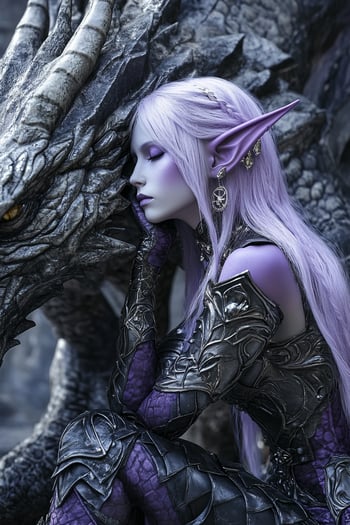
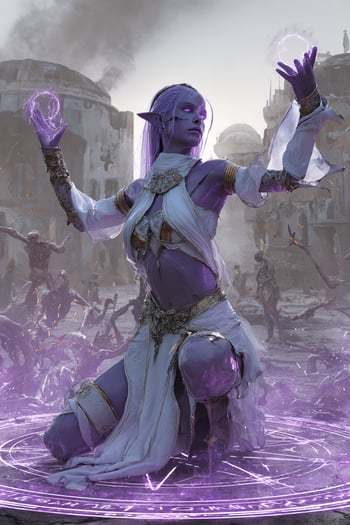
| Wyrmaelfes are not marked by hardened scales and transformative bone structures, but rather more subtle changes. For the Wyrmaelf, their very blood is a battlefield where Aelfen grace and draconic savagery fight for every inch of their identity. The visible change is often limited to a violet complexion and snow-white hair.
| |
| | |
| Their inherent duality defines Wyrmaelf society as one of simultaneous pride and self-loathing. They are a people born of a violation, possessing a strength and longevity that make them formidable warriors, yet they view these gifts as symptoms of a terminal rot. While a small, radical few "accept the fire" and willingly descend into the Aydahar form, the majority live in a state of hyper-vigilance.
| |
| | |
| Wyrmaelfes treat their draconic kin with a complex mixture of reverence and bitter resentment, acknowledging the power of dragons while loathing the "seed" that stole their purity. To survive the daily encroachment of the beast, the Wyrmaelfes have turned to Frigg with a desperation that borders on the fanatical. They do not worship for mere comfort; they pray for stasis. They use their religion as a shield against their own marrow, and their rituals are designed to cleanse the spirit in hopes of one day purging the flesh.
| |
| The Wodaelfes are the traditionalist heart of the Aelf strain, defined by their unwavering devotion to the natural world. While their cousins, the Friggaelfes, believe that art is the dominant aesthetic, the Wodaelfes maintain that nothing on Otan is more beautiful than the raw, untamed creation of Woden the All-Father. This philosophical rift led to a total separation between the tribes long before the Great Erasure, leaving the Wodaelfes to dwell in the deep forests while their kin moved to the northern coasts.
| |
| | |
| Even with their history lost to the Great Erasure, Wodaelfes woke with an innate preference for the aesthetics of the wild already etched into their souls. In Wodaelfen society, the "Great Masterpiece" is not something to be built, but something to be protected and inhabited. Their culture is deeply insular and rooted in the ancient groves of their domains, where they live in harmony with the flora and fauna provided by Woden.
| |
| | |
| Unlike the structured hierarchies of Aelfgarad, Wodaelfen life is governed by the rhythms of the forest, leading many outsiders to view them as primal or mysterious. However, this simplicity is deceptive; they possess a fierce, protective grace and are known to produce "Brutes" who, while strikingly beautiful to behold, are horrifically dangerous when the sanctity of their woods is threatened. Physically, the Wodaelfes mirror the slender, pointed-eared appearance of the Aelf strain, yet they carry a wilder, more organic presence than the curated Friggaelfes.
| |
| | |
| In the wild, they are often accompanied by the great beasts of the forest, and it is said that their most skilled hunters and warriors can move through the undergrowth with a silence that borders on the supernatural. For a Wodaelf, every tree, river, and mountain is a divine work of art that requires no further refinement from sentient hands. They remain the silent sentinels of Woden’s original vision, preferring the rustle of leaves to the grand spires of the city.
| |
| | |
| == Physical Characteristics ==
| |
| {{LoreImage|https://imagedelivery.net/TNzzP2IqyQLYoHEs2ZN5aQ/746387aa-2228-4f85-27a9-5dba145ff000/wiki#.png|350px|left}}
| |
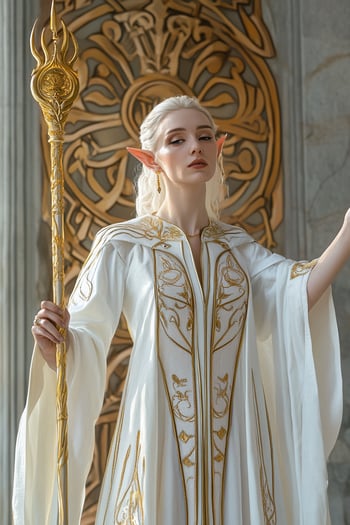
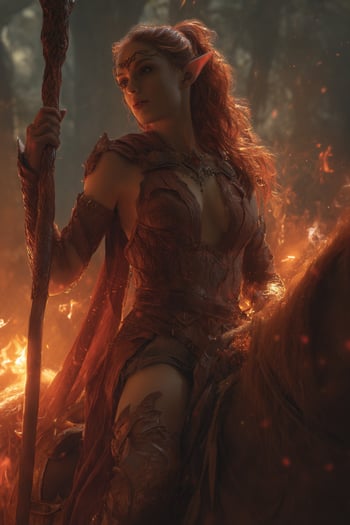
| Physically, Friggaelfes possess the classic hallmark of the Aelf strain: long, slender frames and distinctly pointed ears that mark their northern heritage. However, aside from their lustrous blond hair, their appearance is often defined less by biology and more by their meticulous self-presentation. Because they view their own forms as canvases for the goddess Frigg’s favor, they typically carry themselves with a curated grace and an almost supernatural poise.
| |
| | |
| This inherent "vibe" translates into a magnetic presence; they possess an elevated Charisma that allows them to sway crowds through simple oratory or the mere elegance of their movements. Whether in the courts of Aelfgarad or the insular halls of Aelfwode, a Friggaelf’s physical presence is designed to be as "visually interesting" as the art they produce. Beneath this polished exterior lies a surprising biological resilience. While their kin, the Wodaelfes, are optimized for the forest, the Friggaelfes' preference for the rugged northern coastal shores has granted them elevated Endurance.
| |
| | |
| === Natural and Latent Abilities ===
| |
| {{LoreImage|https://imagedelivery.net/TNzzP2IqyQLYoHEs2ZN5aQ/3cb7a212-4736-4ca3-8dcb-c59e3aba3500/wiki#.png|350px|left}}
| |
| The most prominent latent ability of the Friggaelf is their innate aestheticism, a biological drive so powerful that it survived the Great Erasure. This manifests as a preternatural awareness of symmetry, form, and symbolism, granting them an almost instinctive bonus to any task involving visual design or performance.
| |
| | |
| Furthermore, their physiology is uniquely adapted to the northern coastal climates of Aelfgarad and Aelfwode, resulting in elevated endurance. Unlike the explosive strength of other strains, Friggaelfen stamina is characterized by a "tireless persistence," allowing them to labor over intricate artistic projects or navigate long coastal voyages without succumbing to exhaustion.
| |
| | |
| In addition to their physical resilience, Friggaelfes possess a natural magnetic presence, which translates to a significantly higher outward charisma than many of their kin. This is often viewed as a "latent aura of authority" rooted in their homage to the goddess Frigg; they carry themselves with a curated grace that can sway the emotions of an audience or command a room through sheer poise alone.
| |
| {{-}}
| |
| | |
| === Common Mutations ===
| |
| {{LoreImage|https://imagedelivery.net/TNzzP2IqyQLYoHEs2ZN5aQ/3c3681e2-472d-4a87-f71b-49b2accd2100/wiki#.png|350px|right}}
| |
| While the Aelf strain is often celebrated for its baseline agility and grace, Friggaelfes frequently manifest specialized sensory mutations that further distinguish them from their kin. A significant portion of the population can develop Heightened Vision, an evolutionary or perhaps divinely-touched adaptation that allows them to perceive details at extreme distances or observe microscopic intricacies invisible to the standard human eye. Parallel to this, many Friggaelfes exhibit
| |
| | |
| Heightened Hearing, enabling them to detect frequencies and sounds from far beyond the normal range of audibility. These mutations are often viewed not as deformities but as "aesthetic refinements" granted by the goddess Frigg, allowing her people to appreciate the nuances of art and the subtle rhythms of the northern coasts with unparalleled clarity.
| |
| {{-}}
| |
| | |
| == Physical Characteristics ==
| |
| {{LoreImage|https://imagedelivery.net/TNzzP2IqyQLYoHEs2ZN5aQ/fbeb19ce-c5ad-473d-8ce1-56dd6a3c5300/wiki#.png|350px|right}}
| |
| The Dunaelfes possess a striking, high-contrast appearance that commands immediate attention, blending the classic "Aelfen" physique with a unique palette. They share the standard racial traits of their kin: a tall, lithe frame, gracefully elongated ears, and an inherent, extraordinary charisma. This natural magnetism often makes them the center of any room, though in a Dunaelf, it is frequently channeled into a commanding, intellectual presence rather than mere social charm.
| |
| | |
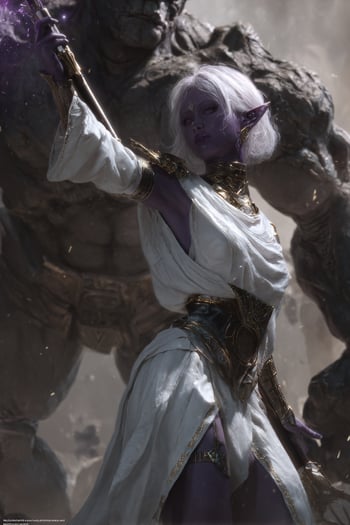
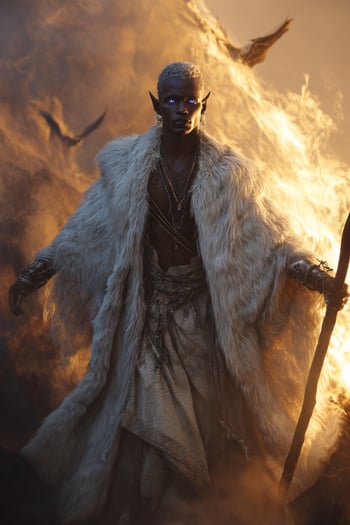
| Their most defining feature is their deep, mahogany complexion. This dark skin provides a stunning backdrop for their hair, which is usually stark white, though shades of slate gray or deep black are also seen among certain lineages. Their eyes are almost universally a piercing, brilliant blue, giving them a gaze that feels both analytical and unnervingly perceptive.
| |
| | |
| This combination of features, dark skin, snow-white hair, and ice-blue eyes, creates an aesthetic of "mystical elegance." They often accentuate their appearance with practical but finely crafted accessories, such as silver-trimmed garments of precision-tooled leather, reflecting their identity as the master engineers of Otan.
| |
| {{-}}
| |
| | |
| === Natural and Latent Abilities ===
| |
| {{LoreImage|https://imagedelivery.net/TNzzP2IqyQLYoHEs2ZN5aQ/15835d5e-2ff3-4bb1-f38d-908059e53600/wiki#.png|350px|right}}
| |
| The Dunaelfes possess a unique cognitive landscape that sets them apart from the other Aelfen strains. While they share the keen senses typical of their race, their true power lies in the intersection of magnetic charisma and a latent, advanced prescience. This foresight is not the chaotic, prophetic dreaming of a seer, but rather a functional intuition, a split-second awareness of how systems, materials, and events will unfold in the immediate future. | |
| | |
| In the hands of a Dunaelf engineer, prescience is a precision tool. They don’t just build a bridge; they perceive the structural stresses it will face fifty years before they happen. This "mechanical second-sight" allows them to identify critical failures: They can "feel" a flaw in a system before it manifests in a physical collapse.
| |
| {{-}}
| |
| | |
| === Common Mutations ===
| |
| {{LoreImage|https://imagedelivery.net/TNzzP2IqyQLYoHEs2ZN5aQ/104d0edc-d427-4246-1b82-58a8c0a34b00/wiki#.png|350px|right}}
| |
| While the Dunaelfes may come to possess the standard heightened senses of their aelfen kin, their lineage frequently manifests specific "hyper-senses" that seem tailored for their role as the realm's master architects. These mutations are not viewed as anomalies, but rather as gifts of Frigg that refine their ability to interact with the material world at a level of precision impossible for other races.
| |
| | |
| In particular, their Heightened Eyesight grants many Dunaelfes the ability to shift their focal depth to a near microscopic level. This allows them to inspect the grain of metal for impurities, verify the alignment of hair-thin clockwork springs, or engrave microscopic runes of power without the aid of external lenses.
| |
| | |
| To a Dunaelf with this mutation, the surface of a polished gemstone looks like a vast, craggy landscape, allowing them to find and fix flaws that would otherwise be invisible. A Dunaelf doesn't just work on a machine; they exist in a feedback loop with it, perceiving its internal state with the same clarity that others perceive the weather.
| |
| {{-}}
| |
| | |
| == Physical Characteristics ==
| |
| {{LoreImage|https://imagedelivery.net/TNzzP2IqyQLYoHEs2ZN5aQ/fe5f2c67-34d6-41d9-9f77-27e06e071000/wiki#.png|350px|right}}
| |
| Physically, the Brimaelfes are masterpieces of biological adaptation, possessing a deceptive grace that masks their incredible durability. Their skin is typically smooth and cool to the touch, ranging in color from the pale, translucent aquamarine of tropical shallows to the bruised, midnight indigo of the ocean floor. Their hair develops its marine blue hue from oceanic plankton.
| |
| | |
| Most distinctive, however, is a hidden respiratory system that allows them to master both worlds: a series of unseen gills that line the musculature of their backs. These narrow slits remain tightly sealed while on land, but once submerged, they open to draw oxygen directly from the water, feeding into a sophisticated pulmonary system that connects seamlessly to their lungs. This allows a Brimaelf to transition from breathing surface air to drawing breath from the sea in a single, fluid heartbeat.
| |
| {{-}}
| |
|
| |
|
| === Natural and Latent Abilities === | | == Society and Culture == |
| {{LoreImage|https://imagedelivery.net/TNzzP2IqyQLYoHEs2ZN5aQ/8c1d998a-156b-4f80-131f-f5bf9608dd00/wiki#.png|350px|right}} | | {{LoreImage|https://imagedelivery.net/TNzzP2IqyQLYoHEs2ZN5aQ/91e702e0-5db2-400d-9f62-1f1c737c3500/wiki#.png|350px|left}} |
| The Brimaelfes possess a unique suite of latent abilities born from their dual nature as both Aelfen nobility and apex aquatic survivors. Foremost is their Heightened Endurance, a biological necessity for those who dwell in the high-pressure environments of the ocean floor. It is key to their survival in this harsh environment. | | Aelfen society is heavily vested in aesthetics. The bodies that form Aelfen governments concern themselves with aesthetics above all but the most dire needs of their charges. Securing a village from an impending attack, for example, would involve two parts setting up defensive archers and blockades. One part would be devoted to making those blockades and ambuscades "look visually interesting". |
|
| |
|
| Their muscular density and cardiovascular efficiency are far superior to terrestrial strains, allowing them to swim for great distances without tiring and to process oxygen with incredible speed through their gill-lung network. This stamina translates to the surface world as a relentless physical persistence; a Brimaelf can exert themselves at peak performance for extended periods, their bodies optimized to thrive where others would collapse from exhaustion.
| | The governments of the two nation-states controlled by Aelfes are Aelfgarad and Aelfwode. Aelfgarade's Council of the Arts makes all but a few decisions for the nation, the remainder of which are made by the king (or queen). Decisions too small for the Council of the Arts are made by smaller and smaller councils. Few decisions in Aelfgarad are made by a single individual. |
|
| |
|
| In addition to their physical prowess, they retain the Heightened Charisma characteristic of the Aelfen soul, though it manifests with a distinctly oceanic allure. Their presence is fluid and captivating, possessing a rhythmic quality that draws others in like an incoming tide. This magnetic personality is bolstered by their regal confidence and the exotic, shimmering beauty of their sea-touched skin. Whether negotiating trade on a surface dock or commanding a court in the abyss, the Brimaelf exudes an air of calm, ancient authority. | | In contrast, Wodaelfes are satisfied to let nature take its course. Believing that the only true aesthetic is that which is produced by nature itself, they are content to let things slide. Individuals in Aelfwode are more likely to take initiative in big decisions and trust in those decisions is handed over to nature or the gods. |
| {{-}}
| |
| | |
| === Common Mutations ===
| |
| {{LoreImage|https://imagedelivery.net/TNzzP2IqyQLYoHEs2ZN5aQ/d8f18613-2470-44fb-5b58-82b20595b700/wiki#.png|350px|right}}
| |
| Among the Brimaelfes, certain lineages develop a profound sensory adaptation known as Sonar-Sight. While most of their kin rely on heightened visual acuity to pierce the gloom, these mutants possess the ability to navigate in total, abyssal darkness by emitting a series of multi-frequency "chirps."
| |
| | |
| To the untrained ear, these sounds are nothing more than a haunting, melodic clicking, but to the Brimaelf, the returning echoes paint a detailed, three-dimensional picture of their surroundings. This sonar is so precise that it can detect the subtle density of objects, the heartbeat of a hidden predator, or the minute cracks in a glass-domed habitat, providing a tactical advantage that transcends mere vision.
| |
| {{-}}
| |
|
| |
|
| == Physical Characteristics == | | == Physical Characteristics == |
| {{LoreImage|https://imagedelivery.net/TNzzP2IqyQLYoHEs2ZN5aQ/033284eb-2c68-43f9-7ce1-f271e05cdf00/wiki#.png|350px|right}} | | {{LoreImage|https://imagedelivery.net/TNzzP2IqyQLYoHEs2ZN5aQ/917a6fad-fa60-4738-9f58-d82b0f397e00/wiki#.png|350px|left}} |
| The physical transformation of a Wyrmaelf is a lifelong progression, a visible chronicle of the Dragon Seed’s influence over their Aelfen form. It begins at birth with a haunting, elemental mimicry; infants are born with skin tones that mirror the specific draconic lineage that tainted their blood.
| | Aelfes could easily be mistaken for Humans if not given a second look. They are generally more slender than their Human cousins and sport small pointed ears. Their biology is similar to humans and they are able to survive on both plant and animal protein. Aelfes are more agile than Humans, though this is a generalization as they do not possess super-human agility. |
| | |
| A child of Rock-Dragon descent may possess the matte, dusty grey of granite, while those of Fire or Lightning lines are born with vibrant, smoldering reds or the pale, electric white of a storm’s heart. As the Wyrmaelf matures, these raw elemental hues undergo a "tempering" process. Upon reaching adulthood, the chaotic colors of their youth settle into a spectrum of regal violet.
| |
| | |
| This transition is the mark of a stabilized spirit, the Aelfen soul asserting its dominance over the dragon’s fire. These shades range from a delicate, ethereal lavender to a deep, bruised violet that can appear black in low light. This violet hue is more than just a color; it is often accompanied by a subtle, iridescent sheen that catches the light like oil on water.
| |
| {{-}} | | {{-}} |
|
| |
|
| === Natural and Latent Abilities === | | === Natural and Latent Abilities === |
| {{LoreImage|https://imagedelivery.net/TNzzP2IqyQLYoHEs2ZN5aQ/13c9f7e6-588e-47db-9c25-88685c455000/wiki#.png|350px|right}} | | {{LoreImage|https://imagedelivery.net/TNzzP2IqyQLYoHEs2ZN5aQ/6bedced1-8275-43d5-9239-9233d0727e00/wiki#.png|350px|right}} |
| The Wyrmaelf exists in a state of heightened biological tension, resulting in a suite of abilities that sit at the intersection of Aelfen refinement and draconic lethality. They are not merely "blessed"; they are augmented by the "seed" in their blood.
| | Perhaps the greatest of all Aelfen abilities is to create the perception that they are more able than others at all things. While they almost certainly exceed the rest of the realm in their aestheticism, it's commonly believe that Aelfs are more agile, resilient, wise, intelligent, psychic, and beautiful than any of the other strains of man. While this is patently untrue, a typical Aelf does not deny a jot of this. |
| | |
| Like all Aelfen strains, Wyrmaelfes possess an innate, radiant charisma. They also have an increased sense of Will, an invaluable addition for anyone taking on any of the Spirit archetypes (Divine, Psychic, Shaman, Warlock). Lastly, they are able to develop the Heightened Vision and Heightened Hearing powers of their Aelfen ancestors.
| |
| | |
| Draconic or Aydahari mutations become available to those characters who allow themselves to succumb to their infection. These characters will begin to look more and more draconic with each change, which can include scales that offer resistances, draconic breath, or even wings. These abilities may come, but do so at a very high cost.
| |
| {{-}} | | {{-}} |
|
| |
|
| === Common Mutations === | | == History == |
| {{LoreImage|https://imagedelivery.net/TNzzP2IqyQLYoHEs2ZN5aQ/235fe70b-ff33-430a-8b56-fcc1f1518900/wiki#.png|350px|right}}
| |
| Those Wyrmaelfes who give up on their Aelfen personal sovereignty and allow the "dragon seed" infection to take hold of them will be able to develop powers from the long list of Adahari mutations. They will lose their Aelfen powers in the exchange, but for some, this is a price worth paying. Otherwise, Wyrmaelfes will be able to develop Heightened Vision and Heightened Hearing as all Aelfs may.
| |
| | |
| The one mutative power that is unique to the Wyrmaelfes is Dragonflight. This powerful mutation enables the Wyrmaelf to fly without wings. While it is not "true flight" in that notions of lift and thrust are not used, they can develop a physical gland similar to those found in dragons. This gland enables those behemoths to take to the air, despite their inadequate wings.
| |
| | |
| Wyrmaelfes with Dragonflight can rise from the ground, hover in place, or perform acrobatic maneuvers. Because Dragonflight does not require lift, the Wyrmaelf flyer can fly indefinitely, provided they do not run out of power. Like most things, power is necessary to keep things running smoothly.
| |
| {{-}}
| |
| | |
| == Physical Characteristics ==
| |
| {{LoreImage|https://imagedelivery.net/TNzzP2IqyQLYoHEs2ZN5aQ/e0c79fcd-6123-4da1-5e88-4ebbd0fe5800/wiki#.png|350px|right}}
| |
| Wodaelfes possess the classic Aelfen silhouette: slender, lithe, and exceptionally graceful. They are celebrated for their unusual agility, moving through dense forest canopies with a fluidity that seems almost supernatural. This physical poise is matched by a natural magnetic presence, allowing them to command attention even when standing perfectly still.
| |
| | |
| Their most striking feature is their elegantly pointed ears, which peek through hair typically found in earthy tones of brown, auburn, and red. While these warm, autumnal colors are the standard for the substrain, black hair occurs in very rare, striking cases. This organic palette allows them to blend seamlessly into the shadows of their ancient woodland homes.
| |
| {{-}}
| |
| | |
| === Natural and Latent Abilities ===
| |
| {{LoreImage|https://imagedelivery.net/TNzzP2IqyQLYoHEs2ZN5aQ/a769d5f9-f1e8-468a-2729-e4a594606b00/wiki#.png|350px|right}}
| |
| The Wodaelfes possess natural and latent abilities that mirror those of their Friggaelf kin, though they are applied toward the mastery of the wild. They swap the Friggaelfen elevated endurance for elevated agility, allowing them to navigate difficult terrain too difficult for most. This physical agility is a hallmark of the Wodaelfe's ability to master forest settings.
| |
| | |
| Their senses are equally refined, often manifesting as Heightened Vision or Heightened Hearing. In the dense forests, these gifts allow them to track movement and sound with pinpoint accuracy across vast distances. Coupled with their Magnetic Presence, these traits ensure that every Wodaelf is a formidable and captivating presence within their domain.
| |
| {{-}}
| |
| | |
| === Common Mutations ===
| |
| {{LoreImage|https://imagedelivery.net/TNzzP2IqyQLYoHEs2ZN5aQ/9ca2afd9-3d62-41dd-57e0-4c5c9c0ad800/wiki#.png|350px|right}}
| |
| Like their coastal cousins, Wodaelfes frequently manifest mutations that grant them Heightened Vision. This allows them to track the subtle movement of a leaf or the twitch of a hidden predator at distances that would baffle other strains. In the dim, dappled light of the deep woods, their eyes can perceive minute details and textures, turning the forest floor into a high-definition map.
| |
| | |
| Equally common is the development of Heightened Hearing, a vital tool for life in the wild. A Wodaelf can discern the snapping of a twig or the distant rush of water through miles of dense foliage with perfect clarity. These acute senses, paired with their natural agility, make it nearly impossible to surprise a Wodaelf within their own territory.
| |
| {{-}}
| |
| | |
| == Friggaelf Culture ==
| |
| {{LoreImage|https://imagedelivery.net/TNzzP2IqyQLYoHEs2ZN5aQ/65fc7007-230b-4a92-7d44-a8be787f3c00/wiki#.png|350px|right}} | | {{LoreImage|https://imagedelivery.net/TNzzP2IqyQLYoHEs2ZN5aQ/65fc7007-230b-4a92-7d44-a8be787f3c00/wiki#.png|350px|right}} |
| To a Friggaelf, culture is not merely a pastime but a moral and civic duty. Their society is built upon a rigid meritocracy of talent where social standing is directly tied to one’s contribution to the "Great Masterpiece" of their nation. This is best exemplified by the ubiquitous "juried exhibitions", state-sponsored competitions that occur at every level of society, from local village squares to the grand marble halls of Aelfgarad.
| | For Aelfes as all the people of Otan, history began in the first year IM. After the Great Erasure, the Aelfes woke to find their people split into two countries. They quickly realized why as the Wodaelfes and Friggaelfes had very different views about how an Aelf should live. |
| | |
| Artistic competitions are not simple festivals; they are high-stakes adjudications where poets, sculptors, architects, and musicians compete for titles that grant them political influence and the right to advise the Council of the Arts. To win a Contest of Excellence is to be recognized as having "refined the raw tools of Woden" into something worthy of the goddess Frigg’s gaze.
| |
| | |
| This obsession with perfection permeates even the most mundane aspects of daily life, creating a culture that can seem intimidatingly formal to outsiders. Whether it is the specific preparation of "tad Taxt" to achieve the perfect clarity of color or the architectural requirement that every building must contribute to a city’s overall silhouette, the Friggaelfes live in a state of constant curation.
| |
| | |
| This cultural pressure has fostered a unique brand of charisma and poise, as every citizen is raised to be a performer on a national stage. While this leads to breathtaking cities and peerless works of art, it also fuels the insular nature of places like Aelfwode, where the cultural standards are kept so high that those who cannot, or will not, compete in the pursuit of aesthetic perfection are quietly marginalized.
| |
| {{-}}
| |
| | |
| === Lifestyle ===
| |
| {{LoreImage|https://imagedelivery.net/TNzzP2IqyQLYoHEs2ZN5aQ/aa51d3ed-b84d-4e77-77fb-705e33a38700/wiki#.png|350px|right}}
| |
| Daily life for a Friggaelf is an exercise in intentionality, where the boundary between "living" and "performing" is purposefully blurred. From the moment they wake, a Friggaelf views their environment through the lens of the Great Masterpiece, ensuring their attire, grooming, and even the arrangement of their morning meal meets a high aesthetic standard. Socializing often revolves around "The Critique", a culturally ingrained habit of discussing the form and function of everything from the architecture of their coastal cities to the nuances of a neighbor’s recent oration.
| |
| | |
| Even Friggaelfen leisure time is structured; a Friggaelf is rarely "idle," instead dedicating quiet hours to perfecting a craft, studying art theory, or practicing the subtle social cues that bolster their natural aesthetic sensibilities. In the bustling markets of Aelfgarad or the quiet, curated streets of Aelfwode, the rhythm of the day is dictated by communal standards of excellence.
| |
| | |
| A typical afternoon might include attending a local "Juried Exhibition", where citizens gather not just to watch, but to rigorously judge the quality of a peer's work. These interactions are fueled by a preference for specific cultural staples, such as sipping Tamasa Sarap, their culturally superior wine, while engaging in spirited debates over the "visual interest" of a new public building.
| |
| {{-}}
| |
| | |
| === Diet ===
| |
| {{LoreImage|https://imagedelivery.net/TNzzP2IqyQLYoHEs2ZN5aQ/4c5b8d16-91cc-44e9-3ec5-612b06789100/wiki#.png|350px|right}}
| |
| The Friggaelfen palate is as refined as their architecture, favoring a sophisticated blend of resources harvested from both the rugged northern earth and the cold coastal tides. Their tables are dominated by a "Surf and Turf" philosophy, where delicate, salt-cured meats from the sea are paired with the rich, earthy flavors of the land. While they maintain organized agricultural estates and keep various domestic animals for a steady supply of high-quality protein, there is a distinct cultural prestige associated with the "Occasional Hunt."
| |
| | |
| Wild game, brought down with the grace and precision expected of an Aelfen marksman, is a common centerpiece at celebratory feasts or high-society "Juried Exhibitions", serving as a reminder of their dominance over the raw tools of nature. Meals are rarely just about sustenance; they are carefully plated experiences designed to be visually arresting.
| |
| | |
| A typical Friggaelfen dish might feature fire-roasted wild venison or domestic fowl seasoned with coastal herbs, served alongside a glass of their preferred Tamasa Sarap wine. This specific beverage, noted for its clarity and precise flavor profile, is the standard accompaniment for their daily fare. Whether dining in a grand hall in Bealu or a seaside cottage on the Aelfgarad coast, the Friggaelfen diet reflects their core belief: that even the act of consumption should be an elevated form of art.
| |
| {{-}}
| |
| | |
| === Religion ===
| |
| {{LoreImage|https://imagedelivery.net/TNzzP2IqyQLYoHEs2ZN5aQ/6350eeb0-fc78-41c0-a03e-be3cecebc800/wiki#.png|350px|right}}
| |
| The spiritual life of the Friggaelfes is centered on the veneration of the goddess Frigg, whom they view as the ultimate matriarch. Worship takes place within breathtakingly high, slender spires that pierce the northern sky. These architectural marvels were designed to be as "visually interesting" to the heavens as they are to those on the ground. Within these marble and glass sanctuaries, the Friggaelfes celebrate Frigg’s dominion over the hearth, home, and the sacred act of creation.
| |
| | |
| Rituals often involve the rhythmic spinning of thread and the weaving of intricate textiles, acts that mirror the goddess’s own hand in weaving the fate and beauty of the world. While her kin-god Woden is a figure of raw power, Frigg represents the refined elegance of love and the domestic arts, symbolized by the mistletoe, a potent emblem of her capacity for ultimate forgiveness. For a Friggaelf, to create a masterpiece of a garment or a harmonious home is the highest form of prayer, turning every act of craftsmanship into a divine homage.
| |
| {{-}}
| |
| | |
| === Friggaelf Observances ===
| |
| {{LoreImage|https://imagedelivery.net/TNzzP2IqyQLYoHEs2ZN5aQ/4b4d11ee-63ab-4eea-c19e-93ec1b509e00/wiki#.png|350px|right}}
| |
| The spiritual and civic calendar of the Friggaelfes culminates in the National Exhibition, a grand juried event held during the Holy Week of Frigg. Throughout this sacred period, the high spires of worship are transformed into galleries where the finest artistic achievements of the year, from woven masterpieces to architectural designs, are meticulously adjudicated.
| |
| | |
| This is more than a simple gallery showing; it is a moment of deep religious veneration where the "best of the year" is celebrated as a manifestation of cultural and divine favor. While smaller local contests occur year-round, the National Exhibition serves as the ultimate benchmark of excellence for all Aelfgarad, where winning a place in the archives is considered a permanent blessing upon one’s house and lineage.
| |
| {{-}}
| |
| | |
| == Dunaelf Culture ==
| |
| {{LoreImage|https://imagedelivery.net/TNzzP2IqyQLYoHEs2ZN5aQ/74dfaff4-8fb1-47c7-085e-9e31c7e86400/wiki#.png|350px|right}}
| |
| Dunaelf culture is centered in the industrial heart of Aelfgarad, where they operate with a degree of haughty independence. While they technically pay homage to the Council of Arts and the King, they do not suffer royal edicts lightly, often viewing political mandates as inefficient distractions from their own great works. They exist as a state-within-a-state, a technocratic elite that values the logic of continuous development and improvement over the whims of the Council.
| |
| | |
| Their participation in the National Exposition is a highlight of the Aelfen calendar, though their artistic endeavors typically occupy "special categories" specifically designed to accommodate their unique aesthetic. While other strains might present a painting or a poem, the Dunaelfes arrive with massive, self-regulating sculptures, clockwork contraptions, or experimental appliances.
| |
| | |
| Dunaelf submissions to the National Exposition are often so advanced that the Council struggles to judge them by traditional standards, treating them as a separate, protected class of "Higher Art." This art is often judged within Dunaelf society long before its submission to the National Exhibition, an act some consider akin to "pearls before swine."
| |
| | |
| This obsession with engineering extends even to Dunaelfen kitchens. Dunaelf cuisine is a triumph of technical process over raw nature; they are masters of precision distilling, vacuum-pressure curing, and thermal-regulated fermentation. To a Dunaelf, a meal is a series of chemical successes. They don't just "smoke" meat; they use complex apparatuses to infuse flavors at a molecular level, resulting in a diet that is as chemically pure as it is sophisticated.
| |
| | |
| Their long-term philosophy defines many of their social interactions. Due to their latent prescience, they design for the millennium, leading to a culture of extreme patience and meticulous planning. A Dunaelf would rather spend a decade on a blueprint than an hour on a repair. This makes them appear detached to outsiders, but among their own, it is seen as the highest form of respect for the future of the Aelfen strain.
| |
| {{-}}
| |
| | |
| === Lifestyle ===
| |
| {{LoreImage|https://imagedelivery.net/TNzzP2IqyQLYoHEs2ZN5aQ/d78edc42-67af-4b96-7e79-8e27fa2a4c00/wiki#.png|350px|right}}
| |
| Based on the maritime-industrial foundation of the Friggaelfes and the engineering obsession of the Dunaelfes, their lifestyle is likely a synthesis of rigorous discipline and avant-garde luxury. While a Wodaelf village is a quiet part of the forest, a Dunaelf home in Aelfgarad is a temple to functional beauty.
| |
| | |
| Dunaelf living spaces are often filled with brass-trimmed automation, self-stoking hearths, water-filtration systems, and lighting powered by captured kinetic energy, creating a standard of living that seems centuries ahead of the rest of Aelfgarad.
| |
| | |
| Dunaelfen social life is defined by a continuous effort that begins at the workbench. In Friggaelf culture, by contrast, the ship or the dock is the center of life; for the Dunaelf, it is the workbench or the foundry. They regularly host "Design Salons" where the consumption of precision-distilled spirits is accompanied by the sharing of blueprints and the testing of prototypes.
| |
| | |
| Because of their advanced charisma, their engineering gatherings aren't dry academic lectures, but high-stakes, magnetic displays of intellectual dominance and wit. Nearly every entry to the National Exposition starts as a debate in an engaging Design Salon.
| |
| | |
| Dress and personal grooming also reflect the Dunaelf higher aesthetic. Eschewing the rough furs of the forest or the flowing silks of the court, a Dunaelf likely wears garments of high-thread-count cotton or treated leather, reinforced with decorative but functional metal filigree. Every button, buckle, and stitch is a testament to their engineering prowess.
| |
| {{-}}
| |
| | |
| === Diet ===
| |
| {{LoreImage|https://imagedelivery.net/TNzzP2IqyQLYoHEs2ZN5aQ/a803746f-0f04-4a18-13cb-645abd65e700/wiki#.png|350px|right}}
| |
| As Aelfgarad residents, the Dunaelf diet maintains the foundation of a blend of maritime and pastoral resources, but elevates them through the lens of high engineering. Where a Friggaelf might be content with a well-salted fish and a sturdy ale, the Dunaelf views raw ingredients as "raw data" to be processed into a superior final product.
| |
| | |
| Borrowing the Friggaelf love for seafood and hardy meats, the Dunaelfes use pressurized curing chambers and vacuum-sealed containers to create textures impossible in nature. They favor "Aelf-Bresaola" and chemically aged fish that have been treated with specific mineral salts to achieve a perfect, predictable flavor profile every time.
| |
| | |
| Dunaelfes are also the undisputed masters of high spirits. They don't just brew; they fractionally distill. Their beverages are often crystal clear, high-potency liquors served in precision-blown glassware. These spirits are frequently infused with botanical extracts using cold-press technology to preserve the bright notes of a plant without the bitterness that comes from boiling.
| |
| {{-}}
| |
| | |
| === Religion ===
| |
| {{LoreImage|https://imagedelivery.net/TNzzP2IqyQLYoHEs2ZN5aQ/8e1141bb-1cbf-4b5f-67eb-b5b73b4ba000/wiki#.png|350px|right}}
| |
| For the Dunaelfes, traditional religion is a bit of a paradox. As a culture that venerates high-functioning engineers and "Long-Thinkers," they largely view the dogmatic rituals and ancient myths of the Aesir as outdated relics. Although the existence of Frigg is self-evident, superstitious frameworks from a time before the slide rule and the forge. They are far more likely to trust a metallurgical formula than a Divine’s omen.
| |
| | |
| Despite this intellectual skepticism, you will still find the foundries of Aelfgarad empty on feast days as the population flocks to the temples of Frigg. This isn't out of fear or a sudden lapse into mysticism, but because the Dunaelfes recognize Frigg as the embodiment of Love. In their cold, analytical world of gears, friction, and "logical outcomes," they have reached a rational conclusion: the world is a harsh, entropic place that sorely lacks warmth.
| |
| | |
| The Dunaelfes see Love not as a necessary, civilizing force that keeps the machinery of society from grinding itself into dust. For a Dunaelf, attending a ritual for Frigg is a deliberate choice to support the most beautiful "flaw" in their logical universe. They don't worship her because they believe she will magically fix a broken engine; they honor her because her essence represents the empathy and connection that their own rigid engineering cannot replicate.
| |
| {{-}}
| |
| | |
| === Dunaelf Observances ===
| |
| {{LoreImage|https://imagedelivery.net/TNzzP2IqyQLYoHEs2ZN5aQ/f8304d33-cf3d-483b-84b7-02ced3f66900/wiki#.png|350px|right}}
| |
| For a people who view the world through the cold clarity of a lens, Dunaelf observances are a necessary "calibration of the heart." Their festivals serve to bridge the gap between their rigid engineering mindsets and the messy, vital force of Love represented by Frigg.
| |
| | |
| One of the most significant Dunaelf traditions involves the Sacred Mistletoe, a plant that symbolizes love and a nod to the ancient myths of Frigg. While the Friggaelfes might see the plant as a parasitic growth, the Dunaelfes treat it as a biological marvel, a plant that lives between the worlds of earth and sky.
| |
| | |
| During their festivals, high-precision brass replicas or chemically preserved sprigs of mistletoe are hung over the entrances to foundries and laboratories. It serves as a "neutrality zone" mandate. Under the mistletoe, all professional rivalries and "engineering ego" must be set aside. It is the one time when a master architect and a junior gear-cutter speak as equals, acknowledging that Love is the only force more powerful than the laws of physics. Sometimes, there is kissing.
| |
| | |
| In the interest of supporting the nation of Aelfgarad, the Dunaelfes prepare their entries to be submitted to the National Exposition. In a series of heralded events, citizens present their works and research in what is less a display and more a "performance of the possible." Dunaelfes host grand galas where they debut their "Scientific Art" long before adjudicators from the National Exposition bear witness to the spectacle.
| |
| | |
| Other observances include various feasts, food-fueled celebrations of the Dunalfes' advanced cooking technologies. These festivals, such as the Feast of the Distilled Heart, showcase where mastery of the laboratory meets the dinner table. They utilize vacuum-distillation and precision-chilling to create "Kulaw Cocktails", drinks with layers of varying densities that stay perfectly separated until the first sip.
| |
| {{-}}
| |
| | |
| == Brimaelf Culture ==
| |
| {{LoreImage|https://imagedelivery.net/TNzzP2IqyQLYoHEs2ZN5aQ/d2191d5d-07ca-4abe-99a8-225df9771600/wiki#.png|350px|right}}
| |
| The Brimaelf economy and sustenance are built upon a sophisticated mastery of aquaculture that far surpasses the primitive foraging of surface dwellers. They are meticulous architects of the sea, engaging in large-scale fish farming and the selective breeding of underwater species to ensure a constant, gourmet supply of resources.
| |
| | |
| This expertise extends to the domestication of great marine mammals; Brimaelfes are renowned for raising orcas, which serve as both loyal companions for territorial monitoring and high-speed transportation through the powerful oceanic currents. Beyond the farms, they prize the thrill of underwater big-game hunting, pursuing leviathans of the deep with a discipline that is as much ritual as it is sport.
| |
| | |
| Their culinary pride is so great that they regularly submit complex seafood recipes to Aelfgarad's National Exposition, often winning through sheer innovation in flavor and texture. Certainly, the variety of spices that can only be harvested underwater gives them advantages that no terrestrial cook can rival.
| |
| | |
| Brimaelf society is uniquely bifurcated, maintaining two distinct sets of traditions for life above and below the surface. In their air-filled vaults and surface districts, they present a facade of regal, Aelfen grace, but their true heart lies in the deep-water ceremonies. They have developed specialized underwater instruments, resonant crystal harps, and percussive shells that utilize the density of water to carry melodies for miles.
| |
| | |
| Their dances are three-dimensional, choreographed to utilize buoyancy in ways land-bound dancers could never replicate. Even their diet adapts to the environment; below the waves, they favor "compact snacks," nutrient-dense, gelatinous morsels designed specifically not to dissolve or drift away in the current.
| |
| | |
| This cultural sophistication is paired with a fierce, territorial pride. The Brimaelfes harbor a cold, sharp contempt for surface-dwellers who sail over their territory without explicit permission. To the Brimaelf, the surface of the ocean is not a public highway, but the "roof" of their sovereign home.
| |
| | |
| They view the passage of unauthorized hulls as an invasive trespass, and they are notoriously unforgiving in their enforcement of maritime borders. In the courts of the Brimaelf royalty, ignorance is no excuse; those who drift blindly into their waters may find their rudders snapped or their anchors cut, serving as a silent, sinking reminder of who truly rules the vastness of Otan.
| |
| {{-}}
| |
| | |
| === Lifestyle ===
| |
| {{LoreImage|https://imagedelivery.net/TNzzP2IqyQLYoHEs2ZN5aQ/424ff8a6-4f1c-4e64-5434-2f5a5e353900/wiki#.png|350px|right}}
| |
| The Brimaelf lifestyle is anchored by two immutable pillars: Aquaculture and National Defense. The former is an intricate, labor-intensive industry that transforms the ocean floor into a sprawling larder. This involves the meticulous tending of kelp forests, the management of massive shellfish beds, and the selective breeding of prey fish within living-coral enclosures.
| |
| | |
| The most prestigious labor involves the domestication of apex predators, such as the orcas used for travel and herding. For the Brimaelfes, bringing food to the plate is a high art form; they are not merely foragers, but master stewards who manipulate the very ecosystem to ensure their air-filled vaults are stocked with delicacies that reflect their status as the ocean's elite.
| |
| | |
| To live in the deep is to live in a state of constant, silent war, making National Defense a vital daily reality. Brimaelf warriors must stand guard against gargantuan leviathans that drift up from the lightless trenches, driven by ancient hungers to treat Aelfen settlements as easy prey. Beyond these titans, defense forces must combat the insidious threat of invasive species that can decimate a season’s crops in days, as well as the bold intruders from the surface who seek to raid their pearl-rich treasuries.
| |
| | |
| Every Brimaelf district is thus a fortress, monitored by scouts on whale-back and protected by sonic-pulse weaponry, ensuring that the beauty of their tide-crafted civilization is never extinguished by the terrors of the deep or the greed of the land.
| |
| {{-}}
| |
| | |
| === Diet ===
| |
| {{LoreImage|https://imagedelivery.net/TNzzP2IqyQLYoHEs2ZN5aQ/59272360-238b-488c-c82d-a489e8298a00/wiki#.png|350px|right}}
| |
| The Brimaelf palate is primarily defined by the rich, salt-heavy bounty of the deep, utilizing a sophisticated array of seafood, sea spices, and aquatic vegetables. Their culinary traditions have mastered the use of bioluminescent fungi for seasoning and various kelp strains that provide a base as versatile as any land-grown grain.
| |
| | |
| Because many social gatherings occur in submerged plazas, they have innovated the use of "food pods", nutrient-dense, gelatinous or edible-membrane casings that encapsulate a full course. These pods are designed to be enjoyed underwater, preventing the flavors from leaching into the surrounding currents and ensuring that a delicate sauce or spice blend remains intact until it reaches the tongue.
| |
| | |
| When they transition to their surface districts or air-filled vaults, however, their culinary habits shift toward the exotic. Brimaelfes often view "land food" as a luxurious treat, a sensory departure from the briny profile of their daily lives. They have a particular fondness for surface fruits, breads, and roasted meats.
| |
| | |
| Adventurous Brimaelfes crave the flavors that are impossible to replicate in the moisture-rich environment of the ocean. This preference has created a thriving trade in coastal markets, where Brimaelf merchants exchange rare pearls and deep-sea spices for crates of such commodities as citrus, honey, and grain. For a Brimaelf, a meal of terrestrial origin is more than just sustenance; it is a celebration of their unique status as beings who can walk between the waves and the wind.
| |
| {{-}}
| |
| | |
| === Religion ===
| |
| {{LoreImage|https://imagedelivery.net/TNzzP2IqyQLYoHEs2ZN5aQ/8b461f38-ca0a-4e92-25bd-1ee56f0dd200/wiki#.png|350px|right}}
| |
| The Brimaelfes are largely Wodenist by tradition, yet their spiritual lives are as vast and varied as the currents they inhabit. Unlike other Aelfen strains that might exhibit a collective devotion to a single patron, Brimaelf culture imposes no strictures on personal worship. To risk a pun, their faith is fluid.
| |
| | |
| They view the gods as specialized forces to be consulted as the situation demands: Woden is invoked for the wisdom required to navigate complex undersea politics, Frigg for the enduring love that binds families across the deeps, and Thor for the raw strength needed to combat leviathans or weather a subterranean tremor.
| |
| | |
| As a result, the spiritual architecture of a Brimaelf settlement is unique; their temples are almost always multidenominational hubs. These grand, bioluminescent halls, often located within the central air-habitats, house alcoves and shrines dedicated to the entire Wodenist pantheon, allowing citizens to cycle through their devotions in a single visit. This pragmatic approach to the divine fosters a culture of high religious tolerance, where the pursuit of spiritual favor is seen as a personal journey rather than a communal mandate.
| |
| | |
| This openness even extends beyond the traditional Aelfen gods. Brimaelfes are seasoned travelers of the world’s oceans, and it is not uncommon for them to pay homage to foreign sea deities encountered during their deep-water voyages. It is a mark of their cosmopolitan nature to see a Brimaelf sailor offer a prayer to Mujit, the western sea god, for calm waters, or to see a deep-reef farmer leave an offering for Teniz, the goddess of the south seas.
| |
| | |
| To the Brimaelf, the sea is a single, interconnected body, and it only makes sense to honor any power that holds sway over its many reaches.
| |
| {{-}}
| |
| | |
| === Brimaelf Observances ===
| |
| {{LoreImage|https://imagedelivery.net/TNzzP2IqyQLYoHEs2ZN5aQ/72d919fa-8f48-4a39-b2b3-429092f67b00/wiki#.png|350px|right}}
| |
| In the lightless reaches of the ocean floor, the turning of the leaves and the fall of snow are meaningless abstractions. Because there are no seasons beneath the waves. There is barely the slightest shift in water temperature to mark the transition from summer to winter. Because of this, the Brimaelfes do not concern themselves with the seasonal observances that dominate terrestrial life.
| |
| | |
| To the Brimaelfes, the environment is an eternal, unchanging constant. Despite this environmental detachment, they remain culturally tethered to their aelfen kin through the Otan Calendar. They strictly observe Holy Week, transforming their underwater citadels into hubs of spiritual reverence and joyous celebration. These days are marked by grand, bioluminescent feasts in their air-vaults, where the bounty of the sea is served alongside rare land-imported delicacies in honor of the gods.
| |
| | |
| The most anticipated events in Brimaelf society, however, are their grand Exhibitions. These are not merely markets, but prestigious city and state-sponsored events where the brightest minds and most skilled farmers compete for the King’s favor. The highest honors are reserved for advancements in Aquaculture, such as the development of a heartier strain of bioluminescent kelp, more efficient orca-training techniques, or a breakthrough in deep-sea pressure containment.
| |
| | |
| Brimaelf Exhibition culture serves as the "seasons" of the deep, providing a sense of renewal and forward momentum to a culture that lives outside the reach of the sun, celebrating the perpetual evolution of their underwater empire. The greatest fruits of these Exhibitions are, of course, submitted to Bealu for the National Exhibition each year.
| |
| {{-}}
| |
| | |
| == Wyrmaelf Culture ==
| |
| {{LoreImage|https://imagedelivery.net/TNzzP2IqyQLYoHEs2ZN5aQ/cd5882f5-e536-48ba-abae-12c18b11b000/wiki#.png|350px|right}}
| |
| The Wyrmaelfes are the most solitary of the Aelfen strains, lacking the bustling industrial drive of the Dunaelfes or the expansive forest-communes of the Wodaelfes. They congregate in small, insular enclaves tucked within the larger settlements of Aelfgarad and Aelfwode. These communities are almost always anchored to a Temple of Frigg; for a Wyrmaelf, the temple is not merely a place of worship, but a sanctuary of stabilization. They live beneath the shadow of the goddess, using her rites of Love as a shield against the creeping draconic influence in their blood.
| |
| | |
| Their relationship with beauty is deeply personal and often fractured by their internal struggle. A Wyrmaelf’s aesthetic leanings usually mirror their "pre-seeded" heritage. Those of Wodaelf descent may still find solace in the raw chaos of nature, while those of Dunaelf stock might cling to geometric precision.
| |
| | |
| Because Wyrmaelfes are so often consumed by the daily war for their own souls, they tend to abandon the formal Aelfen aesthetic traditions entirely. To these Aelfes, a debate over the National Exposition feels trivial when one is fighting to keep their very bones from reshaping themselves into something monstrous. They rarely submit entries of their own to the National Exposition or any other exposition, regardless of their talent in a given aesthetic pastime.
| |
| | |
| Paradoxically, this detachment from traditional art has given birth to a unique penchant for fashion. Wyrmaelfes are highly coveted clients for the elite tailors of Otan, not because they follow trends, but because they seek to define their own image against their changing biology. They spend lavishly on the finest silks and most meticulous constructions, often arriving at a tailor’s shop with their own exacting, personal designs.
| |
| | |
| The Wyrmaelf focus on dress is perhaps a second way (after religion) of asserting control over their condition. If they cannot control the color of their skin, they will exert control over the style and quality of the fabrics that cover them. In Friggaelf and Dunaelf circles, the very rich will often mimic Wyrmaelf fashion in their councils and salons.
| |
| {{-}}
| |
| | |
| === Lifestyle ===
| |
| {{LoreImage|https://imagedelivery.net/TNzzP2IqyQLYoHEs2ZN5aQ/d20fe365-2c3a-4bac-44c8-df737eef8500/wiki#.png|350px|right}}
| |
| Wyrmaelfes have a largely undefined culture, and their lifestyle also defies a strict definition. As they wander, they tend to mimic the lifestyle of the city and country that is hosting them. While those settled in Aelfgarad and Aelfwode are decidedly Aelfen, many Wyrmaelfes seek life outside of Aelfen influence.
| |
| | |
| Beyond their cloistered enclaves, the Wyrmaelfes are a people of movement and self-exile. Many live as itinerant wanderers, walking the four coasts of Otan as solitary figures of mystery and power. Others find a home in the Free States, where their "infected" status matters little among the world's outcasts. The most enigmatic Wyrmaelfes, however, are those who migrate to the nation of Altinqor.
| |
| | |
| Altinqor offers the Wyrmaelfes a strange and somber coexistence with the Aydahar. They spend their days in service to the Dragons, some as devoted attendants. Some go as far as becoming citizens of Altinqor and participating in the political intrigue, and live among the Aydahar as friends and kinsmen.
| |
| {{-}}
| |
| | |
| === Diet ===
| |
| {{LoreImage|https://imagedelivery.net/TNzzP2IqyQLYoHEs2ZN5aQ/5b3874c9-9b8c-47e8-90b1-7d1a4a1f8e00/wiki#.png|350px|right}}
| |
| While most Wyrmaelfes pragmatically adapt their diet to the regions they inhabit, those who walk the itinerant paths of Otan have pioneered a daring and sophisticated fusion of culinary traditions. These wanderers blend the refined palates of their aelfen heritage with the raw, primal flavors of the draconic-lands.
| |
| | |
| A traveling Wyrmaelf might present a dish of tender forest venison, perfectly seared in the Aelfen style but finished with a pungent Sasik Beetle reduction, a sharp, earthy delicacy favored by the Aydahar. This marriage of Aelfen elegance and draconic intensity results in a cuisine that is as striking and complex as the Wyrmaelfes themselves, capable of impressing even the most jaded gourmand with its balance of high-culture technique and predatory spice.
| |
| {{-}}
| |
| | |
| === Religion ===
| |
| {{LoreImage|https://imagedelivery.net/TNzzP2IqyQLYoHEs2ZN5aQ/38c3af7c-2695-4360-0c17-f4b3950a7d00/wiki#.png|350px|right}}
| |
| For the Wyrmaelfes, devotion to Frigg is not a cultural pastime; it is a vital necessity for the preservation of the soul. They are the most fervently religious of all the Aelfen strains, viewing the goddess of love as a metaphysical anchor that prevents their spirit from drifting into the cold, predatory abyss of the dragon.
| |
| | |
| Without the grounding of "Frigg's Love" and the ritualized compassion of her faith, the viral fire in their blood invariably wins. The temple is the center of their world because it is the only place where the internal noise of the "dragon seed" is quieted, replaced by a spiritual weight that keeps their Aelfen identity tethered to their flesh.
| |
| | |
| So total is this reliance that it is nearly impossible to find a Wyrmaelf who has successfully maintained their sanity outside of Frigg’s grace. Those who turn away from the temples almost always face a swift and tragic end. Robbed of their spiritual shield, they either succumb to the transformation and warp into the dragon-skinned Aydahar, or, recognizing the encroaching beast in their own minds, they choose to "leave life behind" before their Aelfen heart is extinguished entirely. In the Wyrmaelf culture, faith is the thin, silver line between a dignified life of discipline and a descent into the monstrous.
| |
| {{-}}
| |
| | |
| === Wyrmaelf Observances ===
| |
| {{LoreImage|https://imagedelivery.net/TNzzP2IqyQLYoHEs2ZN5aQ/2ca532dc-f0eb-412d-5184-f0a0c8486900/wiki#.png|350px|right}}
| |
| Religious life for the Wyrmaelfes centers on a rhythmic cycle of devotion, most notably the observance of Frigg’s Day, held on the 13th of each of the twelve full calendar months. While other Aelfen strains might use holy days for feasts and grand displays of art or engineering, Wyrmaelf celebrations are marked by a profound, heavy silence.
| |
| | |
| These are days of deep introspection and quiet prayer, where the community gathers not to feast, but to collectively reinforce the spiritual dikes holding back the draconic tide. During these hours, Divines move through the gathered faithful to offer blessings of stability, their prayers acting as a balm for the restless fire in the Wyrmaelfes' blood.
| |
| | |
| The pinnacle of this devotion occurs during Holy Week, six days dedicated entirely to the Goddess. The most striking and poignant ritual of these observances takes place beneath the arches of sacred mistletoe. Here, Wyrmaelfes engage in long, wordless embraces that can last for hours.
| |
| | |
| In a culture often defined by guarded discipline and the fear of their own predatory nature, this act is a vital conduit for the Frigg's Love. They lean into one another in total silence, using the physical and spiritual connection to share their burdens and remind their spirits. Through the silent language of the heart, they pray that they are still Aelfen.
| |
| {{-}}
| |
| | |
| == Wodaelf Culture ==
| |
| {{LoreImage|https://imagedelivery.net/TNzzP2IqyQLYoHEs2ZN5aQ/c25120bd-80ad-439e-f924-468acfd2b500/wiki#.png|350px|right}}
| |
| Wodaelfes are the premier stewards of Otan, believing that a healthy forest is the only true measure of a society's wealth. Their culture is built on the mastery of forestry and conservationism, ensuring that the ecosystem provides for them while they, in turn, protect its vitality. They do not merely live in the woods; they manage the wild with a sophisticated, invisible hand.
| |
| | |
| Their expertise in animal husbandry and agriculture is unparalleled, though it looks vastly different from the fenced-in farms of other strains. They practice "forest farming," cultivating hidden groves of high-yield crops and tending to wild herds with a gentle, watchful authority. To a Wodaelf, the survival of the forest and the survival of the tribe are the same heartbeat.
| |
| | |
| Social life centers around vibrant agricultural festivals, which mirror the energy of a state fair. These gatherings feature intense growing contests and dramatic animal handling shows, where Wodaelfes demonstrate their deep bond with the forest's beasts. These events are not just for sport; they are a sacred celebration of their ability to work in harmony with Woden’s creation.
| |
| | |
| Wodaelfen agriculture is a marvel of symbiotic cooperation between sentient and beast. Their most famous cross-cultural achievement is Tabigi Sarap, a rare and exquisite wine produced through a unique method of animal husbandry. They train small forest rodents and birds to harvest perfectly ripened grapes, ensuring the delicate fruit is collected without the bruising caused by heavy hands or iron tools.
| |
| | |
| The animals are meticulously taught to identify the ideal sugar content for natural fermentation while resisting the urge to consume the crop themselves. This process results in a wine that is prized across Otan for its purity and deep, earthen complexity. For the Wodaelfes, Tabigi Sarap is more than a drink; it is a liquid testament to their ability to refine nature through partnership rather than dominance.
| |
| | |
| This mastery extends to their seasonal festivals, where the first pressing of the wine is celebrated alongside displays of incredible animal training. During these events, the "Great Masterpiece" is seen in the perfect obedience of a forest predator or the bounty of a wild-managed vineyard. These achievements prove that while they shun the forge and the chisel, their influence over the living world is unrivaled.
| |
| {{-}}
| |
| | |
| === Lifestyle ===
| |
| {{LoreImage|https://imagedelivery.net/TNzzP2IqyQLYoHEs2ZN5aQ/5d0abdf4-87e9-441c-95f2-7495b78cc100/wiki#.png|350px|right}}
| |
| Wodaelf lifestyle is defined by a rhythmic, nomadic existence within the deep forest, where every tribe member serves as a guardian of the ecosystem. They spend their days practicing "invisible" maintenance, clearing deadfall to prevent fires and guiding the growth of the canopy to ensure a healthy forest floor. This lifestyle is not one of primitive survival, but of highly refined, active environmental stewardship.
| |
| | |
| To protect their groves from the encroaching threat of the Grendel, Wodaelfes dedicate significant time to honing specialized martial skills. They favor guerilla tactics and archery, using their Heightened Vision to strike from the shadows before a threat even realizes it has been spotted. Their combat style is a fluid dance designed to neutralize the Grendel's brute strength through superior agility and forest positioning.
| |
| | |
| Despite the constant vigilance required to hold back the dark, their social hours are filled with communal music and the enjoyment of Tabigi Sarap. When they gather, it is often to share stories of the forest's history or to prepare for their grand agricultural festivals. This balance of martial readiness and peaceful husbandry ensures that the Wodaelfes remain both the forest’s most gentle lovers and its most lethal defenders.
| |
| {{-}}
| |
| | |
| === Diet ===
| |
| {{LoreImage|https://imagedelivery.net/TNzzP2IqyQLYoHEs2ZN5aQ/4eb8f08d-11b2-4759-22c6-9e92d3924f00/wiki#.png|350px|right}}
| |
| The Wodaelfen diet is a reflection of the forest's immediate bounty, emphasizing freshness and "wild-grown" quality. They are master foragers who rely heavily on a variety of naturally harvested fruits, berries, and mushrooms, which they identify with expert precision. Their meals are nutrient-dense and revolve around the seasonal availability of the woodland floor.
| |
| | |
| Proteins are sourced through highly skilled hunting, providing a steady supply of wild game that is prepared simply to honor the animal's spirit. Because their agricultural practices focus on "forest farming" rather than clearing land, there is very little in the way of grains or bread in their diet. They view heavy, processed starches as a hindrance to the agility and lightness of spirit required for forest life.
| |
| | |
| Instead of bread, they supplement their meals with nutrient-rich tubers and nuts, often paired with various nectars, natural wines, or the deep, earthy flavors of their distilled spirits. This "clean" way of eating ensures they maintain their elevated agility necessary to patrol their borders through thick brush. Every meal is a quiet celebration of Woden's provision, taken directly from the branch or the hunt.
| |
| {{-}}
| |
| | |
| === Religion ===
| |
| {{LoreImage|https://imagedelivery.net/TNzzP2IqyQLYoHEs2ZN5aQ/e2e8ef4a-a987-4648-98bf-0eb2193a6500/wiki#.png|350px|right}}
| |
| The Wodaelfes are devout Wodenists, directing their spiritual energy toward Woden as the ultimate architect of the wild. Their faith centers on honoring his wisdom and penchant for deliberation, favoring deep-forest shrines over the soaring spires of their cousins. They believe in the sacred duty to treat strangers fairly, giving travelers the benefit of the doubt until they prove themselves a threat to the forest’s balance.
| |
| | |
| The Divines are the leading practitioners of this faith, serving as the spiritual and intellectual anchors of Wodaelfen society. These individuals are not merely priests but "interpreters of the wild," chosen for their innate ability to read Woden’s will through the growth of the canopy and the behavior of beasts. They ensure the tribe remains focused on stewardship, steering them away from the "creative vanity" seen in other cultures.
| |
| | |
| In keeping with Woden’s habit of seeking counsel, the Divines act as the tribe's ultimate advisors, rarely deciding without a period of quiet, collective meditation. They oversee the sanctification of the harvest of the natural wines, blending spiritual law with environmental management. Under their guidance, the Wodaelfes maintain a culture that is as intellectually measured as it is physically formidable.
| |
| {{-}}
| |
| | |
| === Wodaelf Observances ===
| |
| {{LoreImage|https://imagedelivery.net/TNzzP2IqyQLYoHEs2ZN5aQ/19ab610e-bfb1-47ee-10e7-c40c8c231300/wiki#.png|350px|right}}
| |
| For the Wodaelfes, the spiritual calendar centers on Yule, a Holy Week that serves as a visceral connection to the primal power of Woden. The observance commences with the Night of the Wild Hunt, a period of high-stakes ritual where the most skilled hunters track the forest's most elusive beasts under a winter moon. This is not merely a sport, but a sacred cleaning of the woods to prepare for the coming cycle of growth.
| |
| | |
| The remaining six days are a stark contrast to the intensity of the Hunt, transforming into a period of deep communal bonding and unrestrained celebration. The air in their arboreal villages fills with the scent of roasting game and the delightful taste of Tabigi Sarap.
| |
| | |
| During this time, the usual silence of the forest is replaced by the roar of the feast. They drink heavily, often the dark, potent distilled spirits, and share stories of the year's stewardship, ensuring that every member of the tribe feels the warmth of Woden’s favor. It is a week when their guard is lowered, and the harsh survival of the wild is forgotten in favor of joy and gratitude.
| |
| {{-}}
| |
| | |
| == Friggaelf Geography ==
| |
| {{LoreImage|https://imagedelivery.net/TNzzP2IqyQLYoHEs2ZN5aQ/a917dc09-c3c5-499b-b5f2-53c160226e00/wiki#.png|350px|right}}
| |
| The Friggaelfes are a coastal people whose territorial identity is inextricably tied to the nation of Aelfgarad. Unlike other strains that may wander or establish disparate colonies, the Friggaelfes live here exclusively, viewing the jagged northern shores and rolling coastal hills as the only proper stage for their civilization.
| |
| | |
| The landscape of Aelfgarad is a testament to their philosophy; where nature provided raw stone and wild sea, the Friggaelfes have carved out a structured, aesthetically dominant realm that reflects their internal drive for order and beauty. This concentration of the substrain ensures that their cultural influence remains pure and undiluted, turning the entire nation into a singular, sprawling monument to the Aelfen spirit.
| |
| | |
| At the heart of this nation lies the capital city of Bealu, the crown jewel of Friggaelfen achievement. Bealu is not merely a center of trade or governance; it is the seat of the Council of Arts and the ancestral home of the substrain’s most powerful and influential families. The city is famous for its soaring spires and meticulously planned districts, where every street corner is subject to the scrutiny of the artistic elite.
| |
| | |
| From the marble halls of Bealu, the Council dictates the cultural and political direction of the Friggaelfes, ensuring that the standards of excellence, whether in architecture, oratory, or the National Exhibition, are upheld with unwavering precision. For a Friggaelf, Bealu is the axis of the world, the place where the raw tools of Otan are most perfectly transformed into divine art.
| |
| {{-}}
| |
| | |
| == Dunaelf Geography ==
| |
| {{LoreImage|https://imagedelivery.net/TNzzP2IqyQLYoHEs2ZN5aQ/8db45fa3-1682-4cbe-eb8e-575e338f7200/wiki#.png|350px|right}}
| |
| The Dunaelfes are anchored to the rugged, salt-sprayed landscapes of the northern coast of Aelfgarad. Their ancestral and industrial heartland lies within Gerim Shire, a region characterized by sheer sea cliffs, deep-water fjords, and rich mineral deposits. While the interior of the shire may be rolling hills, the Dunaelfes have carved their civilization into the very bones of the northern coastline, utilizing the immense power of the tides and the thermal vents of the deep earth to fuel their foundries.
| |
| | |
| To the east lies the Batis nation. This proximity creates a fascinating geopolitical tension. The Batis, who are great agriculturalists, are often seen as more traditional or perhaps less "refined" in their technical pursuits, provide a buffer and a trade partner. The Dunaelfes maintain heavily fortified and beautifully engineered border outposts here.
| |
| | |
| There is a fluid, rhythmic migration between Gerim Shire and the Friggaelf cities further down the coast. Because the Dunaelfes share a common root with the Friggaelfes, they are often found in maritime hubs, serving as master shipwrights, navigators, or hydraulic engineers. In the "industrial quarters" of almost every major Friggaelf city, you'll find a district that looks noticeably more Dunaelf: cleaner lines, better street lighting.
| |
| | |
| In Gerim Shire itself, the geography is a blend of nature and artifice. The Dunaelfes have improved the coastline with massive sea-walls that double as promenades and aqueducts that bring fresh mountain water directly into the coastal forges. Their cities are vertical marvels, built into the cliffsides to save the arable land of the shire for the high-precision "forest farming" and technical curing houses that provide their unique diet.
| |
| {{-}}
| |
| | |
| == Brimaelf Geography ==
| |
| {{LoreImage|https://imagedelivery.net/TNzzP2IqyQLYoHEs2ZN5aQ/f9729bf9-3276-4ba5-48a6-34477d68d700/wiki#.png|350px|right}}
| |
| The Brimaelf empire is a vast, aquatic ribbon stretching from the turbulent depths of Bealu Bay to the ancient, current-swept trenches beneath the Straits of Araldar. Their presence is as ubiquitous as the salt in the water, yet it remains largely invisible to the surface world; while their reach mirrors the coastlines of Araldar, the Free States, and Kiskentay, the true locations of their glass-domed citadels are closely guarded secrets.
| |
| | |
| These settlements are widely scattered across the ocean floor, positioned strategically to monitor tectonic vents, nutrient-rich currents, and the political movements of the land-dwellers above. To look at a map of Otan is to see only half the story; beneath the blue expanse lies a complex network of Brimaelfen territories that treat the continental shelves as their sovereign borders.
| |
| | |
| Despite their preference for the deeps, the Brimaelfes frequently establish temporary beachhead shanty towns along the coastlines of their territory. These modular, ramshackle outposts serve as vital hubs for international trade, where sea-spices and pearls are exchanged for the "land-luxuries" they crave.
| |
| | |
| While these settlements are often viewed as welcome amusements by local land-dwellers, bringing exotic music and bioluminescent wares to the shore, they are fundamentally transient. Built for speed and security, these shanties are designed to "bug out" at a moment’s notice; should a Brimaelf trade-master feel unnecessarily threatened or insulted, the entire town can be dismantled and submerged within a single tide, leaving nothing behind but wet sand and a lingering scent of fish oil.
| |
| {{-}}
| |
| | |
| == Wyrmaelf Geography ==
| |
| {{LoreImage|https://imagedelivery.net/TNzzP2IqyQLYoHEs2ZN5aQ/bde5f46f-202d-4b0f-24bd-4828c5f10300/wiki#.png|350px|right}}
| |
| The geography of the Wyrmaelfes is a study in isolation, scattered from Aelfen land to the jagged, sky-piercing peaks of Altinqor. While their kin claim the lush forests of the Aelfwode or the coastal clockwork cities of Aelfgarad, the Wyrmaelfes cling to the "spine of the world," where the air is thin and the earth is alive with volcanic heat.
| |
| | |
| Their individual homes can vary as greatly as the land. They might be carved directly into the living rock of mountain spires or perched precariously on sheer cliffs, designed to be accessible only by the most arduous climbs or by wing. These high-altitude sanctuaries serve a dual purpose: they keep the "infected" lineage far from the vulnerable populations of the lowlands and provide a strategic vantage point from which to watch over the ancient, slumbering dragons that share their mountain domain.
| |
| | |
| Even when they settle in the lower reaches of Aelfgarad or the Aelfwode, they instinctively seek a low profile, favoring less glamorous districts of settlements where they will receive the least notice. Within these conclaves, one will invariabley find a Temple of Frigg, which acts as the literal and metaphorical center of their world.
| |
| | |
| A Temple of Frigg, whether it is a grand spire of alabaster stone in a Free State or a humble mountain shrine, these monuments serve to provide the memory of Frigg's divine love and perfection; a perfection most Aelfes, and certainly most Wyrmaelfes, seek to reflect.
| |
| {{-}}
| |
| | |
| == Wodaelf Geography ==
| |
| {{LoreImage|https://imagedelivery.net/TNzzP2IqyQLYoHEs2ZN5aQ/efc7564a-0d85-442a-f2d7-38b58f080000/wiki#.png|350px|right}}
| |
| The Wodaelfes reside exclusively within the ancient, towering canopies of Aelfwode. Their homes are architectural marvels of suspension and organic growth, built high above the forest floor to stay clear of predators and maintain a commanding view of the woodland. This vertical civilization allows them to inhabit the "Great Masterpiece" without scarring the earth below, living in harmony with the trees that serve as their foundation.
| |
| | |
| Aelfwode sits in a precarious geopolitical position, bordered by Soltustik to the northwest and the expanding Wasteland to the south. To the northeast lies Maercland, the rugged home of their ancestral enemies, the Grendel.
| |
|
| |
|
| While the two races have been locked in brutal conflict in the past, a tenuous peace has taken root, lasting for over a full generation. This rare era of tranquility has allowed the Wodaelfes to focus more on their agricultural festivals and less on the constant fortification of their borders. However, the proximity to the Grendel means that their martial skills remain sharp, as every Wodaelf knows that peace in the wild is often as fragile as a winter leaf.
| | The Wodaelfes did eventually side with Humans in the Grendel War, where the Grendel had ravaged human settlements in the North. The Aelfes may have acted from compassion or possibly because they believed that they would be the next victims of Grendel aggression. Since that war, Aelfes and Humans have been less reluctant to trade and interact. |
| {{-}} | | {{-}} |
|
| |
|
| Line 573: |
Line 126: |
| Wyrmaelfes treat their draconic kin with a complex mixture of reverence and bitter resentment, acknowledging the power of dragons while loathing the "seed" that stole their purity. To survive the daily encroachment of the beast, the Wyrmaelfes have turned to Frigg with a desperation that borders on the fanatical. They do not worship for mere comfort; they pray for stasis. They use their religion as a shield against their own marrow, and their rituals are designed to cleanse the spirit in hopes of one day purging the flesh. | | Wyrmaelfes treat their draconic kin with a complex mixture of reverence and bitter resentment, acknowledging the power of dragons while loathing the "seed" that stole their purity. To survive the daily encroachment of the beast, the Wyrmaelfes have turned to Frigg with a desperation that borders on the fanatical. They do not worship for mere comfort; they pray for stasis. They use their religion as a shield against their own marrow, and their rituals are designed to cleanse the spirit in hopes of one day purging the flesh. |
| {{-}} | | {{-}} |
| | " |
"
Aelf
Player Strain
The Aelfes (🔊 ALF ) are a northern strain occupying the mountains, forests, and seas. Legend tells that the first Aelfes were created by Woden the All-Father.
| Strain | Aelf |
|---|
| Scientific name | Homo Aestheticus |
|---|
| Plural | Aelfes |
|---|
| Possessive | Aelfen |
|---|
| Eyesight | Farsight, Deepsight |
|---|
| Location | Aelfgarad,Aelfwode |
|---|
| Language | Aelfen Language,Otani Language |
|---|
| Climate | Temperate |
|---|
| Height | 9-11 Kol (140‒170 cm) |
|---|
| Weight | 4-6 Tas (37‒68.9 kg) |
|---|
| Skin Color | Porcelain, Fair |
|---|
| Hair Color | Blonde, Brown, Auburn, Red, Blue, Aqua, White |
|---|
| Eye Color | Blue, Silver, Brown, Green, Hazel, Gray |
|---|
| Build | Slender |
|---|
| Distinctions | Air of distinction. Slender build. Pointed ears. Often very physically attractive. |
|---|
| Disposition | Aesthetically driven. |
|---|
The Aelfes were created and scattered upon the lands of Otan by Woden the All-Father. The Aelfes soon found that they were driven by their preferences, and a schism developed between them. The Wodaelfes preferred the forests granted to them by Woden, decrying that nothing on Otan was more beautiful than Woden's creation.
The Friggaelfes had meanwhile come to the conclusion that art was the dominant aesthetic and that Aelfen art was certainly more beautiful than Woden's creation; Woden simply provided the tools to create art. The schism advanced until the two main tribes separated completely. Wodaelfs stayed mainly in the forests while Friggaelfes preferred coastal shores.
Society and Culture
Aelfen society is heavily vested in aesthetics. The bodies that form Aelfen governments concern themselves with aesthetics above all but the most dire needs of their charges. Securing a village from an impending attack, for example, would involve two parts setting up defensive archers and blockades. One part would be devoted to making those blockades and ambuscades "look visually interesting".
The governments of the two nation-states controlled by Aelfes are Aelfgarad and Aelfwode. Aelfgarade's Council of the Arts makes all but a few decisions for the nation, the remainder of which are made by the king (or queen). Decisions too small for the Council of the Arts are made by smaller and smaller councils. Few decisions in Aelfgarad are made by a single individual.
In contrast, Wodaelfes are satisfied to let nature take its course. Believing that the only true aesthetic is that which is produced by nature itself, they are content to let things slide. Individuals in Aelfwode are more likely to take initiative in big decisions and trust in those decisions is handed over to nature or the gods.
Physical Characteristics
Aelfes could easily be mistaken for Humans if not given a second look. They are generally more slender than their Human cousins and sport small pointed ears. Their biology is similar to humans and they are able to survive on both plant and animal protein. Aelfes are more agile than Humans, though this is a generalization as they do not possess super-human agility.
Natural and Latent Abilities
Perhaps the greatest of all Aelfen abilities is to create the perception that they are more able than others at all things. While they almost certainly exceed the rest of the realm in their aestheticism, it's commonly believe that Aelfs are more agile, resilient, wise, intelligent, psychic, and beautiful than any of the other strains of man. While this is patently untrue, a typical Aelf does not deny a jot of this.
History
For Aelfes as all the people of Otan, history began in the first year IM. After the Great Erasure, the Aelfes woke to find their people split into two countries. They quickly realized why as the Wodaelfes and Friggaelfes had very different views about how an Aelf should live.
The Wodaelfes did eventually side with Humans in the Grendel War, where the Grendel had ravaged human settlements in the North. The Aelfes may have acted from compassion or possibly because they believed that they would be the next victims of Grendel aggression. Since that war, Aelfes and Humans have been less reluctant to trade and interact.
Wodaelf Substrain
Description:The Wodaelfes (🔊 WOAH-dalf) grew distant from their Friggaelfen cousins due to an aesthetic rift. They prefer natural beauty to anything artistic. They reside primarily in Aelfwode.
Overview:The Wodaelfes are the traditionalist heart of the Aelf strain, defined by their unwavering devotion to the natural world. While their cousins, the Friggaelfes, believe that art is the dominant aesthetic, the Wodaelfes maintain that nothing on Otan is more beautiful than the raw, untamed creation of Woden the All-Father. This philosophical rift led to a total separation between the tribes long before the Great Erasure, leaving the Wodaelfes to dwell in the deep forests while their kin moved to the northern coasts.
Even with their history lost to the Great Erasure, Wodaelfes woke with an innate preference for the aesthetics of the wild already etched into their souls. In Wodaelfen society, the "Great Masterpiece" is not something to be built, but something to be protected and inhabited. Their culture is deeply insular and rooted in the ancient groves of their domains, where they live in harmony with the flora and fauna provided by Woden.
Unlike the structured hierarchies of Aelfgarad, Wodaelfen life is governed by the rhythms of the forest, leading many outsiders to view them as primal or mysterious. However, this simplicity is deceptive; they possess a fierce, protective grace and are known to produce "Brutes" who, while strikingly beautiful to behold, are horrifically dangerous when the sanctity of their woods is threatened. Physically, the Wodaelfes mirror the slender, pointed-eared appearance of the Aelf strain, yet they carry a wilder, more organic presence than the curated Friggaelfes.
In the wild, they are often accompanied by the great beasts of the forest, and it is said that their most skilled hunters and warriors can move through the undergrowth with a silence that borders on the supernatural. For a Wodaelf, every tree, river, and mountain is a divine work of art that requires no further refinement from sentient hands. They remain the silent sentinels of Woden’s original vision, preferring the rustle of leaves to the grand spires of the city.
Dunaelf Substrain
Description:The Dunaelfes (🔊DOON-alf) grew distant from their Aelfen cousins due to a difference in aesthetic sensibilities. They reside primarily in Aelfgarad.
Overview:The Dunaelfes are a striking contrast to their Friggaelf kin, defined by a mahogany-dark complexion and a cultural obsession with the higher aesthetic of engineering. While they share a lineage with the Friggaelfes, the Dunaelfes have turned their intellect away from the sea and toward the forge, the gear, and the blueprint.
They believe that the ultimate expression of Frigg’s wisdom is found in the perfection of the machine. They take delight in transforming raw materials into complex, functional wonders. To a Dunaelf, a well-tuned engine or a perfectly balanced clockwork mechanism is as beautiful as any sunrise.
Living primarily in the industrial and urban hubs of Otan, the Dunaelfes are the preeminent architects and inventors of the realm. Their society is a meritocracy based on technical skill and innovation; status is earned not through land or birthright, but through the efficiency and elegance of one's designs.
They view the Wodaelfes’ "stewardship" as a passive waste of potential, believing instead that the natural world provides the components which sentient minds must refine into a more orderly, productive existence. Their homes are often filled with the rhythmic ticking of prototypes and the low hum of experimental power sources.
Despite their focus on cold iron and brass, the Dunaelfes maintain a deep sense of social duty, often providing the infrastructure. They are known for their aqueducts, bridges, and defensive siege engines, which keep their cousin Aelfen substrains safe. They are the "builders of the framework," providing the skeleton of civilization upon which others live.
Brimaelf Substrain
Description:The Brimaelfes (🔊BREEM-alf) are the coastal sea Aelfes, who live off the coast of Aelfgarad. Their habitats are primarily underwater, with occasional beach habitats.
Overview:The Brimaelfes are the sovereign masters of the Otan depths, possessing a sleek physiology that mirrors the shifting moods of the sea. From the shimmering teal of a sunlit bay to the deep, ink-like indigo of the abyss, they add an entirely new dimension to what is Aelfen.
Though they are expert swimmers capable of enduring the crushing weight of the deep, they maintain a unique dual nature. They are a people of two worlds, occupying the vast waters between Aelfgarad and Araldar, they are governed by a rigid Monarchy and swearing fealty to a single King or Queen. The royal throne sits within sprawling underwater citadels of glass, pearl, and living coral, serving as the heartbeat of a hidden empire that remains a mystery to those who dwell under the sun.
While these grand cities are submerged, they are designed with a profound understanding of Aelfen comfort. Many districts consist of enclosed air-habitats, pressurized vaults kept dry for those who prefer to use their lungs while they labor at their crafts or retreat into the restorative silence of sleep.
These architectural marvels allow the Brimaelfes to maintain their terrestrial refinements even in the heart of the ocean, creating a culture that is as intellectually sophisticated as it is physically formidable. To a Brimaelf, the "dry" home is a sanctuary where the mind is sharpest, surrounded by the muffled, rhythmic thrum of the exterior currents.
For the Brimaelf, the ocean provides the only aesthetic relevance worth pursuing. They believe that true beauty is not invented by hands, but harvested from the tides; their art, fashion, and architecture are entirely defined by iridescent shell-work, bioluminescent blooms, and the mathematical perfection of reef-growth.
To them, any beauty born of the dry land is static and lifeless, lacking the fluid grace of the water. This singular focus allows them to walk the surface docks of Otan with a regal, detached confidence, knowing that the terrestrial world is merely a shallow shore compared to the infinite, tide-crafted empire they command below.
Friggaelf Substrain
Description:The Friggaelfes (🔊 FRIGG-alf) grew distant from their Wodaelfen cousins due to a difference in their art-driven aesthetic sensibilities. They reside primarily in Aelfgarad.
Overview:The Friggaelfes are the primary artistic and cultural branch of the Aelf strain (*Homo Aestheticus*), defined by a fundamental philosophical schism that likely occurred before the Great Erasure. While their kin, the Wodaelfes, believe that the natural world created by Woden the All-Father is the pinnacle of beauty, the Friggaelfes maintain that art is the dominant aesthetic.
To a Friggaelf, nature provides only the raw tools; it is through sentient craftsmanship and the homage paid to the goddess Frigg that true perfection is achieved. This dedication to manufactured beauty is so deeply ingrained that even the loss of historical records during the Great Erasure could not diminish their innate drive to create.
In practice, Friggaelfen society is entirely structured around this pursuit of aesthetics, with its government, the Council of the Arts, prioritizing visual and symbolic excellence above nearly all else. This cultural mandate extends even to the most utilitarian tasks; for instance, a military fortification in their northwestern nation of Aelfgarad is rarely built for defense alone. Instead, engineers are required to ensure that blockades and defensive positions are "visually interesting," treating a battlefield as a canvas for symbolic expression.
This fixation on high art and rigid theory eventually led to further internal rifts, such as the Dunaelfes, who broke away to pursue a more whimsical style of creativity.
Wyrmaelf Substrain
Description:The Wyrmaelfes (🔊 VERM-alf) are a variety of the Friggaelfes, but infected by Draconic Essence. They resist becoming full Aydahar through prayer and force of will.
Overview:The Wyrmaelfes are the tragic scions of a spiritual and physical blight known as "dragon seed". While humans who are tainted by draconic essence succumb entirely, warping into the fully draconic strain known as the Aydahar, the Aelfen spirit is resilient enough to forestall this corruption. The result is a lineage caught in a permanent state of transition.
Wyrmaelfes are not marked by hardened scales and transformative bone structures, but rather more subtle changes. For the Wyrmaelf, their very blood is a battlefield where Aelfen grace and draconic savagery fight for every inch of their identity. The visible change is often limited to a violet complexion and snow-white hair.
Their inherent duality defines Wyrmaelf society as one of simultaneous pride and self-loathing. They are a people born of a violation, possessing a strength and longevity that make them formidable warriors, yet they view these gifts as symptoms of a terminal rot. While a small, radical few "accept the fire" and willingly descend into the Aydahar form, the majority live in a state of hyper-vigilance.
Wyrmaelfes treat their draconic kin with a complex mixture of reverence and bitter resentment, acknowledging the power of dragons while loathing the "seed" that stole their purity. To survive the daily encroachment of the beast, the Wyrmaelfes have turned to Frigg with a desperation that borders on the fanatical. They do not worship for mere comfort; they pray for stasis. They use their religion as a shield against their own marrow, and their rituals are designed to cleanse the spirit in hopes of one day purging the flesh.
"