Strength: Difference between revisions
Robyn.Blaber (talk | contribs) Created page with "{{Infobox stat | stat = Strength | image = https://imagedelivery.net/TNzzP2IqyQLYoHEs2ZN5aQ/63d0040c-c7c6-4ef5-ba3a-1854c9bfbc00/wiki#.png | caption = Strength is a being's ability to physically move an object by means of their own body. | parent_stat = Body | child_stats = | stat_min = -10 | stat_max = | base_value = 0 }} == Strength..." |
Robyn.Blaber (talk | contribs) No edit summary |
||
| Line 10: | Line 10: | ||
}} | }} | ||
[[Strength]] represents a character's ability to exert physical force upon the world. It governs the raw power of the body: lifting, pushing, pulling, breaking, forcing, grappling, and moving things that are otherwise unwilling to move. A strong character can accomplish feats that would be impossible for a weaker one, whether that means wrenching open a stubborn door, dragging an injured companion to safety, hauling a heavy object out of the way, or simply putting considerable force behind a physical action. | |||
[[Strength]] also determines how much weight a character can comfortably carry or lift before becoming subject to Encumbrance. This makes [[Strength]] particularly important for characters who routinely carry heavy weapons, armor, equipment, treasure, or other burdens. It is not, however, a measure of how well a character knows how to use their strength. A trained warrior and a powerful laborer may both possess considerable [[Strength]] while applying it in very different ways. | |||
== [[Strength]] Checks == | == [[Strength]] Checks == | ||
{{LoreImage|#.png|350px|right}} | {{LoreImage|https://imagedelivery.net/TNzzP2IqyQLYoHEs2ZN5aQ/43beb98f-b23a-4a2d-9676-c64b4e8b8000/wiki#.png|350px|right}} | ||
When performing a feat that relies primarily on physical force, the GM may ask for a [[Strength]] Check. This can include forcing open or breaking an object, lifting or dragging something heavy, pushing another creature, holding something in place, breaking free of restraints, climbing or swimming under difficult conditions, or otherwise overcoming an obstacle through brute physical effort. [[Strength]] can solve problems that finesse cannot, although sometimes the most obvious solution is also the loudest one. | |||
A basic [[Strength]] modifier is zero, but stronger characters such as [[Brute]]s, [[Grendel]], or [[Grendel]] [[Brute]]s may have high [[Strength]] modifiers even at low levels of [[Power]]. A [[Strength]] Check is performed by rolling a 20-sided die, to which the [[Strength]] bonus is added, or the [[Strength]] penalty subtracted. A total roll of 11 or higher indicates success. | |||
Extremely difficult tasks may require a higher roll, as determined by the GM. Critical successes occur when the required total is reached or exceeded on a natural 20. This may inspire the GM to sweeten the outcome of the check. Conversely, a natural 1 is an automatic failure, even if the addition of a bonus would otherwise exceed the required roll. This Critical Failure may inspire the GM to impose additional consequences upon the failed feat of strength | |||
{{-}} | {{-}} | ||
== [[Strength]] Saving Throws == | == [[Strength]] Saving Throws == | ||
{{LoreImage|#.png|350px|right}} | {{LoreImage|https://imagedelivery.net/TNzzP2IqyQLYoHEs2ZN5aQ/a4393994-2b4e-4f1c-ad31-9ec2c666b900/wiki#.png|350px|right}} | ||
When something happens to a character that [[Strength]] alone can mitigate, the GM may call for a [[Strength]] Saving Throw. The player rolls a 20-sided die and adds their [[Strength]] modifier to the roll. The resulting total indicates to the GM whether the character resists the physical force involved or is subject to the calamity. | |||
[[Strength]] Saving Throws are appropriate when a character must physically resist something rather than simply accomplish a task. Examples might include resisting being knocked backward by a powerful impact, holding onto a ledge while something attempts to tear them loose, resisting being pushed or dragged somewhere against their will, forcing themselves through a collapsing passage, or physically bracing against an environmental hazard. A character might also use a [[Strength]] Saving Throw to resist the physical effects of a creature attempting to grapple, crush, shove, or otherwise overpower them. | |||
The distinction between a [[Strength]] Check and a [[Strength]] Saving Throw is therefore largely one of circumstance. A [[Strength]] Check represents a character deliberately applying force to accomplish something, while a [[Strength]] Saving Throw represents a character resisting force or an unwanted physical consequence. The GM determines when the distinction matters and what constitutes success. | |||
{{-}} | {{-}} | ||
== Loss of [[Strength]] == | == Loss of [[Strength]] == | ||
{{LoreImage|#.png|350px|right}} | {{LoreImage|https://imagedelivery.net/TNzzP2IqyQLYoHEs2ZN5aQ/b2a7ab6d-d06c-43df-b250-ed5f933a9400/wiki#.png|350px|right}} | ||
Various diseases, curses, special creature attacks, and other effects might sap a character's [[Strength]], causing a reduction in their [[Strength]] modifier. Most often, these losses are temporary, allowing the character to recover once the underlying condition has been treated or the effect has passed. Even a temporary loss can be serious, however, particularly for characters who depend upon [[Strength]] for combat, equipment, or other physical tasks. | |||
Permanent losses of [[Strength]] are considerably more dangerous. A character who loses [[Strength]] may find previously manageable burdens becoming Encumbering, physical feats becoming difficult or impossible, and other [[Strength]]-based actions less reliable. Permanent losses of [[Strength]] can be recovered by [[Power]]ing Up and converting [[Power]] to [[Strength]] in the Player's Workshop. Characters should therefore treat effects that reduce [[Strength]] as serious threats rather than minor inconveniences. | |||
{{-}} | {{-}} | ||
== Related Stats == | == Related Stats == | ||
{{LoreImage|#.png|350px|right}} | {{LoreImage|https://imagedelivery.net/TNzzP2IqyQLYoHEs2ZN5aQ/1a5d8ad4-5733-4c33-93d3-e013db485e00/wiki#.png|350px|right}} | ||
[[Strength]] is one of the three [[Body]] stats, along with [[Endurance]] and [[Agility]]. Together, these stats describe the fundamental physical capabilities of a character. [[Strength]] represents force, [[Endurance]] represents the ability to withstand physical demands, and [[Agility]] represents movement, coordination, and physical quickness. | |||
The three [[Body]] stats are also used to calculate increases in a character's [[Body]] Point totals, making them particularly important to martial characters such as the [[Brute]] and [[Knight]]. [[Strength]] is therefore more than a convenient measure of muscle. It is one component of the physical foundation upon which a character's ability to survive and fight is built. | |||
{{-}} | {{-}} | ||
{{Copyright notice}} | {{Copyright notice}} | ||
[[Category:stat]] | [[Category:stat]] | ||
Revision as of 05:59, 1 October 2026
| General Information | |
|---|---|
| Parent Stat | Body |
| Values | |
| Stat Min | -10 |
| Base Value | 0 |
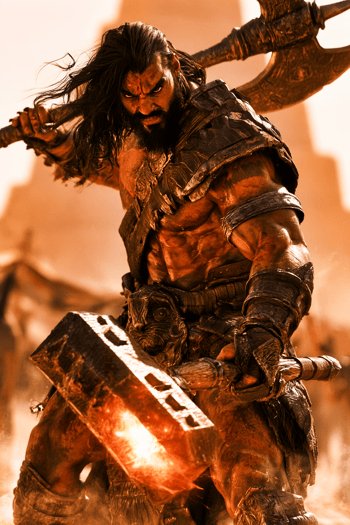
Strength represents a character's ability to exert physical force upon the world. It governs the raw power of the body: lifting, pushing, pulling, breaking, forcing, grappling, and moving things that are otherwise unwilling to move. A strong character can accomplish feats that would be impossible for a weaker one, whether that means wrenching open a stubborn door, dragging an injured companion to safety, hauling a heavy object out of the way, or simply putting considerable force behind a physical action.
Strength also determines how much weight a character can comfortably carry or lift before becoming subject to Encumbrance. This makes Strength particularly important for characters who routinely carry heavy weapons, armor, equipment, treasure, or other burdens. It is not, however, a measure of how well a character knows how to use their strength. A trained warrior and a powerful laborer may both possess considerable Strength while applying it in very different ways.
Strength Checks
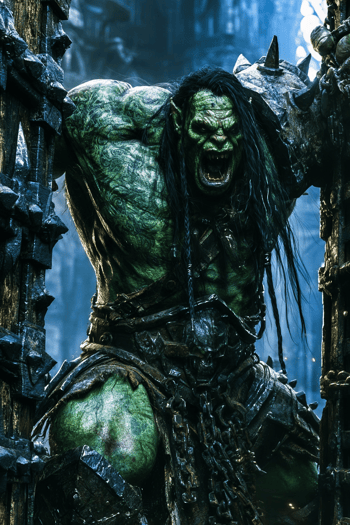
When performing a feat that relies primarily on physical force, the GM may ask for a Strength Check. This can include forcing open or breaking an object, lifting or dragging something heavy, pushing another creature, holding something in place, breaking free of restraints, climbing or swimming under difficult conditions, or otherwise overcoming an obstacle through brute physical effort. Strength can solve problems that finesse cannot, although sometimes the most obvious solution is also the loudest one.
A basic Strength modifier is zero, but stronger characters such as Brutes, Grendel, or Grendel Brutes may have high Strength modifiers even at low levels of Power. A Strength Check is performed by rolling a 20-sided die, to which the Strength bonus is added, or the Strength penalty subtracted. A total roll of 11 or higher indicates success.
Extremely difficult tasks may require a higher roll, as determined by the GM. Critical successes occur when the required total is reached or exceeded on a natural 20. This may inspire the GM to sweeten the outcome of the check. Conversely, a natural 1 is an automatic failure, even if the addition of a bonus would otherwise exceed the required roll. This Critical Failure may inspire the GM to impose additional consequences upon the failed feat of strength
Strength Saving Throws
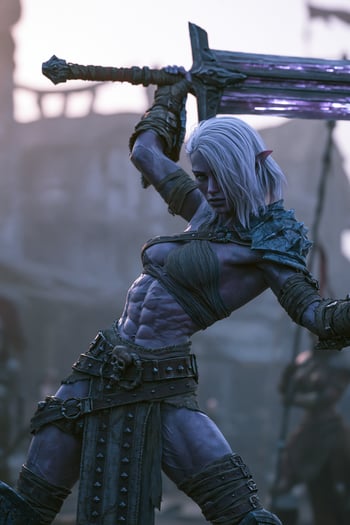
When something happens to a character that Strength alone can mitigate, the GM may call for a Strength Saving Throw. The player rolls a 20-sided die and adds their Strength modifier to the roll. The resulting total indicates to the GM whether the character resists the physical force involved or is subject to the calamity.
Strength Saving Throws are appropriate when a character must physically resist something rather than simply accomplish a task. Examples might include resisting being knocked backward by a powerful impact, holding onto a ledge while something attempts to tear them loose, resisting being pushed or dragged somewhere against their will, forcing themselves through a collapsing passage, or physically bracing against an environmental hazard. A character might also use a Strength Saving Throw to resist the physical effects of a creature attempting to grapple, crush, shove, or otherwise overpower them.
The distinction between a Strength Check and a Strength Saving Throw is therefore largely one of circumstance. A Strength Check represents a character deliberately applying force to accomplish something, while a Strength Saving Throw represents a character resisting force or an unwanted physical consequence. The GM determines when the distinction matters and what constitutes success.
Loss of Strength
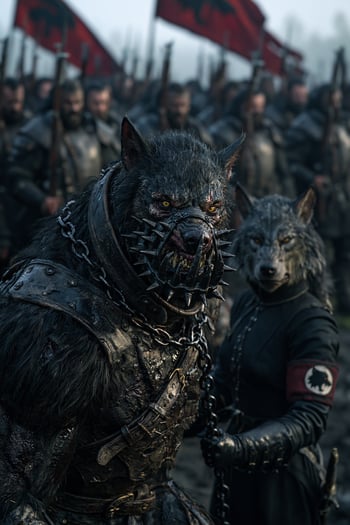
Various diseases, curses, special creature attacks, and other effects might sap a character's Strength, causing a reduction in their Strength modifier. Most often, these losses are temporary, allowing the character to recover once the underlying condition has been treated or the effect has passed. Even a temporary loss can be serious, however, particularly for characters who depend upon Strength for combat, equipment, or other physical tasks.
Permanent losses of Strength are considerably more dangerous. A character who loses Strength may find previously manageable burdens becoming Encumbering, physical feats becoming difficult or impossible, and other Strength-based actions less reliable. Permanent losses of Strength can be recovered by Powering Up and converting Power to Strength in the Player's Workshop. Characters should therefore treat effects that reduce Strength as serious threats rather than minor inconveniences.
Related Stats
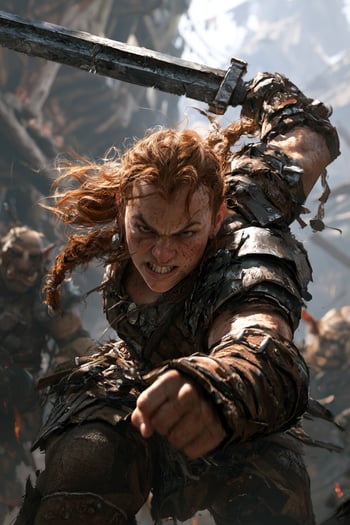
Strength is one of the three Body stats, along with Endurance and Agility. Together, these stats describe the fundamental physical capabilities of a character. Strength represents force, Endurance represents the ability to withstand physical demands, and Agility represents movement, coordination, and physical quickness.
The three Body stats are also used to calculate increases in a character's Body Point totals, making them particularly important to martial characters such as the Brute and Knight. Strength is therefore more than a convenient measure of muscle. It is one component of the physical foundation upon which a character's ability to survive and fight is built.
| Copyright © 2021-2026 by Robyn Blaber and Will to Power Games. All rights reserved. Content on this website may not be reproduced without written permission of the copyright owner. |
