Grand Chantry of Jormungandr
| General Information | |
|---|---|
| Region | Altinqor |
| Subregion | Altin Aydahar Region |
| Government | |
| Demographics | |
| Features & Amenities | |
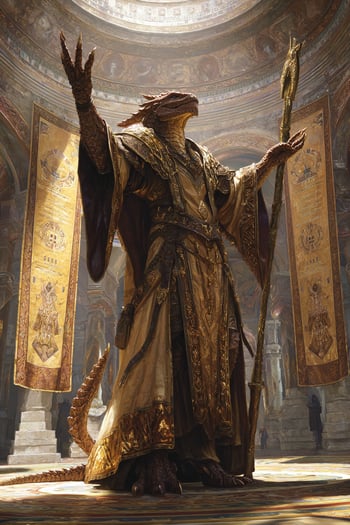
Deep within the shimmering heart of Altinqor, the capital of Kazinasi, the Grand Chantry of Jormungandr stands as a staggering testament to the devotion of the Aydahar people. This architectural marvel is a riot of gold and sun-drenched stone, designed to catch the unforgiving light of the Kazinasi sky and cast a divine radiance across the city’s central plaza.
Dominating the structure is a colossal, winding sculpture of the Great Serpent itself, its golden coils seamlessly weaving through the cathedral’s interior and exterior as if the building were a mere trellis for a living god. The air within is thick with the scent of rare incense and the low hum of draconic chants, vibrating against walls adorned with intricate mosaics that recount the many legends of Jormungandr’s power.
Grand Chantry of Jormungandr Description
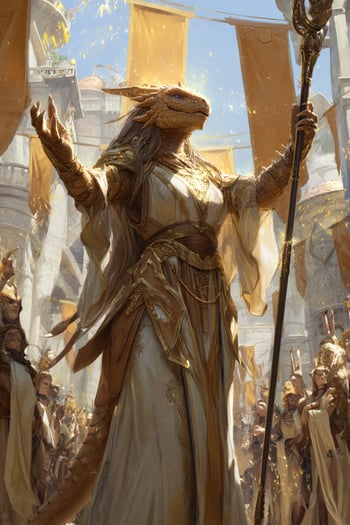
As the religious epicenter for all of the Aydahar substrains, the Chantry reflects the opulent yet fiercely traditional nature of those who claim draconic descent. Massive stained-glass windows depict the Great Erasure and the subsequent rise of the Aydahar, filtering the light into hues of amber and crimson that dance upon the scales of the faithful.
The Aydahar hold a fierce, unwavering conviction that the Great Serpent Jormungandr will emerge as the ultimate victor during the apocalyptic events of Ragnarok. Unlike other cultures that may view the end times with dread or a sense of inevitable tragedy, the Aydahar see the prophecies of the final battle as the moment their progenitor god will finally crush his ancient rivals and claim dominion over the remnants of Otan.
This belief is so deeply ingrained that it defines their societal structure, from the dragon-themed architecture of their capital, Altinqor, to the "draconic seed" they believe flows within their very blood. For the Aydahar, Ragnarok is not an ending but a promised triumph where the strength and fire of Jormungandr will purge the world, leaving his chosen children to inherit the golden age that follows.
Entry Requirements
While the Grand Chantry serves as the seat of draconic divine power, its golden gates remain open to all; seekers of every denomination are permitted entry, provided they come in the spirit of veneration rather than conquest. To maintain the sanctity of the Serpent’s coil, all arms are strictly forbidden within the threshold, and the wearing of armor is heavily discouraged, as one should stand humble and unburdened before the Infinite One.
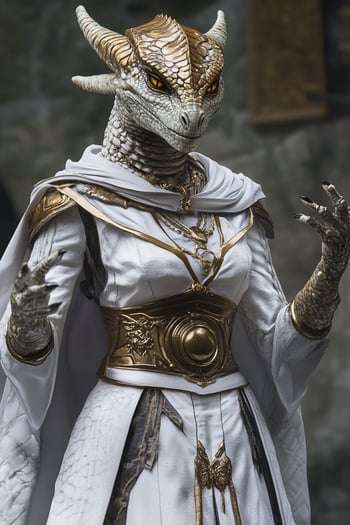
Upon crossing the nave, visitors are met by a Temple Acolyte, clad in shimmering silks, who offers the traditional welcome of the faith. The Acolyte initiates the Chantry’s greeting by crossing their arms to meet the guest's, locking wrists in the sacred "infinity sign"; a physical mimicry of Jormungandr’s own eternal coils. Together, they recite the hallowed refrain, "Blessings to the Infinite One," a chant that resonates through the gilded halls to signify that, for a moment, the guest and the Great Serpent are of one spirit.
Defenses
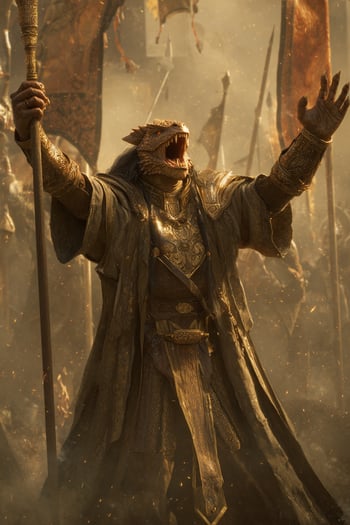
In the long history of Altinqor, the Grand Chantry remains an anomaly: a fortress of gold that has never suffered the indignity of an assault. This peace is not merely a product of the Aydahar’s formidable military, but a byproduct of a deep-seated spiritual dread; to strike the Chantry is to strike the Great Serpent himself. Should any foe be so foolish as to test these gilded gates, they would face the wrath of the High Priesthood of Jormungandr. These are not merely clerics, but living conduits of draconic power, capable of channeling the primal fire and crushing gravity that define their god’s domain.
At the apex of this hierarchy stands the Eldest High Priest, a figure whose presence is as heavy as the stone coils of the cathedral. His power is spoken of in hushed, terrifying tones; an unfathomable well of ancient magic that mirrors the legendary strength of the Progenitor. It is whispered among the Altin and the At that the Eldest High Priest no longer breathes air, but the very essence of Jormungandr’s will; his gaze alone is said to be capable of rendering the most hardened warrior to ash, ensuring that the Chantry remains an untouched sanctuary of the Infinite One.
Amenities
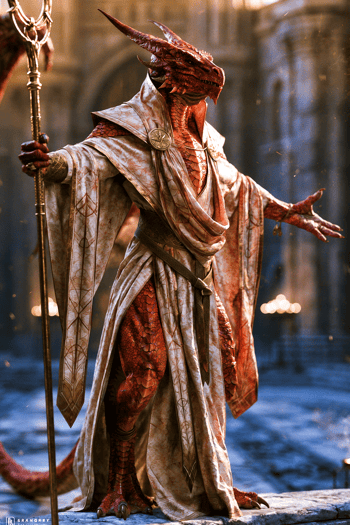
In keeping with its role as a beacon of spiritual restoration, the Grand Chantry provides numerous secluded sanctuaries designed specifically for the weary traveler or the visiting Divine to rest and replenish their power. These chambers are engineered to be conduits of power, shielded from the bustling chants of the main nave to allow for deep meditation and the recovery of one’s essence.
For those whose faith lies outside the draconic path, the Chantry maintains several non-denominational sanctums. These "Halls of the Many" are intentionally minimalist, offering a consecrated space where a Divine may establish a temporary altar. Within these private niches, visitors are permitted to arrange their own phylacteries, icons, and ritual paraphernalia, ensuring that regardless of one’s personal divinity, the Chantry serves as a universal anchor for the sacred in Otan.
Divinities
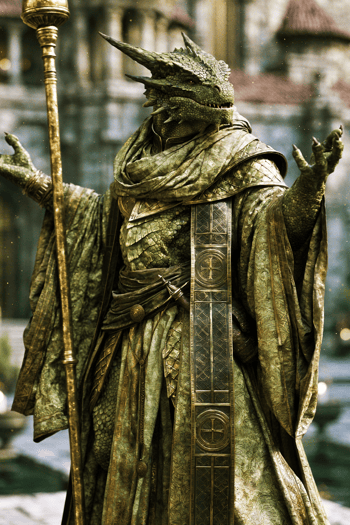
While the Grand Chantry is a golden monument to the glory of Jormungandr, it serves as a sanctified space for the broader celestial lineage of the Great Serpent. In a gesture of ancestral piety, the Chantry permits open blessings to be offered to Jormungandr’s siblings, Hel and Fenris, whose fates remain entwined with the Serpent's own. Veneration is also extended to Loki, the Trickster and father of this monstrous brood, whose cunning is honored as the spark of their divine origin.
Most notably, the Chantry maintains a profound, if complex, reverence for Woden the All-Father. It was Woden who, in a moment of ancient mercy, stayed his hand and spared the lives of the infant Jormungandr and his siblings, allowing them to fulfill their destinies across the lands of Otan.
By welcoming the faithful of the All-Father, the Aydahar acknowledge that without Woden’s pivotal act of grace, the draconic seed that defines their existence would never have been sown. Thus, the Chantry stands as a rare crossroads of divinity, where the coils of the Serpent and the wisdom of the All-Father find a mutual, golden peace.
Divine Services
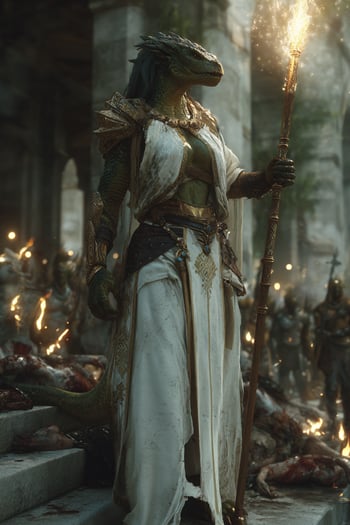
From the soothing reparation of a fractured spirit to the miraculous reconstitution of a fallen comrade, the Grand Chantry serves as a conduit for the impossible. Under the shadow of Jormungandr’s infinite power, no feat of divine intervention is beyond reach for those who approach the altar with sufficient penitence (or gold).
Whether seeking to mend the soul or pull a life back from the threshold of the Nether World, the High Priests stand ready to channel the Serpent’s potency, provided the supplicant’s offerings are as weighty as the boons they seek. In the presence of the Infinite One, death is but a temporary knot in the coil, waiting to be unmade by those with the faith and the gold, to command it.
| Copyright © 2021-2026 by Robyn Blaber and Will to Power Games. All rights reserved. Content on this website may not be reproduced without written permission of the copyright owner. |
