Altin Aydahar
| Scientific Name | Homo Draconus Chrysus |
|---|---|
| Plural | Altin Aydahar |
| Possessive | Altin Aydahari |
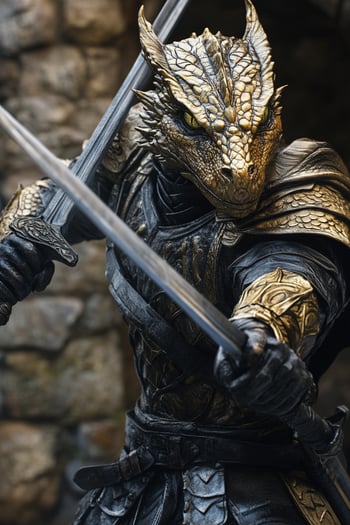
The Altin Aydahar (Homo Draconus Metallus) are the preeminent leaders and protectors of Altinquor, characterized by their metallic-scaled hides and a biological lineage tracing back to the Metal Dragons. Physically, they are identified by a pair of swept-back metallic horns and scales that reflect the luster of their draconic progenitors.
While their name "Altin" translates to "Gold" in Old Otani, their metal connection is broad and foundational to their physiology, rather than limited to a single precious resource. Within Altinquor, they often manifest as a knightly class, utilizing their superior organizational skills to marshal diverse troops and safeguard the nation from the strange creatures and invaders that roam Otan.
This substrain possesses a remarkable biological adaptation: a specialized organ that allows them to absorb and digest various metals. Through a biological process inherited from Metal Dragons, the Altin Aydahar excrete these processed minerals into their scale structure, effectively reinforcing their natural armor. Regular "consumption" of metals in this fashion grants them a significant defensive advantage, making their skin naturally resistant to the cuts and abrasions caused by slashing weaponry. This unique dietary requirement influences their culture and standard fare, which often includes high-mineral content to support their reinforced physiology.
Physical Characteristics
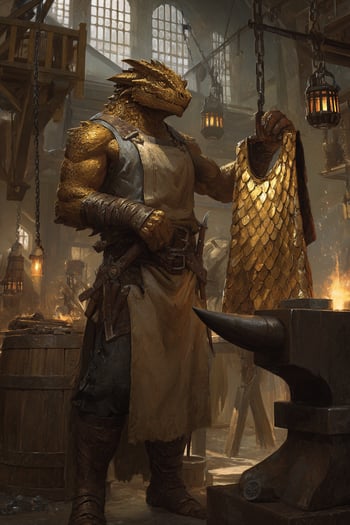
The Altin Aydahar retain the characteristic physiology of the Aydahar, though their appearance is strongly influenced by their Metal Dragon ancestry. Their skin develops metallic scales as they mature, replacing the smooth skin of infancy much as hair develops in humans. Most possess a distinctive pair of swept-back horns, while some individuals may develop additional horns, tails, or, more rarely, wings. Their hands and feet become increasingly talon-like, with dense claws that are considerably stronger than human fingernails.
The most distinctive feature of the Altin is their metallic hide. Their specialized internal organ allows them to consume and digest metals, after which the processed minerals are deposited into their scales. The result is a naturally reinforced outer layer that provides substantial protection against slashing weapons and other physical abrasion. For the Altin, metal is therefore not merely a material to be mined, forged, or traded. It is part of their diet and, quite literally, part of their bodies.
Their metallic appearance varies according to the materials incorporated into their scales, although the association with gold is so strong that the Old Otani name *Altin* has become synonymous with the substrain. The scales, horns, and other draconic features make an Altin unmistakable even among the already distinctive Aydahar. Their appearance is less a disguise for their ancestry than a declaration of it.
Altin Aydahar Culture
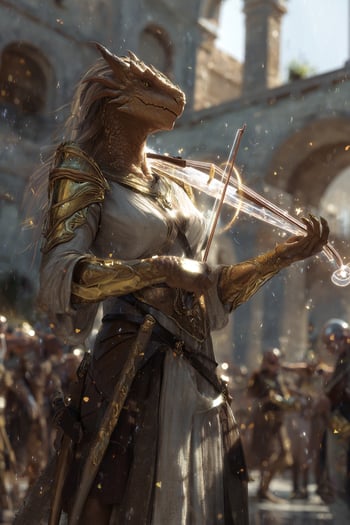
The Altin Aydahar occupy the highest administrative position within Aydahari society, though the other substrains retain their own elders and regional authority. The Altin hold the executive seat on the Council of Six Elders, and the Eldest of the Altin normally serves as the Eldest of the entire council. That position carries only one formal vote, but it becomes decisive in a tied council and gives the Eldest the ability to veto a resolution that lacks their support.
This authority is rarely treated as a source of open conflict. Relations between the six Aydahar substrains are generally even-handed, with little rivalry or major political disagreement. The Altin simply take responsibility for administration, and the other substrains have historically allowed them to do so. In practice, the arrangement works because the Altin are very good at organizing things and even better at believing that someone should organize them.
Altin culture is closely tied to cities, commerce, manufacturing, and the machinery of government. Their greatest expression of this is Kazinasi, originally an Altin settlement that became the capital of the entire Confederation and gradually developed into a metropolitan center containing Aydahar from every substrain, along with increasing numbers of outsiders. The city is one of the few places in Altinqor where matters such as nation-building, international diplomacy, military alliances, and trade policy receive serious attention.
Despite their political prominence, the Altin remain part of the broader Aydahari tradition of service to Dragons. Aydahar regard their relationship with Dragons as both a sacred obligation and a cornerstone of their society, tending their lairs and needs while consulting them on important political matters. The Altin may govern the realm, but even the governors are expected to remember who their ancestors were.
Altin Aydahar Geography
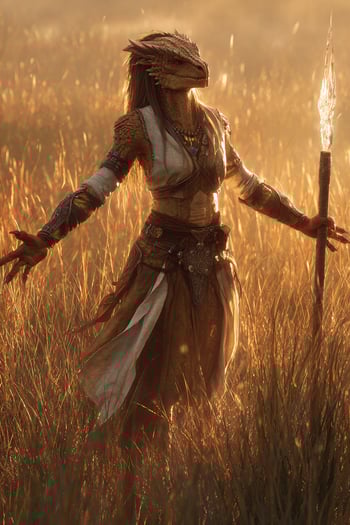
The Altin Aydahar are concentrated in the central and eastern portions of Altinqor, with their greatest population found in and around Kazinasi. Unlike the other Aydahar substrains, whose preferred environments closely correspond to the nature of their Dragon progenitors, the Altin are comparatively indifferent to geography. Their preference is for towns and cities, and their influence is expressed through settlement, administration, and construction rather than through a particular landscape.
Kazinasi stands at the heart of the Altin world. The Golden City, as it is called, serves as both the capital of the Altin Aydahar Region and the capital of the Confederation of Altinqor. Originally founded as an Altin settlement, it grew in importance as the various Aydahar regions were united, eventually becoming a metropolitan city populated by all six substrains and increasingly by people from outside Altinqor.
The wider Altin region is therefore defined less by a single natural environment than by the presence of organized settlements and the institutions that connect them. Altinqor itself contains several distinct terrains suited to its different Aydahar populations, but the Altin are concerned primarily with turning those spaces into functioning communities. Where the other substrains adapt themselves to mountains, plains, water, or stone, the Altin have a simpler solution: build a city.
| Copyright © 2021-2026 by Robyn Blaber and Will to Power Games. All rights reserved. Content on this website may not be reproduced without written permission of the copyright owner. |
