Garis Nation
| General Information | |
|---|---|
| Capital | Trappist |
| Culture | Garis |
| Government | |
| Government Type | Triumvirate |
| Demographics | |
| Total Pop | 4589956 |
| Urban Pop | 321368 |
| Rural Pop | 4268588 |
| Settlements | 35 |
| Geography & Economy | |
| Area | 75748 sq. Gorom |
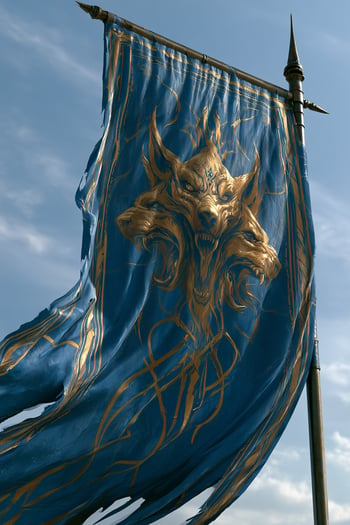
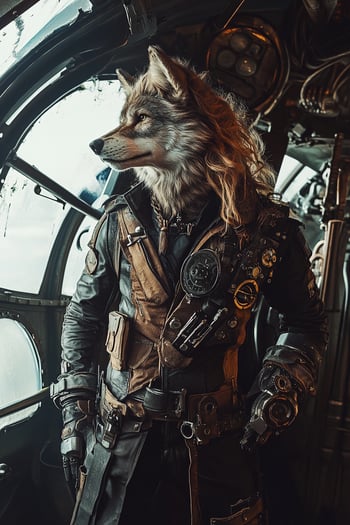
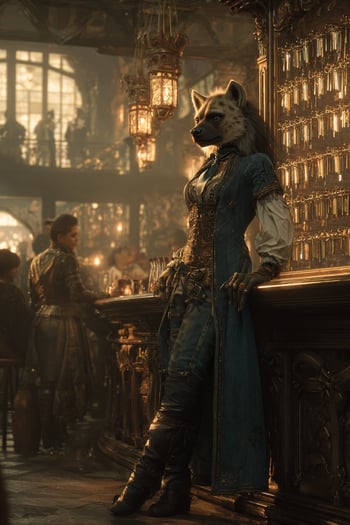
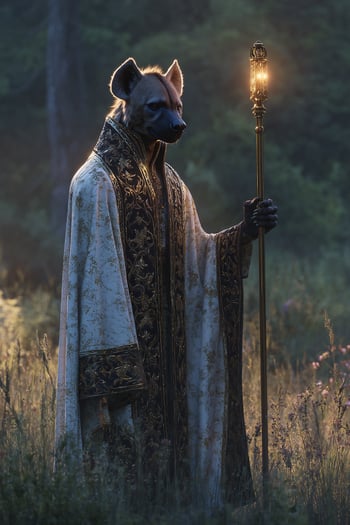
In the southeastern corner of Otan lies the Garis Nation, a highly advanced land governed by the iron-willed Garis Triumvirate. The climate ranges from temperate in the north to tropical in the south, characterized by mild, predictable weather that remains pleasant year-round. This sprawling territory is home to the Garis, a tripartite strain of canine humans split into three distinct substrains: the lupine Ustemdik, the vulpine Akimsilik, and the hyena-like Beybitsilik.
These three substrains reside in the three major regions of the country, with the central region, known simply as the Akimsilik Region, housing the capital city of Trappist. These regions are unsettlingly modern, presenting an environment centuries ahead of its time. Even without reliance on magical powers, Garis architects possess spatial and aesthetic sensibilities that propel their architecture and public administration well beyond the capabilities of neighboring realms. To the Garis, all other nations are considered hopelessly primitive. This meticulously managed infrastructure ensures that there is no poverty, hunger, homelessness, or visible vice evident on Garis' streets.
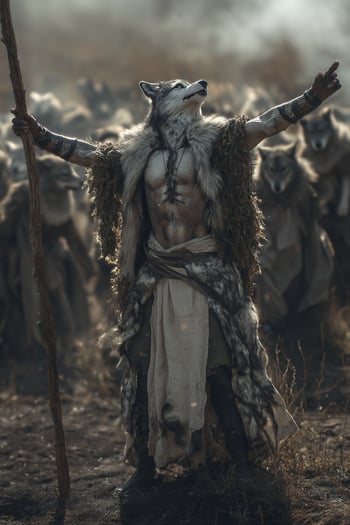
The Garis people themselves are anything but mild. The hawkish, lupine Ustemdik are intensely martial, always petitioning the government to go to war and unleash their modern military. Conversely, the security-minded Beybitsilik prefer peacetime, prioritizing the shoring up of national defenses, border fortification, and the strict policing of currently held territory.
The administratively minded Akimsilik also lean toward peace, though for entirely practical reasons; they genuinely fear the bureaucratic and administrative nightmare required to logistically manage and occupy foreign territory. This careful balancing act keeps the central government in check and prevents reckless expansion. However, the political landscape is highly volatile—a change in resolve from either the Akimsilik or the Beybitsilik would instantly shatter the status quo and plunge the nation into total war.
Population
The population of the Garis Nation is entirely homogeneous. The Garis hold a deep-seated conviction that other nations and foreign human strains are primitive, and they harbor a perpetual fear that outsiders on their land would inevitably steal their prized technological and state secrets. Consequently, foreigners who do manage to secure rare, temporary passage into the Garis Nation are subjected to heavy, unyielding surveillance for the entirety of their stay.
The Garis population numbers over 4.5 million citizens, roughly two-thirds of whom are comprised of the dominant Ustemdik substrain. The only instances of any other strain being present within the country's borders can be found strictly within the nation's capital, where a few tightly monitored diplomatic exceptions reside.
Unlike the vast majority of Otan's kingdoms, there is absolutely no trade conducted with the ubiquitous Kuulik Trade Company, as corporate foreign entities are barred from entry. Instead, the only regular foreign visitors are the Dweorges; industrial Dweorgen ships from the deep Quarrylands frequently sail into Garis ports, laden with heavy supplies of raw metals, precious gems, and other treasures of the deep.
Beyond these tightly controlled ports, the country is a fortress. Few, if any, of the people living just over their borders have ever seen the inside of a Garis town, and standard humans, alongside the draconic Aydahar, are explicitly unwelcome.
Culture
The Garis are an intensely pious people, a trait most fiercely exhibited by the dominant Ustemdik substrain. Over the decades, they have developed their own distinct, localized form of Wodenism, complete with a heavily altered mythology that reflects their canine heritage. In their telling of the cosmos, Ragnarok, the end of days, is entirely dominated by the great wolf Fenris, who defeats Thor and ultimately slays Woden himself. This prophecy of lupine triumph is central to Wodenist teachings across the entire nation.
The soaring temples of the Sanctum of Fenris are densely packed for religious services every weekend. This grand narrative of lupine domination over the heavens goes hand-in-hand with the earthly Ustemdik desire to dominate the physical realm of Otan through military conquest. Every aspect of broader Garis culture is currently experiencing a spectacular renaissance; because of their rigorous intellectual focus, newer, more efficient ways to execute daily tasks, manufacture goods, and organize society come to them as a daily occurrence.
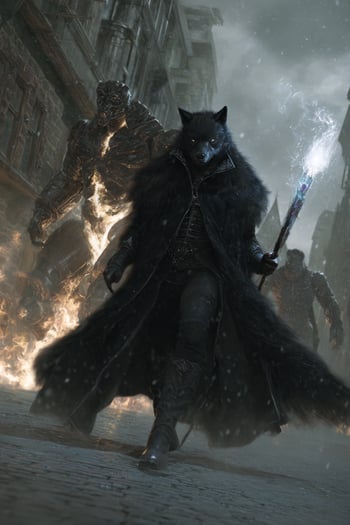
When border clashes inevitably ignite, the Garis will field heavily armored Knights and brutal Brutes during the opening skirmishes. However, as a conflict escalates, they increasingly rely on Tinkers and proto-tinkers; ordinary citizens armed to the teeth with advanced Tinker-engineered weaponry. These technologically equipped troops are so lethal that they can easily match the combat capabilities of power-wielding Archetypes from other nations.
Beyond the battlefield, the Garis excel in civic engineering and governance. They constantly experiment with progressive concepts like paper currency, advanced tiered tax systems, robust social welfare programs, rudimentary railway networks, self-propelled jalopies, massive atmospheric airships, printing presses, and sprawling public libraries and museums. While it might seem difficult to conceive of hawkish wolf-men agreeing to liberal social safety nets, these programs are intentionally designed to ensure that every single Garis citizen has the health and resources necessary to be productive and contribute to the future war effort. In the Garis Nation, there are few idle hands.
Politics
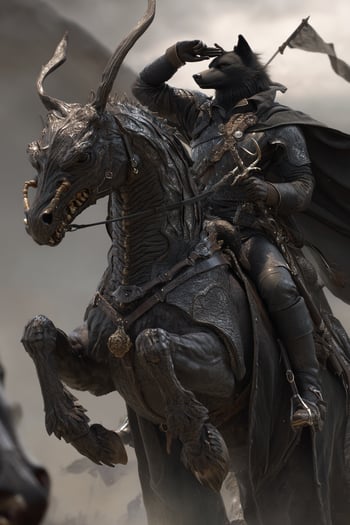
The Garis Triumvirate is the supreme governmental faction that dictates national policy. It is headed by three Triumvirs, each representing one of the core substrains, who collectively make all major decisions for the country. Politically, the Akimsilik Triumvir serves as the de facto "center," while the Beybitsilik and Ustemdik Triumvirs act as the right and left wings of the government, though external observers often find it difficult to tell which side is which.
On internal and domestic matters, particularly progressive social issues, the Ustemdik Triumvir will frequently abstain from voting. This strategic silence gives the Beybitsilik wide latitude to craft rigorous laws and taxation models, while allowing the Akimsilik the political freedom to enact highly liberal policies that benefit the public at large, such as funding education, public health, and transportation infrastructure.
However, a singular, massive geopolitical policy keeps the Ustemdik seated at the negotiating table day in and day out: the declaration of war. The Ustemdik permanently desire total war and actively work behind the scenes to engineer situations that will force the Akimsilik Triumvir to cast a favorable vote.
The Ustemdik are utterly convinced that their technological superiority will allow them to dominate any rival country, and they firmly believe they could defeat the entirety of Otan in a well-planned campaign. Furthermore, they harbor a religious conviction that a true world war might finally trigger Ragnarok: an apocalypse that would please the vast majority of their lupine population.
For the past 260 years, the official voting record on foreign invasion has remained locked at a frustrating two-against-one stalemate. Undeterred, the Ustemdik have countless long-term schemes in motion to sway just a single vote from either the Akimsilik or Beybitsilik. Once that vote flips, they believe they will march onward to global glory.
Economy
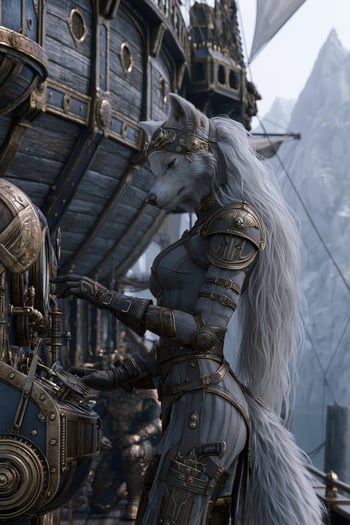
The Garis economy is almost entirely autarkic and self-contained. Possessing little need for what they perceive as the rickety, primitive products of foreign nations, combined with an intense paranoia regarding industrial espionage, they allow virtually nothing to cross their territorial borders. Passing merchant vessels are aggressively encouraged by coastal patrols to stay well clear of Garis waters, with the lone exception being the industrial fleets of the Dweorges.
These seafaring miners make regular arrivals to deliver vital shipments of raw metals and dense alloys. In return, the Garis compensate the Dweorges with cutting-edge technological blueprints, including the latest in paddlewheel innovations and maritime engineering designed to make deep-sea dredging and metal processing immensely more profitable.
These massive influxes of metal are immediately pumped directly into the insatiable Garis war machine. Private individuals, massive manufacturing corporations, and regional governments all operate under the absolute certainty that total war is inevitable. Consequently, materiel for that impending conflict is manufactured in staggering abundance.
While stockpiling advanced weapons and munitions is a natural priority, the state also focuses heavily on building massive reserves of logistical supplies intended for soon-to-be-occupied foreign nations. Vast warehouses are packed with materials for constructing roads, bridges, railways, administrative offices, internment camps, emergency rations, and security facilities, preparing the state to seamlessly govern Otan from the moment the first borders fall.
Geography
The geography of the Garis Nation is highly distinctive, bearing a striking resemblance to a melting, upside-down number three. Two-thirds of the country's perimeter is defined by roaring sea lanes, while its terrestrial border runs in a virtual straight line across the northwest. This land border runs directly adjacent to Ontustik to the south, Altinqor in the center, and Xigis to the north.
The interior terrain is primarily a lush mix of dense deciduous forests and sweeping grasslands, which gradually gives way to a thick, tropical rainforest crowding the southern tip of the Ustemdik Region. The entire landscape is fed by three major, churning rivers that originate high in the lands of Altinqor and carve their way through the Garis provinces toward the ocean. While well-traveled international sea lanes closely surround the peninsula, very few foreign captains dare to enter Garis ports unless their vessels are in dire need of emergency repairs, as the land and sea borders are permanently patrolled by the heavily armed Garis Border Patrol.
History
Sophists across the globe, including the most brilliant minds stationed within the Garis capital of Trappist, consistently scratch their heads when tasked with explaining the historical origins of the canine strain. While the existence of Humans, Aelfes, Dweorges, and even the monstrous Grendel can be neatly explained by referring to the sacred Book of Woden, the Garis are completely, inexplicably absent from its pages. Whether one chooses to believe the orthodox Wodenist creation myth or not, it remains a profound historical mystery that the Garis have no mention in early continental lore.
While most of Otan's older civilizations can divine tangible clues about their existence prior to the catastrophic Great Erasure, Garis archaeologists have discovered only a handful of unconvincing, fragmented scraps of evidence. For the Garis, the stark reality that they exist is certain, but they remain deeply bothered by the fact that they seem to possess absolutely no ancient past.
In the 260 years since the Incipit Mundi (IM), the Garis have forged a historical legacy defined entirely by rapid, unparalleled innovation. While neighboring nations awoke from the ashes of the Great Erasure with their grand institutions already intact, their magic libraries choked with inherited Powers, and their towering fortresses already built, the Garis awoke as scattered, primitive tribes.
They used the ensuing 260 years to meticulously build an advanced civilization entirely from the ground up, meaning every single Garis city and town has a history that is decidedly less than three centuries old. For their magnificent capital of Trappist, they dedicated their greatest architectural and technological triumphs. From the imposing, vaulted archways of the Grand Sanctum of Fenris to the gleaming, modernist steel-and-glass Capital Building, the metropolis of Trappist stands as a breathtaking achievement that is centuries ahead of any other nation on Otan.
Subregions of Garis Nation
Akimsilik Region
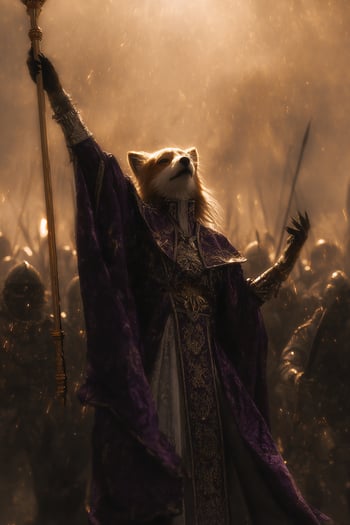
Capital: Trappist
Population: 515,606
Area (sq. Gorom).: 7,244
Beybitsilik Region
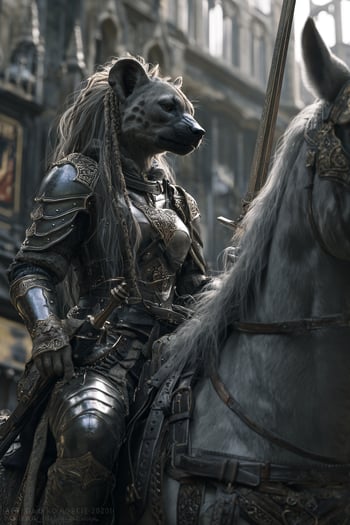
Capital: Kapteyn
Population: 1,097,324
Area (sq. Gorom).: 17,672
Ustemdik Region
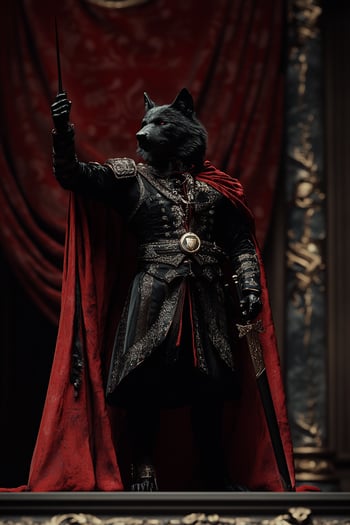
Capital: Saiph
Population: 2,974,734
Area (sq. Gorom).: 50,624
| Copyright © 2021-2026 by Robyn Blaber and Will to Power Games. All rights reserved. Content on this website may not be reproduced without written permission of the copyright owner. |
