Grendel Language
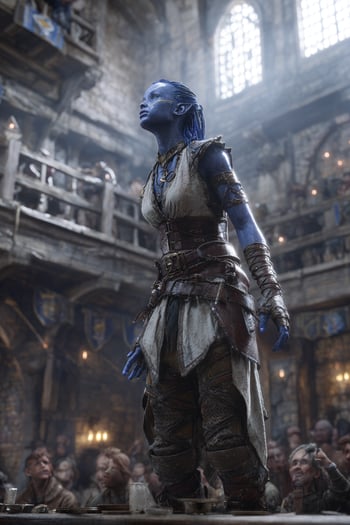
| General Information | |
|---|---|
| Native Name | Grendel |
| Language Family | Gaderung |
| Usage | Spoken, Written |
| Speakers | |
| Where Spoken | Maercland |
| # of Speakers | 6,000,000 |
The Grendel language is spoken almost exclusively by the Grendel of Maercland. It originates from the Gaderung family of languages, whose original Gaderung tongue was lost during the Great Erasure. With relatively little interference from other languages, the principal pressure on Grendel speech has come from within the nation itself, producing three distinct dialects: Kalas, Maerc, and Sogis. The Sogis dialect has fragmented further in the isolated communities of the northern hills, with some local dialects spoken by populations too small to have ever bothered giving them a proper name.
The Kuulik Trade Company is the principal non-Grendel institution that maintains an active interest in preserving the language. The Company has extensive commercial ties throughout Maercland and has considerable incentive to ensure that Grendel remains a living language rather than an archaeological curiosity. Military leaders elsewhere on Otan have taken an altogether less sentimental interest. With the memory of the Grendel War still fresh, military establishments across the continent commonly ensure that at least some of their officers and elite soldiers can understand Grendel speech, should tensions once again flare along the borders.
Speakers and Distribution

The Grendel language has approximately 6 million speakers, not counting those who study it secretly. The number is rising rapidly as the Grendel population expands, creating new speakers at a rate that has surprised even Grendel demographers. The language is overwhelmingly concentrated in Maercland, with the Kalas dialect particularly prominent in the nation's cities and centers of commerce, while Maerc and Sogis remain more strongly tied to their respective regions.
Contact with the Kuulik Trade Company has begun changing the language, particularly among Kalas speakers. Maercland's dependence on Kuulik merchants for the import and export of goods has introduced a growing collection of Kuulik terms into everyday commercial speech. Financial instruments presented a particularly embarrassing gap in the Grendel vocabulary, which was eventually solved in the traditional fashion of languages everywhere: they stole the necessary words from somebody else.
To an outsider, spoken Grendel can sound remarkably hostile. Its flow and intonation have an accusatory quality, with the rhythm often rising and falling as though the speaker has just discovered a grievous personal offense. Even ordinary conversation can therefore sound like an argument between people who have been insulting one another for several minutes. Foreigners unfamiliar with the language are consequently inclined to approach a group of speaking Grendel very cautiously, particularly when they cannot determine whether anyone is actually angry.
Writing and Literature
The Book of Woden is available in the Grendel language, including the litanies traditionally associated with Wodenist worship. In recent years, however, it has been substantially overshadowed by the Idylls of Otoy. The latter is deceptively simple, written in a style so innocuous that it can read almost like a children's book. Beneath that simplicity lies an argument for abandoning Wodenist religion in favor of a philosophy centered upon self-love and individual identity.
The Idylls have become particularly controversial because not everyone accepts its philosophy at face value. Critics argue that its language of self-love conceals a much older Grendel grievance: the desire to reclaim Human-occupied lands lost during the Grendel War, and likely before the Great Erasure. Whether the book is genuinely philosophical, deliberately political, or simply being used for political purposes has become one of the more contentious questions in modern Grendel discourse.
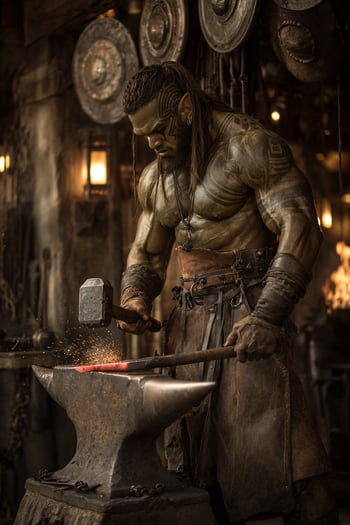
A very different sort of Grendel literature is found in Moldir's Metallurgy, a collection of essays by the late Moldir Qulati, a Kalas Grendel blacksmith. The essays are notoriously difficult reading for anyone without a working knowledge of metallurgy, but their practical influence has been enormous. Moldir's work helped Grendel smiths develop what is widely regarded as the hardest steel on Otan, and the collection has consequently become a national treasure.
Copies of Moldir's Metallurgy can be found on the mantles of proud Grendel households throughout Maercland, where they serve as both technical reference and patriotic ornament. Whether the owner has actually read the book is another matter entirely. For many, possessing the essays is enough to demonstrate an appreciation for the craft, the nation, and the man who helped make Grendel steel famous.
| Copyright © 2021-2026 by Robyn Blaber and Will to Power Games. All rights reserved. Content on this website may not be reproduced without written permission of the copyright owner. |
