Prescience

| General Information | |
|---|---|
| Parent Stat | Spirit |
| Values | |
| Stat Min | -10 |
| Base Value | 0 |
Prescience is an ability every character possesses to some degree. When a person drops a pebble into a pool of water, the mind's eye can visualize, and perhaps even hear, the splash before it happens. The mind recognizes the relationship between cause and effect and automatically anticipates what will happen next. This basic anticipation is a form of Prescience, although in most people it is little more than an unconscious prediction based upon experience and reason.
In some individuals, however, this ability becomes extraordinarily accurate. Events that could not reasonably be foreseen through ordinary observation or logic may become visible to the mind's eye. The more powerful a character's Prescience, the more likely they are to perceive the actual outcome of an event rather than merely the outcome that seems most reasonable.
The Extremely Prescient can take this ability even further, perceiving chains of events or multiple possible outcomes arising from a single action. They may see the hurricane that began with the proverbial butterfly's wing, recognize the seemingly insignificant event that will eventually cause it, and perhaps even intervene before the chain of events becomes inevitable.
Prescience does not necessarily reveal a fixed future. The future may contain possibilities rather than certainties, and observing one possibility may itself change what eventually happens. A character might therefore perceive several possible consequences of an action, some more likely than others. The greater the character's Prescience, the farther along these chains of cause and effect their awareness may reach. A Prescient character may know that something is about to happen without knowing exactly why, while an Extremely Prescient character may perceive the sequence of events that leads to it.
Prescience Checks
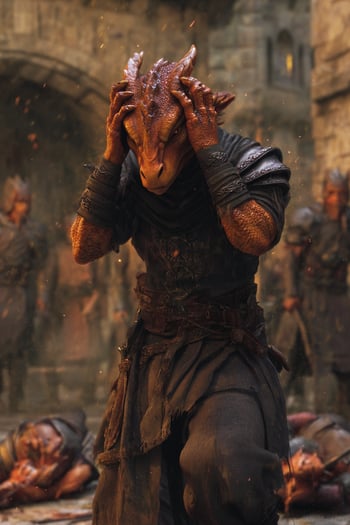
When performing a feat that relies upon perceiving or anticipating an outcome beyond what can reasonably be determined through ordinary observation, the GM may ask for a Prescience Check. A basic Prescience modifier is zero, but highly prescient characters such as Psychics, Fyrthaelfes, or a Fyrthaelf Psychic may have high Prescience modifiers even at low levels of Power.
A Prescience Check is performed by rolling a 20-sided die, to which the Prescience bonus is added, or the Prescience penalty subtracted. A total roll of 11 or higher indicates success. Extremely difficult tasks may require a higher roll, as determined by the GM. Critical successes occur when the required total is reached or exceeded on a natural 20. This may inspire the GM to sweeten the outcome of the check. Conversely, a natural 1 is an automatic failure, even if the addition of a bonus would otherwise exceed the required roll. This Critical Failure may inspire the GM to impose additional consequences upon the failed feat of Prescience.
Feats of Prescience are extremely varied and usually involve a character attempting to visualize the outcome of an action. The action may be something the character has personally set in motion or something whose cause they have witnessed. A character might toss a stone and attempt to perceive where it will land, watch an opponent begin a movement and anticipate what follows, or observe an apparently harmless event and perceive an unexpected consequence that will occur moments later.
Prescience may also allow a character to follow a chain of cause and effect farther than ordinary reasoning would permit. A character might recognize that opening a particular door will lead to an encounter, that disturbing an object will eventually trigger a trap, or that a seemingly insignificant decision will have consequences much farther away. The GM determines how much of the resulting chain becomes visible and how clearly the character perceives it. A successful Prescience Check need not reveal everything that will happen; sometimes knowing that something is wrong is the most useful warning the future can provide.
Prescience Saving Throws

When something happens to a character that Prescience alone can mitigate, the GM may call for a Prescience Saving Throw. The player rolls a 20-sided die and adds their Prescience modifier to the roll. The resulting total indicates to the GM whether the character perceives the danger in time to respond or is subjected to the calamity requiring Prescience.
These circumstances can be surprisingly common. A character might be about to step into a trap and experience a sudden vision of the fatal outcome, allowing them to stop before completing the action. An ambush may be perceived a moment before it occurs, a falling object may be anticipated before it enters the character's sight, or an otherwise ordinary event may trigger an inexplicable certainty that something is about to go wrong. Prescience is particularly useful against dangers whose causes are hidden or whose consequences could not reasonably be anticipated.
Examples of situations that might call for a Prescience Saving Throw include:
- Sensing a trap immediately before triggering it.
- Perceiving an ambush before the attackers reveal themselves.
- Sensing that a seemingly safe path is about to become dangerous.
- Anticipating a falling object or other unexpected environmental hazard.
- Recognizing that a door, lever, container, or other object will produce an unexpected consequence.
- Sensing an imminent attack from an otherwise unseen opponent.
- Perceiving that an apparently harmless action will lead to danger.
- Sensing an approaching storm or other sudden environmental event.
- Recognizing that a companion is about to make an action with an unforeseen consequence.
- Perceiving one of several possible outcomes immediately before an important decision.
A successful Prescience Saving Throw does not necessarily explain the danger. The character may simply know that stepping forward is a very bad idea. This can make Prescience an unusual but powerful defense: the character may not know what is about to happen, but they know enough not to be standing there when it does.
Loss of Prescience
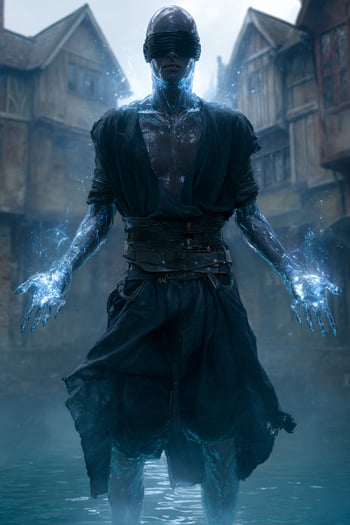
A character's Prescience may be diminished by disease, curses, special creature attacks, magical effects, psychic assaults, or other conditions that interfere with the character's ability to perceive possible outcomes. A reduction in Prescience results in a corresponding reduction of the character's Prescience modifier and may also cause the loss or suppression of powers that require a minimum Prescience modifier.
The effects may be temporary or permanent. A temporary impairment may disappear once the underlying condition has been overcome, while a permanent loss may leave a character increasingly dependent upon ordinary observation and reasoning rather than the subtle warnings of their mind's eye. Permanent losses of Prescience can be recovered over time by Powering Up and converting Power to Prescience in the Player's Workshop.
Related Stats

Prescience is one of the three Spirit stats, along with Will and Empathy. Together, these stats describe abilities that extend beyond the ordinary functions of the body and mind. Prescience represents awareness of possible outcomes and events yet to occur, Will represents the ability to maintain or impose one's own intent, and Empathy represents the ability to perceive and connect with the emotions of other beings.
The three Spirit stats are also used to calculate increases in a character's Spirit Point totals, making them particularly important to spiritually oriented characters such as Psychics and Divines. Prescience gives the Spirit its awareness of what may come. Where Intelligence can reason from what is known, and Memory can recall what has already happened, Prescience allows a character to perceive what has not happened yet, and, in the hands of the Extremely Prescient, perhaps to see far enough ahead to change it.
| Copyright © 2021-2026 by Robyn Blaber and Will to Power Games. All rights reserved. Content on this website may not be reproduced without written permission of the copyright owner. |
