Wodenism: Difference between revisions
Robyn.Blaber (talk | contribs) Created page with "{{Infobox religion | title = Wodenism | image = https://imagedelivery.net/TNzzP2IqyQLYoHEs2ZN5aQ/5fb3a164-7dae-46c3-4a3e-726fb8648700/wiki#.png | caption = Wodenism (🔊 WOE-den-ism) is a religion with a large pantheon led by Woden the All-Father. This popular religion is practiced using wildly diverse methods by the various Wodenist sects. | religion_type = Polytheistic | followers = Or..." |
Robyn.Blaber (talk | contribs) No edit summary |
||
| Line 9: | Line 9: | ||
}} | }} | ||
[[Wodenism]] is the dominant religion of [[Otan]], with [[Woden]], the All-Father, standing at its center. His name is known throughout much of the continent, and his worship has spread well beyond the cultures that first embraced him. [[Human]]s form the largest body of [[Woden]]ist worshippers, but the faith has also found a strong place among the Ælfes, [[Dweorg]]es, [[Ungir]], [[Aydahar]], and other peoples. In many cultures, [[Wodenism]] is less a single uniform church than a broad religious tradition interpreted through local customs. | |||
At the heart of [[Wodenism]] is the belief that existence is defined by the struggle to become something greater. The faith recognizes four great pillars: wisdom, strength, love, and sacrifice, represented respectively by [[Woden]], [[Thor]], [[Frigg]], and [[Tiw]]. These ideals are not necessarily peaceful ones. Wisdom may demand suffering, strength may require violence, love may require devotion, and sacrifice may demand that something valuable be given away. | |||
[[Woden]] himself is an unusually personal deity. He is remembered not merely as the creator of [[Otan]], but as a wanderer, seeker of wisdom, father, teacher, and occasional companion to exceptional mortals. [[Woden]]ists believe that the gods may take an interest in those who demonstrate unusual courage, intellect, skill, or devotion. The gods are therefore not distant abstractions. They are powers that may, on rare occasions, sit at the same table as a mortal. | |||
The faith is remarkably broad for a religion centered on a single All-Father. Different peoples emphasize different gods, customs, and interpretations. The [[Dweorg]]es look especially toward [[Thor]], the [[Aydahar]] toward [[Jormungandr]], the [[Friggaelf]]es toward [[Frigg]], and the [[Soltustiker]]s toward [[Woden]] and [[Tiw]]. These variations have not destroyed [[Wodenism]]. If anything, they demonstrate its unusual ability to absorb local traditions without abandoning its central mythology. | |||
== [[Woden]]ist Tenets == | == [[Woden]]ist Tenets == | ||
{{LoreImage|#.png|350px|right}} | {{LoreImage|https://imagedelivery.net/TNzzP2IqyQLYoHEs2ZN5aQ/e34b4ac1-502b-4728-9067-b8bb3ecfcd00/wiki#.png|350px|right}} | ||
The four pillars of [[Wodenism]] are wisdom, strength, love, and sacrifice. [[Woden]] embodies wisdom, [[Thor]] strength, [[Frigg]] love, and [[Tiw]] sacrifice. Together they form the moral foundation of the faith. A complete life is not necessarily one devoted to a single virtue, but one capable of recognizing when each virtue is required. | |||
The Book of [[Woden]] describes three great wills: the [[Will to Power]], the Will to Perception, and the Will to Transcendence. Of these, [[Woden]] identifies the [[Will to Power]] as the greatest and as the defining aspect of humanoid existence. The teaching is not limited to humans; [[Woden]]'s willingness to include other peoples within his divine order has helped make him especially popular among the Ælfes and other humanoid cultures. | |||
[[Wodenism]] places considerable value on exceptional achievement. The gods are said to take an interest in mortals who distinguish themselves through physical prowess or cognitive genius, and such people may even find themselves dining in the company of a god. Yet divine intervention is deliberately limited. A god is unlikely to simply enter a battlefield and decide the outcome. More often, the mortal receives counsel, protection, recognition, or a message. | |||
The faith therefore celebrates both aspiration and consequence. Courage can earn a place in Valhalla, while a quiet and uneventful life may lead instead to [[Hel]]heim. [[Wodenism]] does not necessarily condemn the latter; it simply offers a rather pointed reminder that the gods have always considered an interesting life preferable to a safe one. | |||
{{-}} | {{-}} | ||
== [[Woden]]ist Clergy == | == [[Woden]]ist Clergy == | ||
{{LoreImage|#.png|350px|right}} | {{LoreImage|https://imagedelivery.net/TNzzP2IqyQLYoHEs2ZN5aQ/a4d7638b-8da4-48a1-2086-dde8543fcd00/wiki#.png|350px|right}} | ||
[[Woden]]ist clergy are divided broadly into two traditions: stationary and itinerant. Stationary clergy serve at chapters of the [[Temple]] of [[Woden]], maintaining temples, conducting worship, preserving religious traditions, and tending to the needs of local communities. Itinerant clergy travel with armies, adventuring companies, and other groups, carrying the teachings of [[Woden]] beyond the walls of established temples. | |||
The [[Temple]] of [[Woden]] is a loosely organized religious bureaucracy rather than a single tightly controlled hierarchy. Its temples are dedicated not only to [[Woden]] but to the wider [[Woden]]ist pantheon, and major cities throughout northern [[Otan]] commonly possess one. The [[Temple]] has also historically encouraged its clergy to spread [[Woden]]'s teachings among other nations and peoples. | |||
The [[Woden]]ist clergy is expected to be active rather than merely ceremonial. Among their more ambitious pursuits is the creation of the legendary Nine Herbs Charm, a magical or devotional work believed to grant additional power and veneration to both its creator and its invoker. Clergy may also maintain sanctuaries where [[Divine]]s can replenish their spiritual power, making temples places of practical importance to travelling worshippers as well as centers of worship. | |||
Not all [[Woden]]ist clergy agree about what the faith should become. The Sanctum of [[Fenris]], the Chantry of [[Jormungandr]], and the relatively new Fists of [[Woden]] all demonstrate how far interpretations of [[Wodenism]] can diverge. The Fists, in particular, believe the established [[Temple]] has become too permissive in allowing non-humans and other undesirables to worship, while other [[Woden]]ist traditions have embraced the religion's broad appeal. | |||
{{-}} | {{-}} | ||
== Creation == | == Creation == | ||
{{LoreImage|#.png|350px|right}} | {{LoreImage|https://imagedelivery.net/TNzzP2IqyQLYoHEs2ZN5aQ/1b3720dc-0a09-423f-a1af-2fb778edad00/wiki#.png|350px|right}} | ||
[[Woden]]ist creation begins with Ymir, a primordial being who became embroiled in a dispute with [[Woden]]. [[Woden]] slew Ymir and used the giant's body to construct [[Otan]]. The oceans were formed from Ymir's blood, the mountains from his bones, the trees from his hair, and the rest of the physical world from his remains. | |||
The races of [[Otan]] were likewise created from Ymir's substance. [[Human]]s, [[Aelf]]es, [[Dweorg]]es, [[Grendel]], and the other peoples were given life from combinations of his flesh and blood, or from the earth and sea that [[Woden]] fashioned from him. The world is therefore not merely something [[Woden]] built; it is, quite literally, the remains of a primordial being. | |||
This story has acquired an unusual degree of attention from [[Sophist]]s and members of the [[Woden]]ist clergy. The primordial Ymir is sometimes conflated with [[Ylem]], the mysterious primordial substance known to contain the raw potential from which power can be drawn. As more members of the clergy have become familiar with [[Ylem]], the possibility that Ymir and [[Ylem]] are somehow connected has gained credibility within parts of the church. | |||
For [[Woden]]ists, this leaves creation in an unusual position. The story may be a sacred metaphor, an ancient account of literal events, or both. The fact that [[Sophist]]s and clergy alike continue to argue about it has done little to diminish its religious importance. | |||
{{-}} | {{-}} | ||
== [[Woden]]ist Observances == | == [[Woden]]ist Observances == | ||
{{LoreImage|#.png|350px|right}} | {{LoreImage|https://imagedelivery.net/TNzzP2IqyQLYoHEs2ZN5aQ/61d4843c-e0ec-4f7d-2761-1964a04d5100/wiki#.png|350px|right}} | ||
The most prominent [[Woden]]ist observance is the Night of the Wild Hunt, held on the 30th of [[Jeltoskan]], the final day of the ordinary [[Otan]] calendar. On this night [[Woden]] and his divine entourage are said to ride out upon the Wild Hunt. The event marks the beginning of [[Holy Week]], the religious period separating autumn from winter. | |||
[[Holy Week]] is observed from the 1st through the 6th, with the sixth day occurring only during the calendar's leap year. The sixth day, known as the Sixth of Sixth, is considered particularly auspicious. While many religions of [[Otan]] maintain their own customs during [[Holy Week]], very few ignore the week entirely, and the sixth day has acquired continent-wide religious significance. | |||
The [[Woden]]ist celebration is also known as Yule. The first night begins with the Wild Hunt and is followed by twelve days of celebration in traditions that extend the observance beyond the formal [[Holy Week]]. Feasting, family, friendship, celebration, and the expectation of abundance are common themes. | |||
Among the [[Soltustiker]]s, the observance is especially dramatic. The Night of the Wild Hunt begins a period of winter feasting in which the people deliberately display the full bounty of their nation despite the cold and barren season. In the north, celebrating abundance in the middle of winter is less a contradiction than a declaration of defiance. | |||
{{-}} | {{-}} | ||
== [[Woden]]ist Pantheon == | == [[Woden]]ist Pantheon == | ||
{{LoreImage|#.png|350px|right}} | {{LoreImage|https://imagedelivery.net/TNzzP2IqyQLYoHEs2ZN5aQ/f0f5036d-edc8-4cd4-4931-6f8fef9e7400/wiki#.png|350px|right}} | ||
[[Woden]]ist theology divides divine beings into four broad roles: the Creator, the Intercessors, the Messengers, and the Destroyer. This division is not a simple ranking of gods. It describes the different ways the divine interacts with the mortal world. | |||
{{-}} | {{-}} | ||
== [[Woden]]ist Foklore == | == [[Woden]]ist Foklore == | ||
{{LoreImage|#.png|350px|right}} | {{LoreImage|https://imagedelivery.net/TNzzP2IqyQLYoHEs2ZN5aQ/c379255d-f176-4b8c-9576-fe880cede100/wiki#.png|350px|right}} | ||
[[Woden]]ist folklore is filled with stories of gods and mortals meeting under ordinary circumstances. [[Woden]] himself is frequently imagined as an elder traveller, appearing in humble form while seeking wisdom or testing those he encounters. The stories reinforce the idea that greatness may be hidden beneath an unremarkable appearance, and that the gods may be watching when mortals least expect it. | |||
The gods are also said to reward exceptional people with their personal attention. A warrior, poet, craftsman, or thinker who achieves something remarkable may find a god sharing a meal at the same table. Such encounters are rare, and direct divine intervention in ordinary human affairs is rarer still. | |||
[[Death]] provides another major body of folklore. Brave warriors may be selected by [[Valkyries]] for Valhalla, where the dead feast, fight, drink, celebrate, and repeat the cycle without end. Others pass into [[Hel]]heim, where life continues in a strangely familiar fashion. A farmer may still raise pigs, a laborer may still perform daily chores, and a person who lived an uneventful life may discover that the afterlife has provided exactly what they earned: more uneventful life. | |||
The stories of Ragnarok provide perhaps the greatest collection of [[Woden]]ist folklore. The coming battle, the deaths of the gods, the destruction of [[Otan]], and the world's eventual renewal have inspired generations of songs, poems, stories, prophecies, and scholarly arguments. Local cultures have added their own versions, making Ragnarok one of the few [[Woden]]ist stories that belongs equally to the entire continent and to nobody completely. | |||
{{-}} | {{-}} | ||
== Writings & Artefacts == | == Writings & Artefacts == | ||
{{LoreImage|#.png|350px|right}} | {{LoreImage|https://imagedelivery.net/TNzzP2IqyQLYoHEs2ZN5aQ/e8e3929d-0609-46fb-4a5c-ddbde24f1900/wiki#.png|350px|right}} | ||
The most important [[Woden]]ist religious text is the Book of [[Woden]]. It is said to have been written by [[Woden]] himself, or by someone claiming to speak in his voice. The book describes the principal tenets of [[Wodenism]], including the three wills, and recounts the gods of the pantheon through stories and verse. | |||
The Book of [[Woden]] is therefore both scripture and mythology. It provides theological instruction while also preserving stories about the gods, their relationships with mortals, and the principles by which [[Woden]]ists are expected to understand existence. Its discussion of the [[Will to Power]], Will to Perception, and Will to Transcendence is particularly important to [[Woden]]ist philosophy. | |||
Another famous religious artefact is the Nine Herbs Charm. [[Woden]]ist priests have sought to create the legendary charm since the beginning of recorded religious tradition. It is said to grant additional power and veneration to both the person who creates it and the person who invokes it, and searching for its true form is a continuing concern among the clergy. | |||
Other objects hold religious significance without necessarily being universal relics. Prayer beads may be used by [[Divine]]s to maintain their power while travelling, while established sanctuaries provide places where divine practitioners can fully replenish themselves. The distinction between sacred object, practical religious tool, and legendary artefact is therefore not always a clean one in [[Woden]]ist practice. | |||
{{-}} | {{-}} | ||
{{Copyright notice}} | {{Copyright notice}} | ||
[[Category:Religions]] | [[Category:Religions]] | ||
Revision as of 03:03, 22 September 2026
| Possessive | Wodenist |
|---|---|
| Religion Type | Polytheistic |
| Followed by | Ortalykshilars, Ontustikers, Aelfes, Dweorges, Sweardaelfes, Garis, Aydahar |
| Deities | Baeldaeg, Bragi, Eostre, Fenris, Frigg, Hel, Jormungandr, Loki, Norns, Sindri, Surtr, Thor, Tiw, Valkyries, Woden |
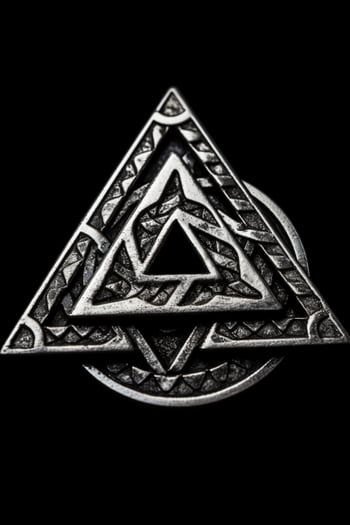
Wodenism is the dominant religion of Otan, with Woden, the All-Father, standing at its center. His name is known throughout much of the continent, and his worship has spread well beyond the cultures that first embraced him. Humans form the largest body of Wodenist worshippers, but the faith has also found a strong place among the Ælfes, Dweorges, Ungir, Aydahar, and other peoples. In many cultures, Wodenism is less a single uniform church than a broad religious tradition interpreted through local customs.
At the heart of Wodenism is the belief that existence is defined by the struggle to become something greater. The faith recognizes four great pillars: wisdom, strength, love, and sacrifice, represented respectively by Woden, Thor, Frigg, and Tiw. These ideals are not necessarily peaceful ones. Wisdom may demand suffering, strength may require violence, love may require devotion, and sacrifice may demand that something valuable be given away.
Woden himself is an unusually personal deity. He is remembered not merely as the creator of Otan, but as a wanderer, seeker of wisdom, father, teacher, and occasional companion to exceptional mortals. Wodenists believe that the gods may take an interest in those who demonstrate unusual courage, intellect, skill, or devotion. The gods are therefore not distant abstractions. They are powers that may, on rare occasions, sit at the same table as a mortal.
The faith is remarkably broad for a religion centered on a single All-Father. Different peoples emphasize different gods, customs, and interpretations. The Dweorges look especially toward Thor, the Aydahar toward Jormungandr, the Friggaelfes toward Frigg, and the Soltustikers toward Woden and Tiw. These variations have not destroyed Wodenism. If anything, they demonstrate its unusual ability to absorb local traditions without abandoning its central mythology.
Wodenist Tenets
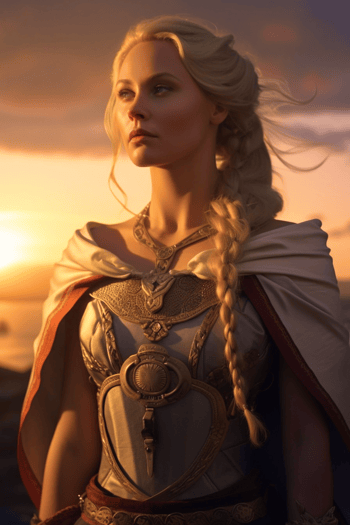
The four pillars of Wodenism are wisdom, strength, love, and sacrifice. Woden embodies wisdom, Thor strength, Frigg love, and Tiw sacrifice. Together they form the moral foundation of the faith. A complete life is not necessarily one devoted to a single virtue, but one capable of recognizing when each virtue is required.
The Book of Woden describes three great wills: the Will to Power, the Will to Perception, and the Will to Transcendence. Of these, Woden identifies the Will to Power as the greatest and as the defining aspect of humanoid existence. The teaching is not limited to humans; Woden's willingness to include other peoples within his divine order has helped make him especially popular among the Ælfes and other humanoid cultures.
Wodenism places considerable value on exceptional achievement. The gods are said to take an interest in mortals who distinguish themselves through physical prowess or cognitive genius, and such people may even find themselves dining in the company of a god. Yet divine intervention is deliberately limited. A god is unlikely to simply enter a battlefield and decide the outcome. More often, the mortal receives counsel, protection, recognition, or a message.
The faith therefore celebrates both aspiration and consequence. Courage can earn a place in Valhalla, while a quiet and uneventful life may lead instead to Helheim. Wodenism does not necessarily condemn the latter; it simply offers a rather pointed reminder that the gods have always considered an interesting life preferable to a safe one.
Wodenist Clergy
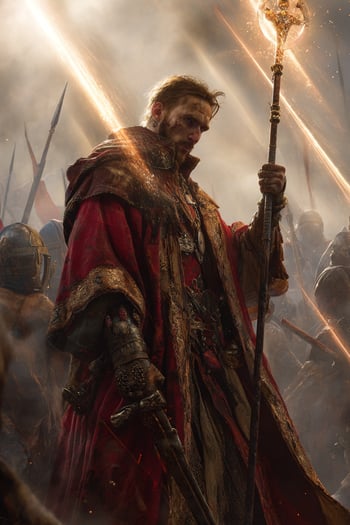
Wodenist clergy are divided broadly into two traditions: stationary and itinerant. Stationary clergy serve at chapters of the Temple of Woden, maintaining temples, conducting worship, preserving religious traditions, and tending to the needs of local communities. Itinerant clergy travel with armies, adventuring companies, and other groups, carrying the teachings of Woden beyond the walls of established temples.
The Temple of Woden is a loosely organized religious bureaucracy rather than a single tightly controlled hierarchy. Its temples are dedicated not only to Woden but to the wider Wodenist pantheon, and major cities throughout northern Otan commonly possess one. The Temple has also historically encouraged its clergy to spread Woden's teachings among other nations and peoples.
The Wodenist clergy is expected to be active rather than merely ceremonial. Among their more ambitious pursuits is the creation of the legendary Nine Herbs Charm, a magical or devotional work believed to grant additional power and veneration to both its creator and its invoker. Clergy may also maintain sanctuaries where Divines can replenish their spiritual power, making temples places of practical importance to travelling worshippers as well as centers of worship.
Not all Wodenist clergy agree about what the faith should become. The Sanctum of Fenris, the Chantry of Jormungandr, and the relatively new Fists of Woden all demonstrate how far interpretations of Wodenism can diverge. The Fists, in particular, believe the established Temple has become too permissive in allowing non-humans and other undesirables to worship, while other Wodenist traditions have embraced the religion's broad appeal.
Creation
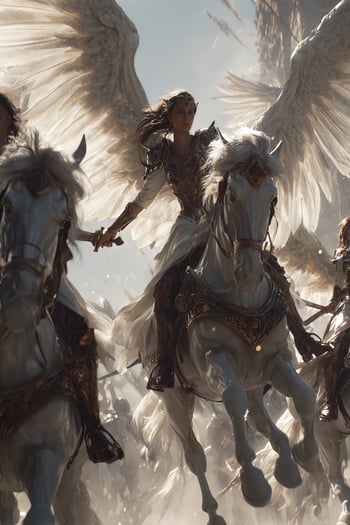
Wodenist creation begins with Ymir, a primordial being who became embroiled in a dispute with Woden. Woden slew Ymir and used the giant's body to construct Otan. The oceans were formed from Ymir's blood, the mountains from his bones, the trees from his hair, and the rest of the physical world from his remains.
The races of Otan were likewise created from Ymir's substance. Humans, Aelfes, Dweorges, Grendel, and the other peoples were given life from combinations of his flesh and blood, or from the earth and sea that Woden fashioned from him. The world is therefore not merely something Woden built; it is, quite literally, the remains of a primordial being.
This story has acquired an unusual degree of attention from Sophists and members of the Wodenist clergy. The primordial Ymir is sometimes conflated with Ylem, the mysterious primordial substance known to contain the raw potential from which power can be drawn. As more members of the clergy have become familiar with Ylem, the possibility that Ymir and Ylem are somehow connected has gained credibility within parts of the church.
For Wodenists, this leaves creation in an unusual position. The story may be a sacred metaphor, an ancient account of literal events, or both. The fact that Sophists and clergy alike continue to argue about it has done little to diminish its religious importance.
Wodenist Observances
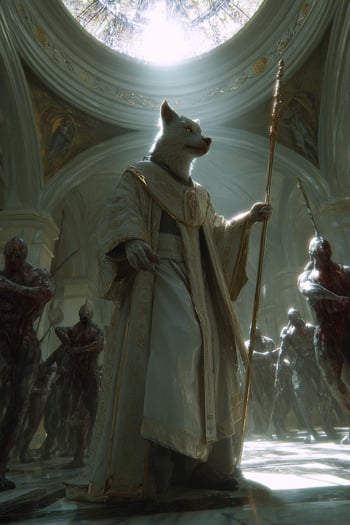
The most prominent Wodenist observance is the Night of the Wild Hunt, held on the 30th of Jeltoskan, the final day of the ordinary Otan calendar. On this night Woden and his divine entourage are said to ride out upon the Wild Hunt. The event marks the beginning of Holy Week, the religious period separating autumn from winter.
Holy Week is observed from the 1st through the 6th, with the sixth day occurring only during the calendar's leap year. The sixth day, known as the Sixth of Sixth, is considered particularly auspicious. While many religions of Otan maintain their own customs during Holy Week, very few ignore the week entirely, and the sixth day has acquired continent-wide religious significance.
The Wodenist celebration is also known as Yule. The first night begins with the Wild Hunt and is followed by twelve days of celebration in traditions that extend the observance beyond the formal Holy Week. Feasting, family, friendship, celebration, and the expectation of abundance are common themes.
Among the Soltustikers, the observance is especially dramatic. The Night of the Wild Hunt begins a period of winter feasting in which the people deliberately display the full bounty of their nation despite the cold and barren season. In the north, celebrating abundance in the middle of winter is less a contradiction than a declaration of defiance.
Wodenist Pantheon
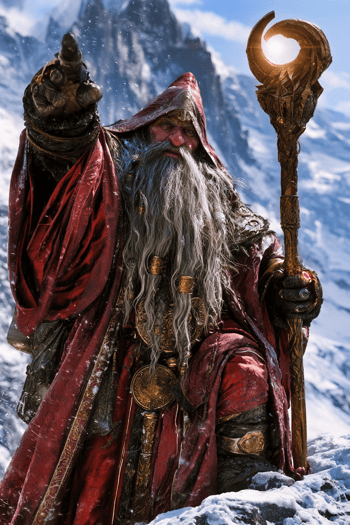
Wodenist theology divides divine beings into four broad roles: the Creator, the Intercessors, the Messengers, and the Destroyer. This division is not a simple ranking of gods. It describes the different ways the divine interacts with the mortal world.
Wodenist Foklore
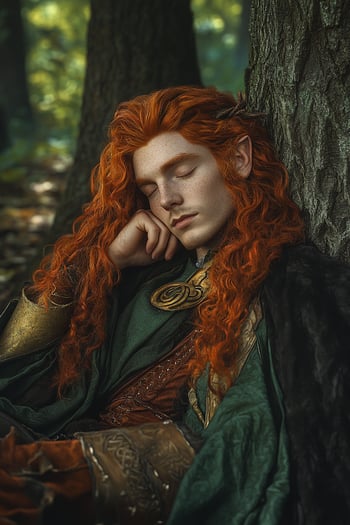
Wodenist folklore is filled with stories of gods and mortals meeting under ordinary circumstances. Woden himself is frequently imagined as an elder traveller, appearing in humble form while seeking wisdom or testing those he encounters. The stories reinforce the idea that greatness may be hidden beneath an unremarkable appearance, and that the gods may be watching when mortals least expect it.
The gods are also said to reward exceptional people with their personal attention. A warrior, poet, craftsman, or thinker who achieves something remarkable may find a god sharing a meal at the same table. Such encounters are rare, and direct divine intervention in ordinary human affairs is rarer still.
Death provides another major body of folklore. Brave warriors may be selected by Valkyries for Valhalla, where the dead feast, fight, drink, celebrate, and repeat the cycle without end. Others pass into Helheim, where life continues in a strangely familiar fashion. A farmer may still raise pigs, a laborer may still perform daily chores, and a person who lived an uneventful life may discover that the afterlife has provided exactly what they earned: more uneventful life.
The stories of Ragnarok provide perhaps the greatest collection of Wodenist folklore. The coming battle, the deaths of the gods, the destruction of Otan, and the world's eventual renewal have inspired generations of songs, poems, stories, prophecies, and scholarly arguments. Local cultures have added their own versions, making Ragnarok one of the few Wodenist stories that belongs equally to the entire continent and to nobody completely.
Writings & Artefacts
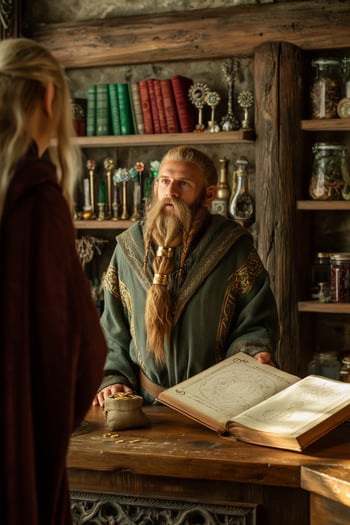
The most important Wodenist religious text is the Book of Woden. It is said to have been written by Woden himself, or by someone claiming to speak in his voice. The book describes the principal tenets of Wodenism, including the three wills, and recounts the gods of the pantheon through stories and verse.
The Book of Woden is therefore both scripture and mythology. It provides theological instruction while also preserving stories about the gods, their relationships with mortals, and the principles by which Wodenists are expected to understand existence. Its discussion of the Will to Power, Will to Perception, and Will to Transcendence is particularly important to Wodenist philosophy.
Another famous religious artefact is the Nine Herbs Charm. Wodenist priests have sought to create the legendary charm since the beginning of recorded religious tradition. It is said to grant additional power and veneration to both the person who creates it and the person who invokes it, and searching for its true form is a continuing concern among the clergy.
Other objects hold religious significance without necessarily being universal relics. Prayer beads may be used by Divines to maintain their power while travelling, while established sanctuaries provide places where divine practitioners can fully replenish themselves. The distinction between sacred object, practical religious tool, and legendary artefact is therefore not always a clean one in Wodenist practice.
| Copyright © 2021-2026 by Robyn Blaber and Will to Power Games. All rights reserved. Content on this website may not be reproduced without written permission of the copyright owner. |
