Ontustik
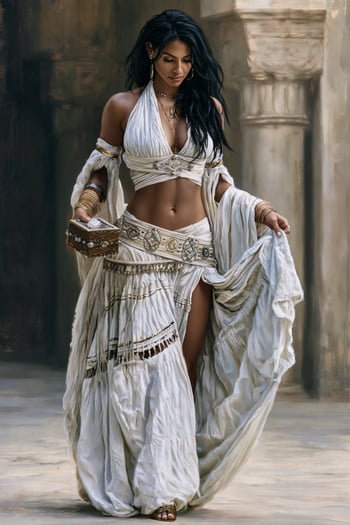
| General Information | |
|---|---|
| Capital | Anar |
| Culture | Ontustiker |
| Government | |
| Government Type | Caliphate |
| Demographics | |
| Total Pop | 4,846,334 |
| Urban Pop | 316,531 |
| Rural Pop | 4,529,803 |
| Settlements | 22 |
| Geography & Economy | |
| Area | 141,016 sq. Gorom |
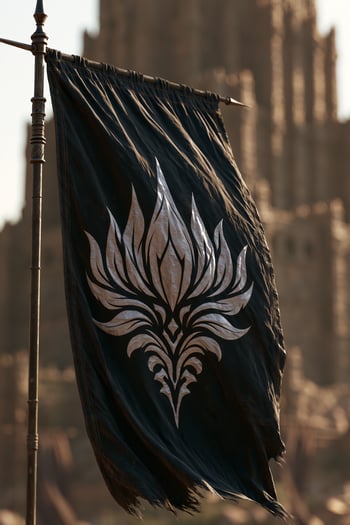
The Caliphate of Ontustik is a realm of striking visual and cultural dichotomies, where the stark, unforgiving expanse of the southeastern desert is abruptly broken by ribbon-like, verdant riverbeds and sprawling, fertile lake basins. This dramatic geography has naturally forged a society of dual mastery. Ontustikers are at once highly sophisticated agriculturalists who manipulate every drop of water at the river’s edge and peerless survivalists capable of reading the shifting sands and enduring the deepest, most arid wastes of the continent.
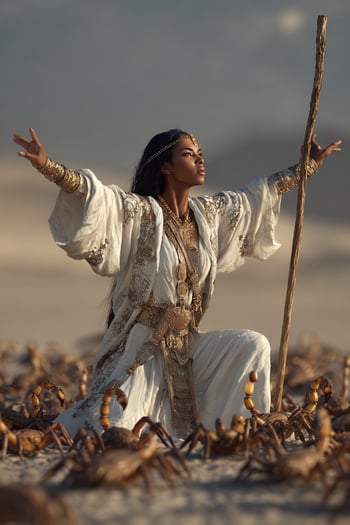
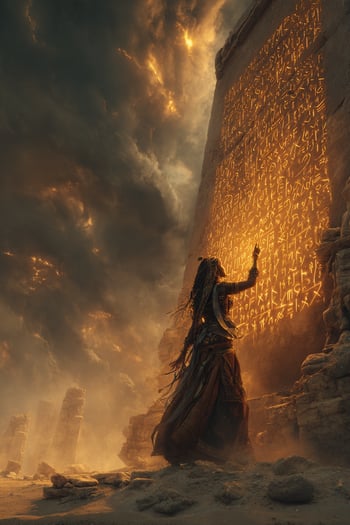
Central to the identity of every Ontustiker is a profound, omnipresent devotion to Aspan, the god of the sky, and the broader Aspanist pantheon. This spiritual fervor is physically stamped across the landscape; every single settlement, from the smallest oasis outpost to the grandest trade hub, features a massive, towering ziggurat dedicated to the sky deities. These monumental terraced structures serve as the literal and figurative hearts of Ontustiker communities, dominating the skyline and drawing the eyes of the faithful upward toward Aspan’s domain.
The temporal and spiritual architecture of the Caliphate is governed by the Flowers of Aspan, a highly organized, matriarchal religious order. The tenets of Aspanism taught by this sisterhood are far from abstract theology; they function as a practical blueprint for survival and prosperity, meticulously guiding the population through the minutiae of daily life, law, and resource management. This divine hierarchy culminates in the coastal capital city of Anar, where the supreme divine leader, the Ninth Lotus of Aspan, reigns over the nation with absolute, unquestioned spiritual authority.
Population
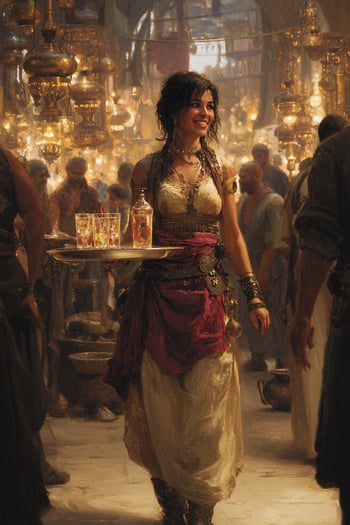
With a total population approaching 5 million souls, the primary and most vital occupation within the Caliphate is simply engineering how to feed the nation. The environment is a constant adversary, plagued by scarce precipitation and violent, sweeping sandstorms. To survive, the population relies entirely on the life-giving rivers that flow downward from the northern highlands. These precious liquid arteries are exploited to their absolute physical limits, heavily diverted into intricate irrigation networks that transform dry silt into bursting fields and anchor the realm's permanent settlements.
While the deep desert wastes harbor sparse game for skilled hunters, the rivers and coastal waters serve as the primary beds of life. Ontustik is a proudly maritime nation with an ancient, deeply entrenched fishing tradition. By pulling a massive portion of their daily sustenance from the southern seas, they alleviate the strain on their arid topsoil and maintain a robust, healthy populace.
Demographically, the Caliphate is remarkably homogeneous, with the population being almost entirely composed of native Ontustikers. The few cosmopolitan exceptions are found within the major urban centers and port cities. These enclaves are typically populated by Karazalikers who have migrated south to adopt the Aspanist faith eagerly, curious Aydahar seeking a human society entirely untouched by the influence of Dragons, and wandering Kuulik merchants who reside in the larger parishes exclusively to manage and secure lucrative trade routes.
Culture
Ontustiker culture is fundamentally shaped by the constant interplay between their rigorous environment and their unique religious philosophy. The Aspanist faith contains a fascinating internal contradiction: on one hand, the gods are viewed as supreme, cosmic architects, yet on the other, humans are strictly commanded to assume full, active responsibility for their own destinies. This manifests in a pragmatic, resilient mindset; in a single breath, an Ontustiker might stoically proclaim an event to be the absolute will of Aspan, and in the very next breath, roll up their sleeves and aggressively set to work correcting the problem.
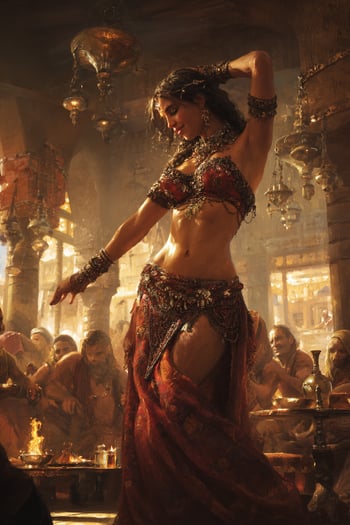
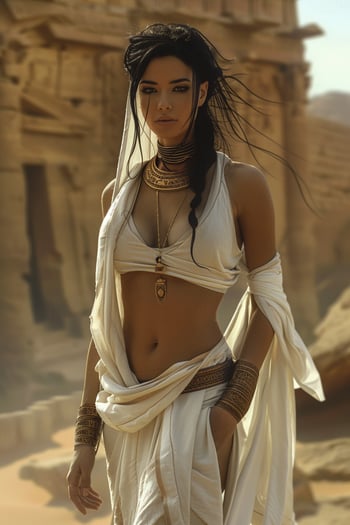
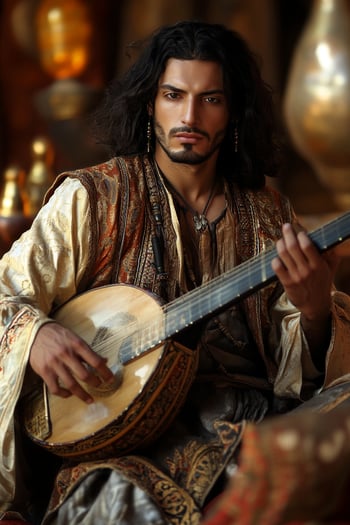
This environmental duality splits the cultural lifestyle down the middle: they are masters of the soil and masters of the sand. The deep refinement of their civilization is reflected in their entertainment, which possesses an inherent, heavy depth of tradition. Their complex musical compositions, vibrant costumes, poetic forms, and mesmerizing belly dancers, whose fluid motions and incredible abdominal control inspire hypnotic performances, carry a gravity that makes them feel older than the gods themselves. Remarkably, in the mere 260 years since the Great Erasure, the Ontustikers have developed a staggering degree of localized cultural diversity, compressed into a timeframe that would normally take other civilizations millennia to achieve.
During the celebratory Holy Week and designated days of rest, religious devotions give way to grand feasts and lively festivals. The standard fare at these gatherings is dominated by Qozi, a beloved dish of richly spiced roasted lamb served over rice and piled high with chopped nuts and raisins. This is washed down with Ayran, a refreshing beverage of fermented goat's milk, water, salt, and mint, kept as chilled as the oppressive desert heat will allow, or potent glasses of Aragh Sagi, a fiery spirit distilled from raisins. These feasts are accompanied by fierce athletic contests of strength, archery, and camel-manship, though the absolute pinnacle of Ontustiker sporting prestige is their peerless tradition of falconry.
Politics
The Caliphate of Ontustik is structured as a centralized, matriarchal theocracy led by the supreme ruler, the Lotus of Aspan, currently the Ninth of her hereditary line. Administratively, the nation is divided into exactly eight distinct regions known as "parishes," a political layout that exists independently of any natural geographical boundaries. The absolute center of power is located within the coastal Anar Parish, home to the capital city of Anar.
The Lotus ensures continuity of rule by establishing a localized, spiritual mirroring of her government in each territory. Each parish is governed by a regional matriarch named after a specific flower. For example, the Karakat Parish is currently overseen by the Fourteenth Rose of Karakat, whose eventual successor will step into the mantle as the Fifteenth Rose. While all parishes adhere strictly to the core tenets of Aspanism, each regional Flower is granted the autonomy to introduce slight legal and cultural variations based on her personal wisdom and wishes.
Within this political ecosystem, the management of the massive ziggurats and core theological doctrines remains exclusively the domain of the women of the Caliphate. However, state, municipal, and practical survival affairs are notably egalitarian. Men’s voices are highly respected and actively integrated into crucial secular infrastructure, holding dominant and influential roles in matters of national defense, foreign trade, large-scale agriculture, and advanced aquaculture.
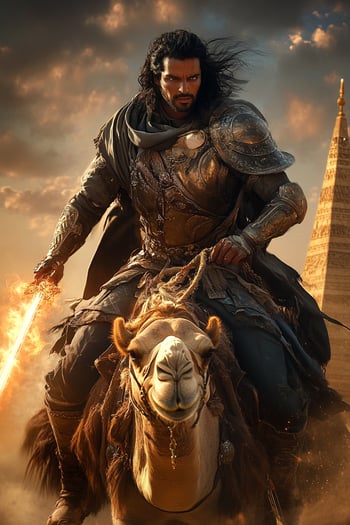
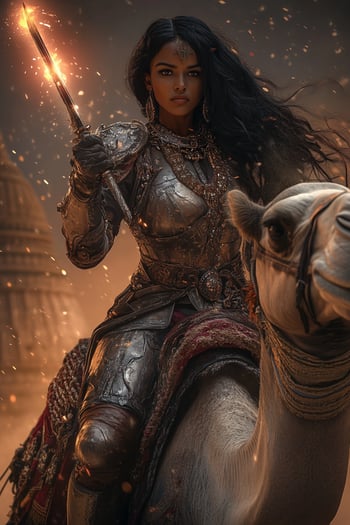
Though historically non-expansionist, the Caliphate maintains a highly funded, standing professional military. This martial vigilance was cemented during the historic Grendel War, when Ontustik was drawn into brief, tense border skirmishes with the Aydahar dragonfolk. The Aydahar, highly suspicious of the southern humans, sent heavy forces to the frontier to preemptively crush any move of solidarity from the Caliphate. The sheer terror of witnessing Dragons massing on their immediate borders reshaped Ontustiker geopolitical policy overnight, ensuring that military funding has remained a top budgetary priority ever since.
Economy
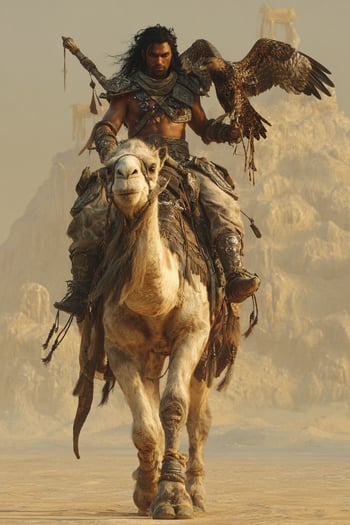
The economic engine of Ontustik operates on a system of profound religious volunteerism rather than coercive taxation. The citizenry willingly tithes a standard portion of their weekly income directly to the ziggurats of the Caliphate, completely eliminating the need for state tax collectors. This staggering, unforced generosity has made the Caliphate one of the wealthiest organizations on Otan. Rather than hoarding this bounty, the religious order aggressively reinvests it into societal engineering: funding massive public works, constructing infrastructure, and offering low-interest loans to citizens purchasing real estate, acquiring livestock, or establishing new agricultural initiatives.
The Caliphate’s vast merchant caravans and trade fleets maintain a highly favorable balance of trade across Otan. They are net exporters of rich aromatics, unique spices, and exquisitely woven fine textiles, all of which command premium luxury prices and are considered highly exotic in foreign courts. Conversely, due to their arid, tree-starved geography and lack of deep surface mines, they are perennially desperate for raw materials. They heavily import industrial metals from the Dweorgen of the Quarrylands and structural timber from the heavily forested Tsardom of Ortalyk to keep their great ziggurats and naval ships under constant construction.
Geography
Ontustik is a massive sovereign territory encompassing over 140,000 square Gorom, averaging roughly 400 Gorom from border to border, a distance that demands a grueling 20-day trek to traverse on foot. The Caliphate’s borders are naturally framed by the Karazalik Matriarchy to the west, the sprawling woodlands and steps of Ortalyk to the north, and the draconic Confederation of Altinqor to the east. To the absolute southeast, a short, rugged stretch of territory meets the Garis Nation; due to the inhospitable terrain, there are almost no established crossings and virtually zero cultural or economic interaction between the Ontustikers and the canine Garis.
Aside from the artificially irrigated riverbeds, lush lake basins, and a few small, protected forests clinging to the southern coastlines, the interior geography consists entirely of severe, wind-swept arid desert. As one travels northward, these flat, blinding sands give way to rolling hills, which quickly escalate into the jagged, imposing mountain ranges that form a massive natural wall separating the Caliphate from Ortalyk. The eight political parishes are entirely artificial constructs, lacking any natural geographic markers to divide them; instead, each parish is defined by its capital city, its prominent ziggurat, and the secondary oasis settlements clustered around it.
History
The modern history of the Ontustikers began in 1 IM, when they awoke from the cataclysm of the Great Erasure to find their massive stone ziggurats already completely constructed and towering over the empty sands. This striking physical evidence allowed them to rapidly reconstruct their societal hierarchy; the clear supremacy of the religious leaders, discovered wearing gilded, ceremonial costumes atop the highest terraces of the ziggurats, was accepted by the waking population without question. As individuals began to slowly rediscover their professional Archetypes, it was these divinely dressed women who demonstrated the strongest link to the heavens, providing the first critical answers to survival in the new world.
To the persistent frustration of successive generations of Flowers, however, the gods have granted them immaculate divine guidance on how to govern and restore the Caliphate, but not a single iota of information regarding their pre-Erasure history. The sky deities, including Tun and Suu, have remained completely silent on the matter to this day, leaving the era before 1 IM a total cipher.
The 260-year history of the Caliphate has been remarkably stable, broken by very few internal upheavals. In the last decade, they attempted to answer the call to arms to assist the northern human alliance in the Grendel War, but due to the massive distances of the desert, their armies were too slow to mobilize, and the conflict ended abruptly before their forces could arrive at the front.
The most significant historical event occurred roughly a century into their history, when a massive cache of ancient religious relics was discovered, traditionally believed to have been delivered directly by the god Tun during a brief period when he walked Otan in fleshly form. Joy quickly turned to obsession when the Divines realized the cache was severely incomplete, with many of the holiest artifacts clearly missing from the vault.
For the past 160 years, an alliance of Ontustiker Divines, Sophists, and elite Hunters has been searching Otan for these missing pieces, unable to determine if Tun scattered them intentionally as a test of faith, or if ancient thieves looted the hoard. Today, the Caliphate continues to deploy significant wealth and covert agents across the length of Otan, dedicated entirely to recovering these lost pieces of their divine puzzle.
Subregions of Ontustik
Ak Parish
Capital: Ak
Population: 576,053
Area (sq. Gorom).: 12,268
Anar Parish
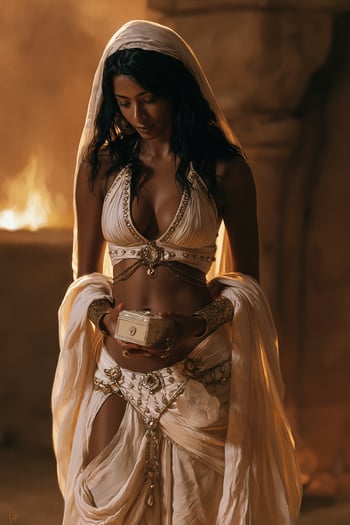
Capital: Anar
Population: 419,260
Area (sq. Gorom).: 10,548
Godjidek Parish
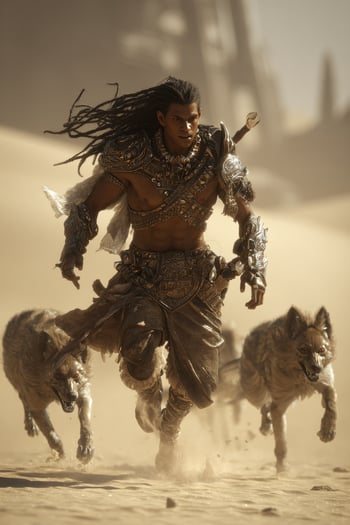
Capital: Godjidek
Population: 202,362
Area (sq. Gorom).: 3,436
Ontustik Parish
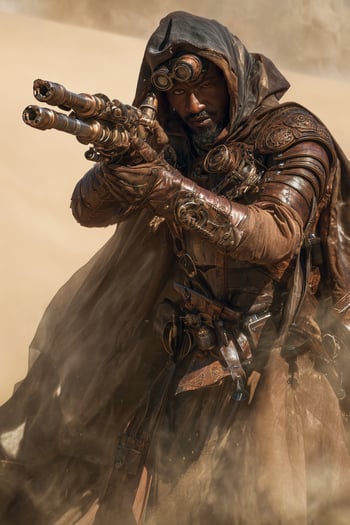
Capital: Karakat
Population: 861,419
Area (sq. Gorom).: 18,348
Kumarlik Parish
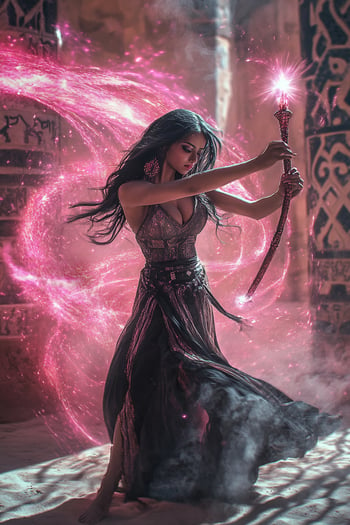
Capital: Kumarlik
Population: 769,595
Area (sq. Gorom).: 37,460
Mukjidek Parish
Capital: Mukjidek
Population: 279,872
Area (sq. Gorom).: 25,140
Sie Parish
Capital: Sie
Population: 791,004
Area (sq. Gorom).: 12,100
Tankray Parish
Capital: Tankray
Population: 946,769
Area (sq. Gorom).: 21,716
| Copyright © 2021-2026 by Robyn Blaber and Will to Power Games. All rights reserved. Content on this website may not be reproduced without written permission of the copyright owner. |
