Xigis
| General Information | |
|---|---|
| Capital | Asiltas |
| Culture | Xigis Turgindar |
| Government | |
| Government Type | Empire |
| Demographics | |
| Total Pop | 2,730,228 |
| Urban Pop | 137,613 |
| Rural Pop | 2,592,615 |
| Settlements | 18 |
| Geography & Economy | |
| Area | 45,968 sq. Gorom |
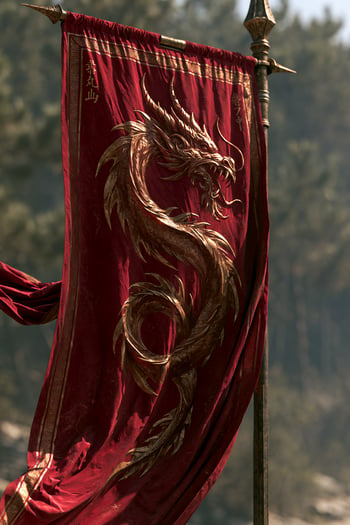
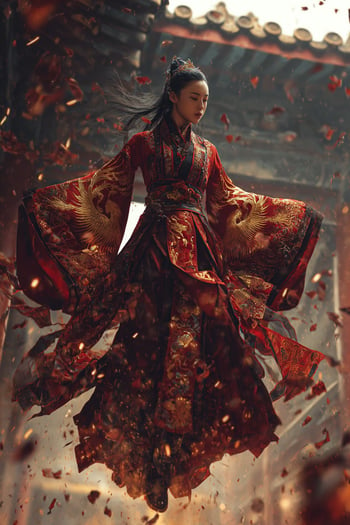
There is no greater enigma on the face of Otan than the Xigis Empire. These people, steeped in tradition, are the continent's leaders in understanding the workings of the universe. They shun relations with outsiders, yet command the second most active merchant navy on the continent. They have had no wars, yet produce many of the world's finest warriors, and for that matter, the finest weapons of war. Everything is an enigma in this country steeped in tradition; traditions which every Xigis Turgundar is convinced are older than the gods, older than the entire world.
Indeed, the paradoxical nature of the Xigis is most apparent in how they balance intense isolationism with a bustling mercantile presence. While their borders remain tightly guarded against foreign trespassers, their grand merchant vessels, second only to the fleets of the Kuulik Trade Company, are a common sight in distant ports. This maritime success is not driven by a desire to mingle with outsiders, but rather by an absolute commitment to the acquisition of raw materials, ensuring that their domestic craftsmen never lack the premium resources required to maintain their unmatched standards of production.
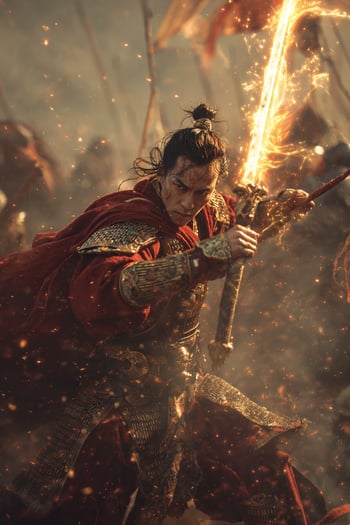
Perhaps the most startling contradiction lies in their martial philosophy. The Xigis Empire has enjoyed centuries of domestic peace, free from the ravages of civil war or foreign invasion. Yet, the imperial military and the weapons they carry are legendary. To a Xigis Turgindar, the mastery of a weapon is not merely a preparation for violence, but the ultimate expression of craft, discipline, and tradition. Their warriors train with a quiet, meditative intensity, treating the martial arts as a physical philosophy rather than a call to conquest.
Population
The Xigis Empire is one of the more densely populated nations on Otan, housing approximately 2.7 million inhabitants within the continent's sixth-smallest territory. The Xigis Turgindar are a people with a distinct physical presence, yet they exhibit a broad range of skin tones that reflect the diverse geography of the eastern territories. Their hair is their most consistent physical feature, almost universally appearing in shades ranging from deep, dark brown to a lustrous, midnight black. While most possess dark eyes, rare and striking variations occur throughout the population; it is not uncommon to encounter individuals with piercing green, hazel, or even rare, golden-yellow eyes, which are often interpreted by the Sophists as a mark of a particularly potent ancestral "echo".
At the heart of the population's identity is an almost religious reverence for fine craftsmanship. Every Xigis Turgindar, from the humblest weaver to the most prestigious metalworker, views their labor as a sacred duty to perfect the material world. This dedication has elevated their everyday products into masterpieces of utility and beauty, highly sought after across Otan. It is this very obsession with quality that has driven the Xigis Turgundar to establish some of the most extensive and reliable trade routes in the world, stretching from the eastern coastlines of Xigis to the furthest western markets, ensuring that their influence is felt even in lands they have never conquered, rivaling the reach of the juggernaut Kuulik Trade Company.
Despite their packed cities, Xigis society is remarkably orderly. The high density of their urban spaces, such as the grand capital of Asiltas, necessitates a highly structured way of living. This tight-knit existence is made possible by the deeply ingrained social rules that govern how citizens interact, move, and work alongside one another. The crowded streets are not chaotic but rather operate like a complex, beautifully choreographed dance in which every individual understands their place, role, and duty to the community.
Culture
The Xigis Empire is steeped in tradition, so much so that a breach of tradition is treated with the disdain reserved for criminality. A breach of etiquette in the presence of the Emperor could result in severe punishment. Thanks to the Ministry of Sophistry, established by the first Emperor, there are many scrolls, ranging from grand imperial decrees to novelty-sized pocket guides, that teach the nation’s traditions to everyone from the gentry to the commoners and children.
Sophists and the public at large agree that Xigis Turgindar traditions do not feel like mere 260-year-old customs, but rather carry the weight of centuries or even millennia. These traditions cover several varied aspects of daily life, from how to greet a stranger to how to hold eating sticks or pour a cup of tea. Naturally, foreigners visiting the Xigis Empire are treated with a degree of derision because they are seen to have few, if any, manners, with many unable to eat a single morsel of food without using their bare hands.
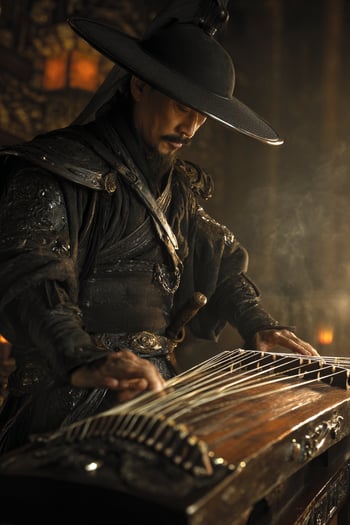
Artistic expression in the Empire is highly celebrated but strictly regulated. The Xigis Turgindar boast many great artists, writers, musicians, and sculptors, yet there is a strong, mandatory undercurrent behind all the arts to document the creative process. Improvisation left undocumented defies tradition and is viewed as meaningless noise. New melodies, poems, and even jokes must be meticulously scribed and cataloged to have any recognized merit. This obsession with documentation led to the second great innovation of the Xigis Empire: the library. The literary and academic output of the Sophists and citizens has always been immense, and to this day, the Imperial Seat in the capital city of Asiltas is home to the greatest library on Otan, the envy of the world, and most notably, the Tzar of Ortalyk.
When they are not practicing their crafts or memorizing scrolls of etiquette, the common folk of Xigis enjoy lively holiday celebrations. Feasting is central to these events, featuring standard fare such as savory flatbreads, seasoned seafood, noodles, rice, and dishes heavily spiced with small red peppers. To wash down these meals, they enjoy rice wine and many varieties of tea. During these festivals, they enthusiastically engage in team sports that involve hitting or kicking a feather-filled ball into a net, a game played by active young men and women but enjoyed by spectators of all ages.
The Xigis Turgundar are also deeply fascinated by gambling. Games of chance capture their imagination like nothing else; whether a game is played with rolled bones, numbered tiles, or painted cards, any system utilizing random probability easily finds a welcoming home in the Empire. This love for gaming is not seen as a vice, but rather as an intellectual fascination with predicting the unpredictable, a playful, structured attempt to find order in the chaotic elements of the universe.
Politics
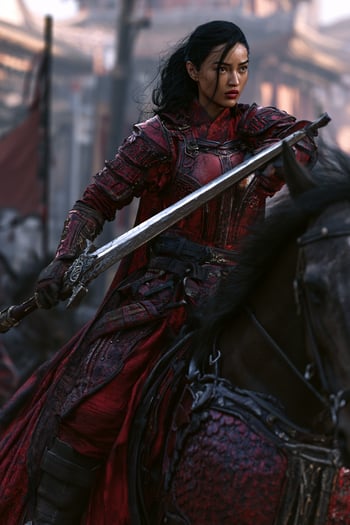
The Xigis Empire operates under a strict feudal structure. Taxes flow upward from local settlements to the provincial governors, and ultimately to the Imperial Throne, while protection, military security, and administrative oversight flow downward. In the two and a half centuries of the Xigis Dynasty's rule, there have been a couple of misguided coup attempts, but remarkably little internal strife. A single poisoning is rarely enough to bring down such a stable dynasty; the current Emperor maintains a robust court with more than a few potential heirs, and the absolute majority of the nation's powerful noble families strongly sworn to his leadership. While the seat of power is traditionally occupied by a male heir, this is a matter of custom rather than codified law, and the Empire has successfully been ruled by two Empresses since the year 1 IM.
Where the Xigis Empire deviates significantly from traditional, rigid feudal systems is in the influence of its Sophist class. Although the pillars of the empire are indeed powerful noble families, the nation is not entirely oligarchic. Working closely with his Sophists, the Emperor injects a strong vein of meritocracy into the government. The Emperor is highly prone to appointing exceptionally talented individuals to important and powerful state positions, even if those individuals are commoners by birth. Naturally, such low-born appointments involve a swift, rigorous education on how to navigate the deadly politics of the Imperial Court without being immediately poisoned; some learn the ways of the court quickly, while others do not survive their rise.
If the Xigis Empire occupied any other territory on Otan, their wealth and organizational genius might drive them to push aggressively at the borders of their neighbors, but their pervasive xenophobia keeps them contained. They harbor a deep-seated distrust of the draconic Aydahar to their west and the canine Garis to the south. The Garis, in turn, are highly hostile and will turn back any imperial travelers, often with lethal force. Minor but incredibly violent border clashes between the Xigis military and the Garis Border Patrol are a regular occurrence along the southern frontier. These skirmishes are notoriously brutal and absolute; casualties are always total, with one side surviving the encounter, but never both.
Economy
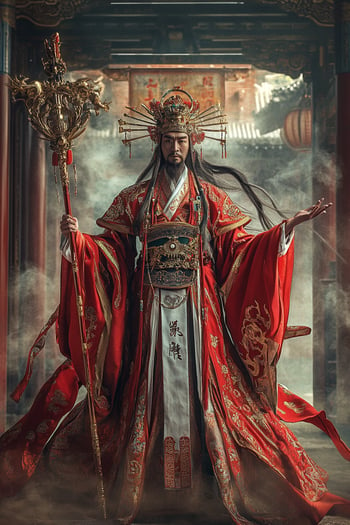
The economy of Xigis is defined by its role as a premier net exporter of high-quality finished goods. Because of their cultural obsession with perfection, Xigis' paper products, specialized inks, bound books, fine fabrics (particularly their legendary silk), vibrantly colored dyes, and fully completed garments easily top the export lists of the continent. Conversely, because their flat geography lacks major mountain ranges, their primary imports are heavy metals and quarried stone, which they eagerly trade to fuel their domestic construction and weaponsmithing.
To facilitate this massive trade while shielding the domestic populace from the "boorish" manners of foreigners, who frequently flout Xigis etiquette to their own peril, the Empire designated the southern island of Balikawlaw as a Free Trade Zone. Here, foreign merchants are permitted to sail into Xigis waters without paying a tariff. All business is conducted on the island with a specialized class of Xigis merchants who are culturally desensitized to foreign behavior. Any goods successfully traded on Balikawlaw and brought back to the mainland under a Xigis flag are charged only a bare minimum in fees and taxes. This genius diplomatic and economic compromise was ushered in during the year 124 IM by the sixth emperor, the brilliant Aqildi Xigis.
Beyond Balikawlaw, the Empire maintains its own merchant fleet. A selection of heavily guarded imperial and private Xigis vessels brave the open seas to travel abroad, specifically targeting Dweorgen, Kuulik, and Araldar ports. These destinations are favored because they yield the most lucrative trade agreements, allowing the Xigis to exchange their delicate silks and scholarly books for the heavy metals, stone, and raw materials required to keep the empire's heart beating.
Geography

Xigis is a coastal southeastern nation nestled along the temperate waters of the Great Sea. It features a relatively flat, low-lying landscape heavily blanketed by dense deciduous forests. The climate is subtropical and remarkably stable, varying the least of any nation in Otan. The warm ocean currents keep the coastline at a more or less constant temperature year-round, with the thermometer dropping only a few mild degrees during the peak winter months.
The nation is quite compact, weighing in as the sixth smallest country on Otan, spanning approximately 46 thousand square Gorom. While the vast majority of its borders are defined by the ocean, Xigis is bordered to the south by the hostile Garis Nation and to the southwest by the Aydahar confederation of Altinqor.
A narrow, 60 Gorom-wide land corridor sits to their northwest, acting as a land bridge that connects the Empire directly to the Tsardom of Ortalyk. This northern border is barely a two-day ride from Ortalyk's capital of Kala Astanals. The ancient trade route traveling through this heavily fortified corridor is perhaps the single busiest and most lucrative overland trade route on the continent, acting as the primary artery through which Xigis' books, silks, and paper flow into the northern markets.
History
When the peoples of Otan awoke from the devastating event known as the Great Erasure, the Xigis were perhaps the quickest of all Strains to resume their normal routines. While other nations woke in absolute chaos, unable to distinguish a king from a peasant, the Xigis experienced no such confusion. No investigations were required to separate the Emperor from the head cook; the people of Xigis woke with an uncanny, instinctual understanding of their exact roles, social standing, and societal duties. Taking advantage of this immediate societal cohesion, the Xigis Empire was already contemplating outward expansion in less than a decade.
The Empire's immediate neighbors did not look like easy prey. To the west lay the formidable dragons and dragon-folk of Altinqor, whose devastating fire and magic could easily leave Xigis in ruins should a war go awry. To the south were the canine monstrosities of the Garis, savage beast-men best kept at as great a distance as possible. Fearful that some terrible ancient plague had mutated these outsiders into beasts and dragons, the early Xigis chose isolation over conquest. Showing great foresight, the first Emperor bypassed these terrifying neighbors entirely, sending a peaceful diplomatic embassy north to the Tsardom of Ortalyk rather than mobilizing an army. Though these northerners were not of the Xigis Turgundar substrain, they were unmistakably human and represented vital potential allies.
To make sense of the strange world around them, the early Emperors established a prestigious noble class of Sophists. These scholars were charged with a monumental task: to study the nature of the Great Erasure, to discover how humans acquire their unique magical Powers, to systematically catalog these abilities, and to find a holistic meaning behind the mysterious cosmic force they called the "Will to Power". The Tzar of Ortalyk quickly noted the intellectual triumphs of this system and appointed his own state Sophists to mirror the Xigis. Embassies and scholarly texts were eagerly exchanged between Asiltas and Kala Astanals, and Sophistry fast became one of the most celebrated and highly esteemed professions on Otan, a status it proudly maintains to this day in the year 261 IM.
Subregions of Xigis
| Copyright © 2021-2026 by Robyn Blaber and Will to Power Games. All rights reserved. Content on this website may not be reproduced without written permission of the copyright owner. |
