Karazalik
| General Information | |
|---|---|
| Capital | Kenzhe |
| Culture | Karazalikar |
| Government | |
| Government Type | Matriarchy |
| Demographics | |
| Total Pop | 2,753,573 |
| Urban Pop | 203,543 |
| Rural Pop | 2,550,030 |
| Settlements | 10 |
| Geography & Economy | |
| Area | 153,360 sq. Gorom |
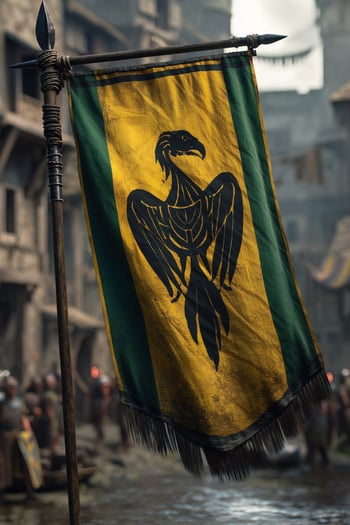
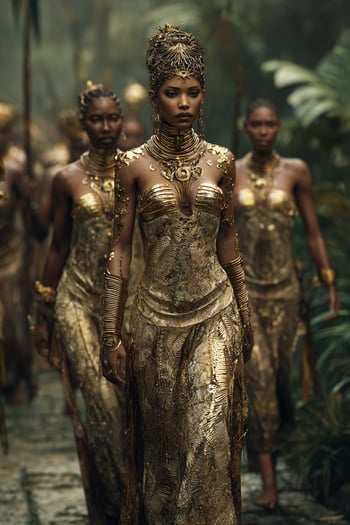
Of all the creatures who walk the lands of Otan, perhaps the most gentle to their surroundings are the Karazalikar. Their worldview stems from their Baksist religion, which holds that the entire world is a child born to the goddess Ana and must be nurtured and raised as such. The result is a people who ease their way through nature, rather than confront it, living in harmony with the environment around them.
The Karazalikar believe that women are born whole, but men are born without a soul. To collect the shards of their soul and enable them to traverse to the next life, men must perform acts of public duty and seek self-building education. They receive their education from elders who exchange care for knowledge. Whereas in other countries the youth can be a danger to society and the elderly a burden, Karazalik solves both problems at once through this single religious tenet.
As men regain their souls and complete their education, they may step into leadership roles. Of course, they defer to the Baksist Mothers who serve as the final arbiters on state and regional-level decisions, but these relationships are almost always collaborative partnerships as opposed to points of political tension.
With a large territory and three diverse ecological biomes, there is no shortage of adventure and exploration for a Karazalikar to spend their whole life in Karazalik. The people of Karazalik are gifted with the same proportion of Archetypal individuals as other nations, supported by skilled craftsmanship, abundant resources, and an unhurried culture that takes time to get things right. Their Archetypal schools rank among the best, and their diverse wildlife provides Archetypes with materials that can be found nowhere else.
Population
The Karazalik nation is home to 2.7 million Karazalikars, most of whom live close to the southern edge of the country near the sea. There are small numbers of former Ontustickers that bolster their population—those who left Ontustik for personal, religious, or political reasons—while similar numbers of Karazalikers migrate to Ontustik. Karazalik is also host to a few thousand Kuulik, whose corporate empire runs through the commercial arteries of the nation.
The nation has seen steady growth throughout its 260-year history, and its total population is estimated to reach 3 million in the next few years. This steady growth is driven by a responsible government, a lack of deprivation, and very little chance of major war, which together have led to a moderate birth rate. With no existential threats on the horizon, there is no societal imperative to produce overwhelming numbers of children.
Food imports from Kiskentay, alongside the nation's rich coastal fisheries, keep the population comfortably supplied. Because of this stable agricultural and marine trade, nearly 10% of the population is able to live in urban areas like Kenzhe and Bayan.
Culture
By nearly any metric, Karazalikar culture is deeply mystical. The never-ending quest of male inhabitants to complete their souls runs through almost every daily activity. The Karazalikars seek education in all things, believing that a learning soul is a growing soul. In matters of sport, for instance, where other cultures are happy to joust or race horses around an oval track, the Karazalikars design complex mounted team sports. They create intricate battle lines and strive to meet tactical objectives before their opposing line can respond. They do not limit themselves to horses either, bringing fleet-footed impala, sturdy water buffalo, and terrifying war elephants onto the field for their scrums. These sports blend physical, tactical, and strategic elements that engage the entire soul rather than merely exercising the body.
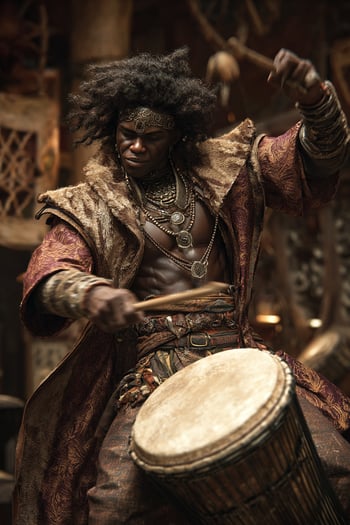
Karazalikar music is perhaps the most unique in Otan, particularly among Humans. Their rhythms possess a level of complexity that even their own Sophists have difficulty describing, let alone notating. Rhythms that invoke the fear and excitement of battle or denote sadness and loss are deeply layered; they can be described through similes, feelings, and lived experiences, but rarely through simple patterns on paper. Entwined with this music are hypnotizing dances and melodies, often seen in the mesmerizing performance art of their local belly dancers, whose fluid motions demand incredible muscular control from head to toe.
Another cultural touchstone is their penchant for board games, particularly pit-and-pebble games played by village elders who often cohabitate in communal groups. The elders play against one another but also use these games as vital teaching tools for young men. This instruction is not a mere cliché, but a practical requirement for young men seeking to reclaim the lost shards of their souls, as those who neglect this journey cannot pass into the next life. Beyond board game challenges, elders instruct the youth in political philosophy, Baksist storytelling, and practical skills such as hunting, fishing, and building.
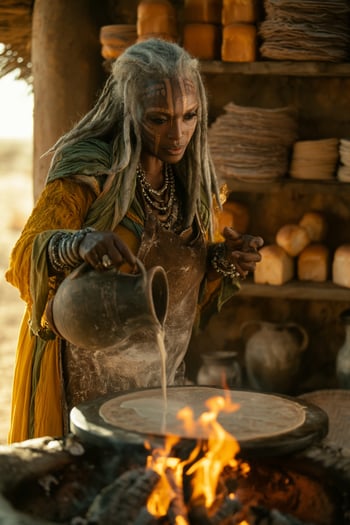
Women generally receive their formal education through the clergy, though the more curious among them frequently sit in on lectures or play board games alongside the men. These women are often those who have manifested an Archetype; though born with complete souls, they understand that even a whole soul can be enriched through lifelong learning. When dining together, the Karazalikars enjoy pleasantly spiced dishes of minced meat and vegetables served atop large round flatbreads known as injera. Eating is a communal, tactile experience in which diners tear off pieces of bread to scoop up their food, accompanied by regional drinks such as palm wine, sorghum beer, or Sadahi.
Politics
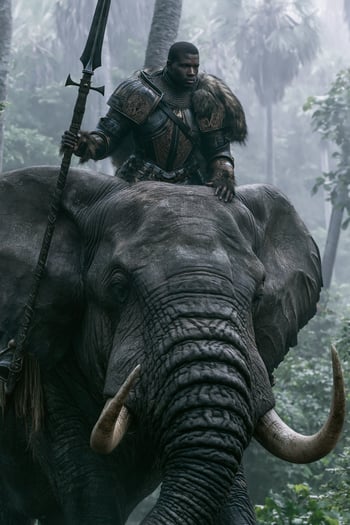
The Queen Mother serves as the ranking member of both the Karazalikar government and the Baksist faith. Queen Mothers are typically succeeded by their own daughters or by Princess Mothers selected from other regions of the country. These Princess Mothers form a governing council that chooses the next Queen Mother through structured prayer and augury.
The Queen Mother remains primarily engaged in matters of the church and the spiritual education of women. While she holds supreme executive power over the nation, she generally exercises this authority in the form of a veto. The practical duties of governance, such as planning roads, organizing national defenses, and managing trade, are handled by state Ministers.
Ministers not directly appointed by the Queen Mother usually achieve their positions through an unwritten custom of slipping into a role without raising offense. If an office is contested, it is frequently shared; if it cannot be shared amicably, it may be settled by a game or contest, with the Queen Mother stepping in only as a last resort.
Karazalik harbors no territorial ambitions beyond its borders, nor does it maintain a massive naval fleet. However, foreign powers should take note that while the Karazalikars appear peaceful and unhurried, virtually every male in the nation is a trained battle tactician thanks to a lifetime of strategic board games and complex mounted sports. Should their homeland ever be threatened, they would prove to be formidable foes in large-scale warfare.
Economy
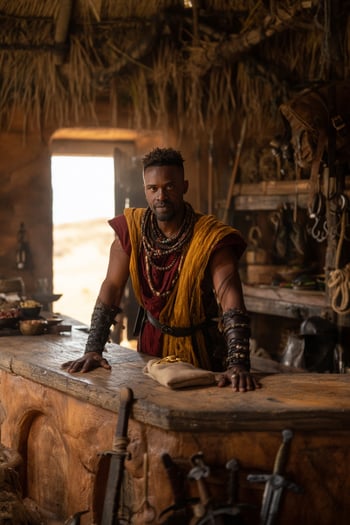
For the most part, Karazalik operates as a model of economic self-sufficiency, though its thriving community of Archetypes creates specific trade demands. Wielding great magical or physical power brings a constant need for specialized gems and raw metals. Because the Dweorgen capital of Diamond City is located only a short journey away across the western border, trade expeditions to acquire fresh materials from the underground mines are a staple for Karazalikar practitioners.
The Dweorges are happy to trade for commodities they prefer not to produce themselves. They eagerly import standard trade goods such as textiles, surplus grain, spices, and regional wines from the Karazalikar merchants. In return, the Dweorges provide refined metals and gems, while remaining keen to inspect any unusual ores extracted from the Karazalikar side of the mountains. These trade junkets double as academic exchanges, where Karazalikar and Dweorgen diggers spend hours discussing mineralogy, craftsmanship, and mining techniques.
Geography
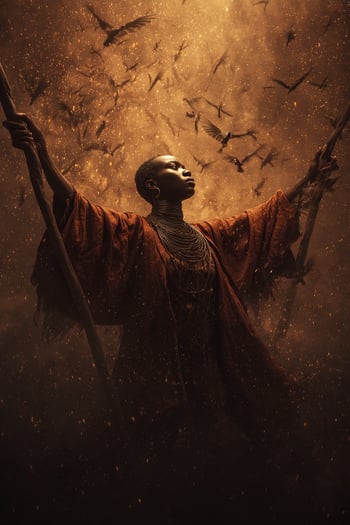
Karazalik spans an oblong territory of 153,360 square Gorom. Its southern coastline features a remarkably large peninsula and an offshore island settled long before the Great Erasure. To the west, the nation shares a long, mountainous border with the Dweorgen Quarrylands.
To the east lies a similarly long border with the Caliphate of Ontustik, though no major mountain range separates the two human realms. To the northeast, Karazalik shares a brief, rugged border with Ortalyk, while its northwestern frontier borders neutral, ice-covered mountain territory.
The Karazalikars maintain a few mining operations in their northern and western mountains to supply their local smiths and Tinkers with iron and stone. The northern expanse directly below these mountains is arid scrubland, home to large game and dangerous predators.
The heartland of the nation consists of rolling, fertile grasslands and dense deciduous forests, making it ideal for agriculture and livestock. Further south toward the coast, the terrain shifts into dense rainforest, which remains largely wild and impassable to all but experienced woodsmen capable of clearing path through the thick jungle vegetation.
History
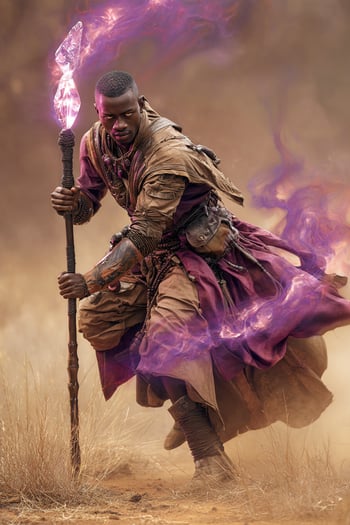
The Karazalikars experienced a smoother transition through the upheaval of the Great Erasure than most other civilizations on Otan. Apart from learning to manage and work with penned animals that had grown unusually large, their system of governance and social order simply followed the path of least resistance. To the Karazalikar mind, their faith and traditions allowed them to adapt without slipping into chaos.
Surrounded by relatively peaceful neighbors, Karazalik has enjoyed a remarkably tranquil 260-year history. Its diplomatic relations with the Dweorges to the west and Ontustik to the east have remained stable, allowing its unhurried culture to flourish without the constant burden of standing armies or territorial defense.
The only major military alarm in recent memory occurred during the Garis War, when the mobilization of the Aydahar raised fears of a potential threat along Ontustik’s borders. Karazalik began mobilizing its own tactical forces to support its eastern neighbors, but the conflict concluded before any Karazalikar regiments were deployed, preserving the nation's long era of unbroken peace.
Subregions of Karazalik
| Copyright © 2021-2026 by Robyn Blaber and Will to Power Games. All rights reserved. Content on this website may not be reproduced without written permission of the copyright owner. |
