Kiskentay
| General Information | |
|---|---|
| Capital | Kiskentay City |
| Culture | Sweardaelf |
| Government | |
| Government Type | Kingdom |
| Demographics | |
| Total Pop | 3,463,862 |
| Urban Pop | 310,631 |
| Rural Pop | 3,153,231 |
| Settlements | 19 |
| Geography & Economy | |
| Area | 112,956 sq. Gorom |
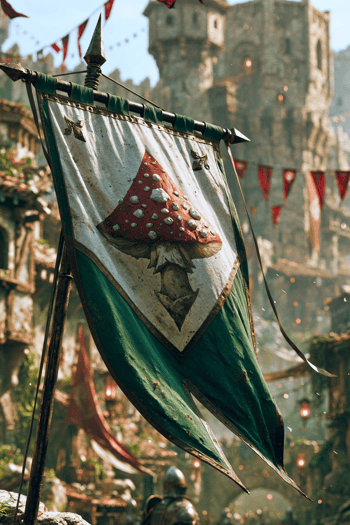
The nation of Kiskentay features some of the most pristine and fertile farmland on the continent of Otan. It stands as a nation wrapped in an overriding historical puzzle. While the diminutive Ungir and Kuulik were historically relegated to small and barren lands in their prehistory, the diminutive Sweardaelfes awoke to an expansive territory blessed with fertile soils, extensive hardwood forests, and a mild sub-tropical climate. Sophists of the world frequently ponder how the Sweardaelfes managed to hold and secure such desirable territory against larger, more aggressive strains.
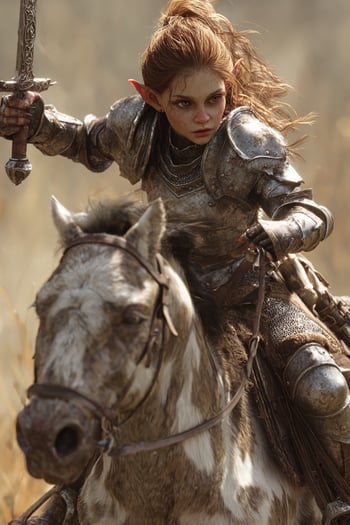
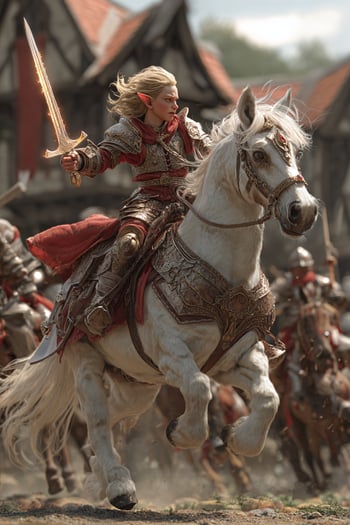
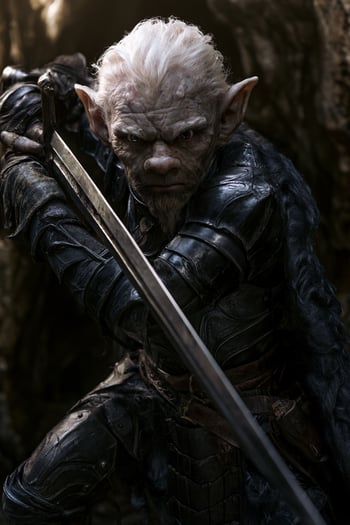
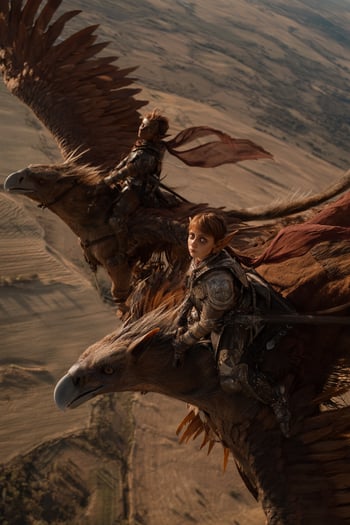
While pre-history remains clouded, the most compelling answer lies in their speed and military organization. Sweardaelf Knights are remarkably lighter than those of other strains and naturally favor flying mounts; specifically majestic hippogryphs. Capable of mounting rapid border responses within hours rather than days, their aerial cavaliers consistently answer emerging threats with overwhelming rapidity. Their longevity is further aided by a relative lack of immediate expansionist neighbors. The Dweorges along their eastern border possess no expansionist ambitions, and while the Free States to the north present a persistent nuisance in the form of wild raiders, they lack a unified standing army. Consequently, their primary existential threat has historically been the naval force of the Araldikar.
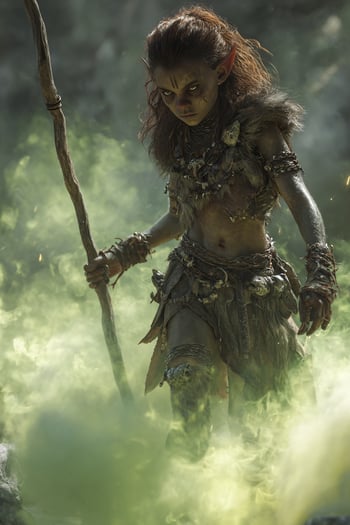
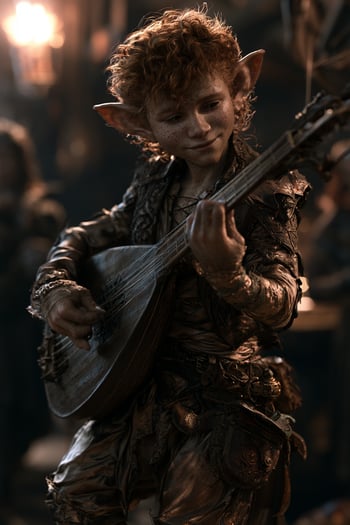
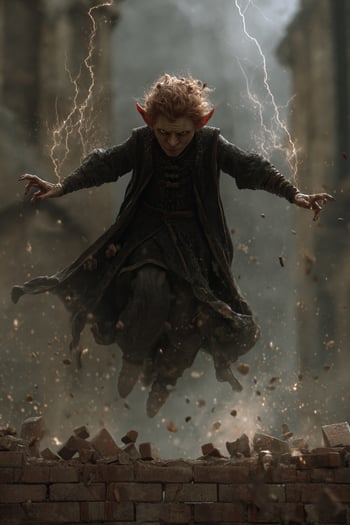
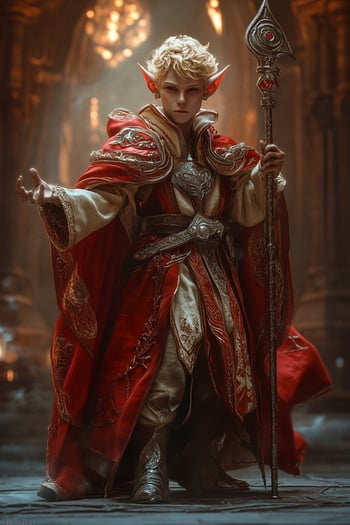
The Sweardaelfes themselves are divided into four distinct substrains, each occupying a specific biome and socio-economic role within Kiskentay. The Borgainaelfes are consummate, high-tech urbanites who are loath to leave their grand cities except in dire defense of the realm. The Geardaelfes are the dedicated stewards of the land, competing directly with the human Batis as the most efficient and productive agriculturalists on Otan. Indeed, travelers passing through the open countryside often leave assuming the Geardaelfes are the nation's sole inhabitants.
Deep within the eastern tropical biomes reside the Fyrthaelfes, who keep largely to themselves within the thick rainforest canopy. Finally, hidden far beneath the surface, dwell the reclusive Scraefaelfes, many of whom spend their entire lives without ever seeing the sun. Bound together by their shared diminutive stature, these four distinct groups have successfully forged Kiskentay into a vibrant and remarkably prosperous kingdom.
Population
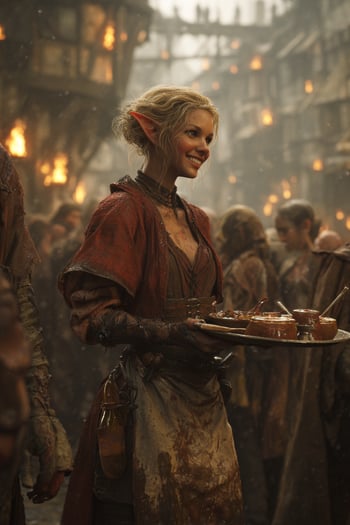
Kiskentay’s census is split between the officially recorded population and a vast, uncounted shadow demographic. The known population numbers roughly 3.5 million souls, largely concentrated in the agricultural heartlands and urban centers. However, Sophists estimate that the unknown population easily exceeds another million. The Fyrthaelfes of the eastern rainforests perpetually splinter into tiny, nomadic sub-tribes, making accurate record-keeping impossible; even the central rainforest settlements lose track of their distant offshoots.
Beneath the earth, the subterranean Scraefaelfes are known to the central monarchy only through the armed guards stationed at their deep cavern entry points. Reclusive to a fault, the Scraefaelfes do not entertain uninvited guests, and their total numbers remain purely speculative.
Foreign strains are a rare sight within Kiskentay's borders, and those who do visit find the infrastructure uniquely unwelcoming. Foreign humans, most notably Araldikar traders, occasionally reside in the coastal capital of Kiskentay City, though their numbers never truly grow. Architectural scales and daily amenities in Sweardaelf settlements are built for little folk; while manageable for a visiting Dweorg or Ungir, they prove near-comical and exceedingly cramped for human-sized visitors.
The Kuulik, despite being of a similar physical stature, are actively discouraged from settling. The Sweardaelfes view the pervasive Kuulik Trade Company as an existential threat to honest local commerce, prompting strict regulations that keep Kuulik merchants from establishing permanent urban footholds. Most other strains traveling this far west ultimately bypass the kingdom entirely, gravitating toward the Free States and leaving Kiskentay almost exclusively to the Sweardaelfes.
Culture

One of the most intriguing cultural phenomena in Kiskentay, particularly among the urban Borgainaelfes, is the ancient concept of "borrowerism". To a Borgainaelf, borrowing an item rarely involves asking for permission beforehand. Scholars believe this quirk is a genetic vestige from their ancient hunter-gatherer ancestors, who accumulated goods not out of immediate necessity, but as a collective hedge against future hardship.
To the average Borgainaelf, the physical world is simply a vast, shared repository of useful items waiting for a more appreciative temporary custodian. Visitors returning to their berthed ships in a Kiskentay port are often shocked to find their vessels stripped down to the gunwales, with anything portable carted off by eager local "borrowers". Adding to a visitor's confusion is the local etiquette: demanding the immediate return of a borrowed item is considered a severe social transgression, tantamount to a crime.
The other Sweardaelf substrains do not share this urban quirk and view borrowerism with considerable suspicion. Geardaelf farmers and Fyrthaelf hunters tend to avoid Borgainaelf cities, treating them much like plague centers. Rural traders prefer to conduct business in temporary shantytowns erected along the roads leading into the cities, keeping a watchful eye on their draft animals and wares. Prominent "No Borrowing" signs line these outskirts, a notice that often utterly bewilders foreign travelers. While the Geardaelfes and Fyrthaelfes reject borrowerism, traditional thieves still exist among them, meaning personal property must be closely guarded regardless of where one travels.
Cultural celebrations across Kiskentay vary widely based on environment and substrain. In the vast rural provinces, festivals revolve around agrarian harvests and the bounty of the soil. Prestigious prizes are awarded for exceptional livestock, champion crops, and masterfully prepared homegrown feasts. In contrast, the metropolitan Borgainaelfes celebrate intellectual and technical achievements, holding grand exhibitions for steam-tech engineering, advancements in Aetherial power research, library expansions, and gourmet culinary arts.
Among the reclusive Fyrthaelfes and Scraefaelfes, public gatherings are undocumented, though both groups share a deep veneration for rare botanical cultivation. Indeed, the subterranean Scraefaelfes frequently harvest exotic cave vegetation and Rock Wasp vellum, distilling naturally sweet wasp venom into potent, herbal spirits that are highly prized by surface alchemists and traders across Otan.
Politics
"Borrow a little, and they see you're OK; borrow a LOT, and they make you king". Political power in Kiskentay operates as a unique plutocracy, where success is measured not merely by accumulated wealth, but by the sheer volume of wealth one has successfully borrowed. The urban Borgainaelfes act as the de facto political masters of the realm, having effectively borrowed the responsibility of national governance.
Monarchical succession follows no fixed timeline or hereditary line. Instead, ambitious political figures amass massive, monarchical hoards through systemic borrowing. When an aspirant can demonstrably prove that their borrowed hoard exceeds that of the sitting monarch, the realm's leaders convene in a formal state ceremony. In a fitting twist of tradition, the plutocrat "borrows" the royal crown and ascends the throne. Ironically, the crown itself is the single object in the kingdom that cannot be borrowed without strict ceremonial authorization.
Outside the metropolitan capitals, countryside politics are far more pragmatic and decentralized. Geardaelf agriculturalists organize into powerful consortiums and regional guilds to protect farmsteads and negotiate export pricing. These agrarian guilds operate with very little political fanfare, as rural leaders rarely seek personal power or grand titles. Guild appointments are viewed purely as a burden of public service, requiring significant administrative effort with very little personal enrichment in return.
Economy

The overarching economic system of Kiskentay is built upon a feudal framework, with tax revenues flowing upward through local authorities to the Crown. However, this flow becomes notoriously complex once it reaches the urban city-states of the Borgainaelfes. Tax collection is governed by intricate, labyrinthine laws dictating what assets can and cannot be legally "borrowed" during financial transfers. Over the centuries, many an unfortunate tax collector or merchant administrator has been ruined after falling foul of these legalities when attempting to move revenue to the capital.
At its core, Kiskentay is an agricultural powerhouse and a massive net exporter of food. If global shipping lanes were less perilous, Kiskentay’s vast grain fields and produce harvests could easily feed the entire continent. Their primary agricultural exports flow directly inland to the Dweorgen Quarrylands and north to the Free States. In return, the Sweardaelfes import raw metals, gems, and stone from their Dweorg neighbors. They also maintain active maritime trade with foreign merchants, enthusiastically purchasing exotic spices, rare magical reagents, and luxury fabrics from distant lands.
Geography
Kiskentay stands as the seventh-largest sovereign nation on Otan, encompassing 112,956 square Gorom and containing 19 major recognized settlements. The nation is organized into five main administrative provinces, Burge, Jartisi, Jurmitka, Kiskentay, and Tukim, alongside a sparsely populated frontier territory to the north. Well-maintained roads and navigable river networks link each provincial capital directly to the grand capital, Kiskentay City. Nestled within a sheltered inlet on the southern coastline, Kiskentay City serves as the political and economic heart of the realm, featuring advanced municipal engineering and extensive, state-of-the-art military and merchant shipyards.
The geography of Kiskentay shifts dramatically across its provinces. The northern expanse consists of sweeping, fertile grasslands that border the Free States. The central regions are heavily forested, transitioning from sprawling deciduous hardwood forests in the west to dense, tropical rainforests in the east. Along the eastern frontier toward the Quarrylands, the terrain rises into mineral-rich hills and low mountain ranges. The southern lands are a lush, highly productive mosaic of winding rivers, rich arable plains, and ancient woodlands, providing the foundation for the kingdom's agricultural dominance.
History
Following the catastrophic event known as the Great Erasure, the history of the Sweardaelfes was defined not by a melancholy search for forgotten origins, but by an immediate, highly pragmatic acquisition of surrounding resources. While other strains awoke mourning their lost ancient heritage, the Sweardaelfes displayed an instinctive, unabashed opportunism. They wasted no time lamenting the past; instead, they gathered every scrap of useful technology, land, and material available. This era of rapid resource gathering laid the cultural foundation for modern borrowerism, permanently shifting their societal views on property and ownership.
While Kiskentay has largely succeeded in avoiding major continental wars, its history has required constant vigilance. Early on, nomadic raiders from the Free States viewed the small-stature Sweardaelfes as easy prey. However, northern invaders quickly learned that the screech of an armored hippogryph descending from the clouds meant a swift defeat. To secure their inland borders, the kingdom established a highly responsive, permanent standing military centered around these aerial knightly orders.
With half of their sovereign borders facing open water, the Sweardaelfes were likewise forced to master the seas. By the second century IM, through elaborate engineering initiatives and clever ship design, they established a formidable navy to defend against Araldikar raiders. This defense fleet grew alongside an expansive merchant navy, ensuring that Kiskentay’s vital agricultural exports could be safely transported to ports across Otan.
Subregions of Kiskentay
Burge Province
Capital: Burge
Population: 903,682
Area (sq. Gorom).: 35,340
Jartisi Province

Capital: Jartisi
Population: 330,784
Area (sq. Gorom).: 5,244
Jurmitka Province
Capital: Jurmitka
Population: 612,769
Area (sq. Gorom).: 17,600
Kiskentay Province
Capital: Kiskentay
Population: 718,468
Area (sq. Gorom).: 15,928
Tukim Province

Capital: Tukim
Population: 608,346
Area (sq. Gorom).: 19,824
Kiskentay Territory
Capital: Unknown
Population: 289,813
Area (sq. Gorom).: 19,020
| Copyright © 2021-2026 by Robyn Blaber and Will to Power Games. All rights reserved. Content on this website may not be reproduced without written permission of the copyright owner. |
