Koke Aydahar
| Scientific Name | Homo Draconus Fulgus |
|---|---|
| Plural | Koke Aydahar |
| Possessive | Koke Aydahari |
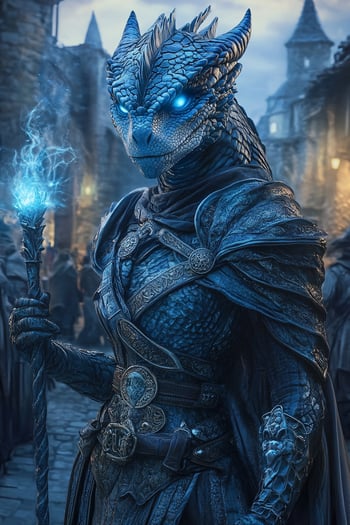
The Koke Aydahar (Homo Draconus Fulgur) are the vibrant inhabitants of the Koke Aydahar region, renowned for their deep affinity for the color blue and their ancestral connection to Lightning Dragons. Their scales exhibit a stunning spectrum of cerulean hues, ranging from a pale sky blue to a nearly black navy, often possessing a deceptive metallic luster despite containing no actual metal.
Within the hierarchy of Altinquor, the Koke are seen as dynamic and energetic, their temperaments often mirroring the sudden and powerful nature of the storms they associate with. This cultural obsession with their namesake color extends to every facet of their lives; their regional capital, Koke, is famously known as "The Blue City" due to the extensive use of blue pigments in its architecture and art.
Biologically, the Koke Aydahar carry the spark of their draconic progenitors, manifesting a natural propensity for creating or attracting electrical charges. This internal electrical capacitance allows them to generate significant shocks, a trait that, when properly developed and disciplined, grants them a formidable natural resistance to lightning and electrical damage.
Like their kin in other regions, their diet and lifestyle are adapted to support these high-energy biological functions. They are known to frequent city markets for standard ales and whiskeys, but their unique physiology allows them to safely consume local delicacies like the roasted Fissure Spider, fueling the metabolic cost of their bio-electrical abilities.
Physical Characteristics
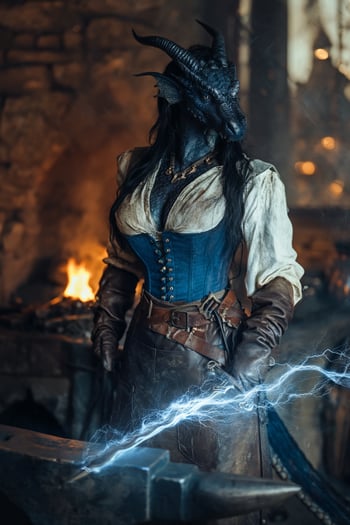
The Koke Aydahar bear the unmistakable physical marks of their Lightning Dragon ancestry. Their scales range from pale sky blue through brilliant cerulean to deep navy, sometimes carrying a metallic sheen despite containing no metal at all. Like other Aydahar, they grow scales in place of hair and almost always possess a tail, with rare individuals developing prehensile tails capable of providing balance or manipulating objects.
The defining feature of the Koke physiology is their relationship with electricity. Their bodies possess an internal electrical capacitance that allows them to create or attract electrical charges and discharge significant shocks. With training and discipline, this same adaptation can provide substantial resistance to lightning and electrical damage. The effect is not merely useful in combat; the Koke have incorporated their affinity for electricity into ordinary life, most famously through the charged blue beverage known as Chokar, which leaves a harmless static tingle on the lips and may even produce small sparks around the rim of the glass.
As with other Aydahar, wings are possible but uncommon, and possessing them does not automatically grant the ability to fly. Flight requires considerable training and patience. The Koke's electrical inheritance is therefore the defining expression of their draconic blood, rather than any single alteration to their physical form.
Koke Aydahar Culture
Koke society reflects the same restless energy associated with their Lightning Dragon heritage. They are dynamic and energetic, with a particular enthusiasm for blue that extends well beyond personal appearance. Their cities, clothing, buildings, artwork, and even their drinks reflect the color, while the Koke themselves otherwise participate in the ordinary occupations of Aydahar society. Koke merchants regularly travel the roads between Koke and neighboring regions, trading goods with their Kizil counterparts.
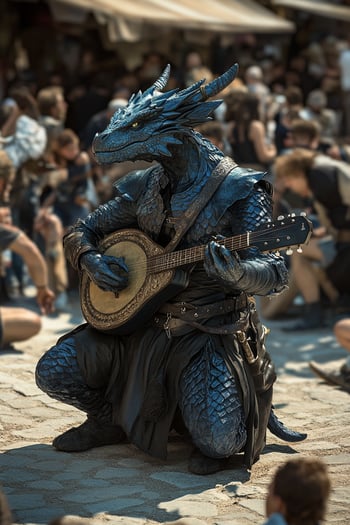
The Koke also have an unusually strong musical tradition. Their Bards are regarded as among the finest in the world, capable of using music to enrage a crowd, send it running, or simply leave an audience sitting on the floor wondering what just happened. Their connection to electricity makes Chokar a natural favorite, while the broader Aydahari appetite for insects and arachnids gives Koke cuisine a character that visitors may find more memorable than entirely comfortable. The seasonal migration of tarantulas is treated as an opportunity rather than an inconvenience: the Koke harvest them by the thousands, kill them with controlled electrical discharges, and turn them into pies, fried dishes, soups, and preserved food.
The harvest becomes a festival, with tarantula venom collected for distillation into Aracona, a potent spirit. Koke inns and taverns are built for their harsh environment, using straw insulation between walls to retain the cool air of the previous night while keeping out the relentless desert heat. Their religious life follows the wider Aydahari devotion to Jormungandr, but the Koke Chantry in particular is a spectacular expression of their love of blue, combining elaborate craftsmanship, dragon-scale patterns, lapis lazuli pillars, and enormous star sapphires into a monument that is as much artwork as temple.
Like all Aydahar, the Koke place duty to Dragons and respect for the bonds between Aydahar above ordinary concerns. They observe Senbi as a day of worship and avoid work, travel, and adventuring except where the needs of a Dragon require otherwise. Even the most energetic Koke therefore knows when to stop, although convincing one to stop talking about blue may be considerably harder.
Koke Aydahar Geography
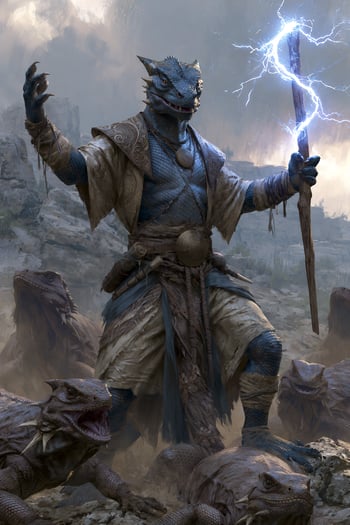
The Koke Aydahar inhabit the Koke Aydahar Region of Altinquor. Unlike the other major Aydahar substrains, whose preferred environments are more clearly defined, the Koke are officially described as having varied geographic preferences. In practice, however, accounts of their homeland describe an arid desert environment where immense blue cities rise from the sands. The seasonal weather is dramatic, with monsoonal storms arriving in early spring and late fall and filling the vast skies with spectacular displays of lightning.
At the center of the region stands Koke, the Blue City, a city unique to Otan in its almost obsessive use of blue. Every building incorporates the color in some fashion: some are entirely blue, while others are white with blue roofs or blue with thatched roofs. Its streets are meticulously planned, with major thoroughfares wide enough for an adult Dragon to walk comfortably through the city. The result is less a collection of buildings that happened to become a city and more a city deliberately designed from the beginning.
The landscape surrounding Koke also shapes its food and seasonal traditions. When the great tarantula migrations cross the desert, Koke hunters gather the creatures by the hundreds and thousands, harvesting both meat and venom. The result is one of the stranger examples of Koke practicality: a dangerous desert migration becomes a source of food, spirits, commerce, and celebration. Between these harvests and the storms that regularly illuminate the sky, the Koke homeland has little trouble reminding its inhabitants that it was built for Lightning Dragons.
| Copyright © 2021-2026 by Robyn Blaber and Will to Power Games. All rights reserved. Content on this website may not be reproduced without written permission of the copyright owner. |
