Soltustiker
| Scientific Name | Homo Sapiens |
|---|---|
| Plural | Soltustikers |
| Possessive | Soltustikter |
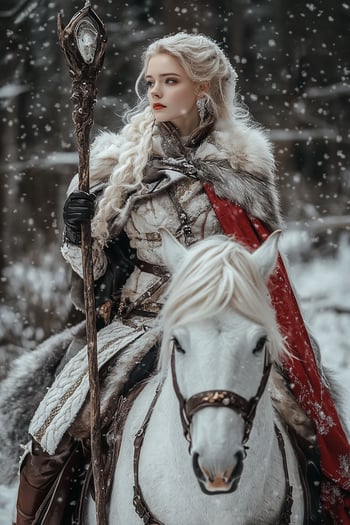
The Soltustikers are a people forged by the unrelenting frost of the northernmost reaches of Otan. Their national identity is inseparable from the frozen geography of Soltustik, a land eternally plunged into a sub-arctic climate. This environment has granted the Soltustikers a physiological edge; they possess a natural, preternatural resistance to the cold that allows them to thrive and operate in temperatures that would leave the other inhabitants of Otan stiffly frozen. Their architectural and sartorial skills are entirely dedicated to the preservation of heat, turning the act of survival into a sophisticated cultural art form.
Politically, Soltustiker society is structured as a rigid, traditionalist feudal hierarchy. While the system tends toward a patriarchal model in its historical roots, the modern division of labor is split pragmatically between the sexes. This is best exemplified by the current sovereign, Queen Kara Muz, who holds absolute authority over the realm. The nation is divided into distinct Baronies, governed by Barons or Baronesses who swear fealty to the Queen. These nobles, in turn, oversee a network of Governors responsible for individual settlements, ensuring that every citizen of the land is bound by a chain of homage that reaches directly to the throne.
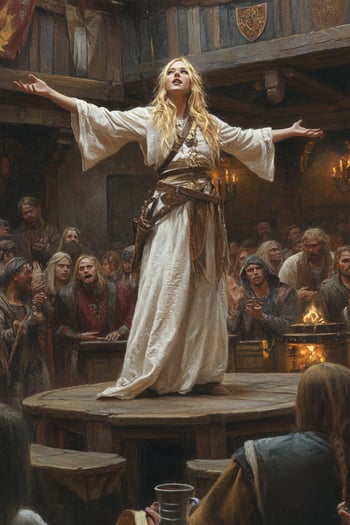
The spiritual life of the north is dominated by an unwavering, almost militant devotion to Wodenism. To a Soltustiker, there is no other pantheon worthy of acknowledgment, and Woden stands as the undisputed Primarch of all existence. This devotion permeates their daily speech to an obsessive degree; Soltustikers are known to invoke the name of Woden, or any of his nearly one thousand liturgical nicknames, in almost every other sentence. Their faith is not one of quiet contemplation, but of boisterous, constant recognition of the divine will in the face of the howling northern winds.
Physically, the northerners are adapted to their low-light environment, with skin tones ranging from a ruddy pinkish hue to a stark, porcelain white. While their hair can span the spectrum from flaxen blonde to a deep black, their eyes are most commonly found in shades of piercing blue or glacial green. Interestingly, the Soltustiker bloodline is more diverse than its isolation might suggest; due to their geographic proximity to the ancient Aelfwode, these northern communities produce a significantly higher number of Half-Aelfes than any other human subculture, blending the resilience of man with the ethereal echoes of the forest.
Physical Characteristics
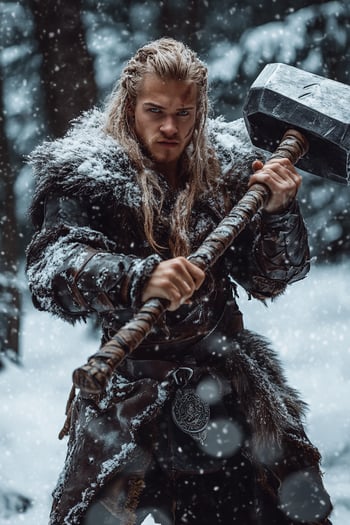
The Soltustikers are unmistakably northern humans, with physical traits shaped by the cold and limited light of their homeland. Their complexions range from ruddy pink to porcelain white, while their hair runs from flaxen blonde through brown to black. Blue and glacial green eyes are common, giving many Soltustikers an appropriately wintry appearance. The population is otherwise recognizably human, without a single unusual physical mutation defining the people as a whole.
Their most important adaptation is physiological rather than cosmetic. Soltustikers possess an exceptional resistance to cold, allowing them to function comfortably in conditions that can be dangerous to visitors from warmer lands. This advantage is reinforced by generations of practical knowledge about clothing, shelter, and the preservation of body heat. To a Soltustiker, heavy winter clothing and a properly built home are not luxuries. They are simply part of being alive.
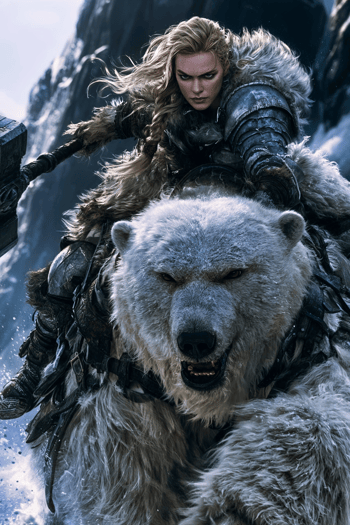
The northern environment has also encouraged an unusual relationship between people and animals. Soltustiker Knights have developed considerable skill in training creatures suited to their difficult terrain. Along the rocky northern coast, polar bears are used as mounts because horses cannot reliably navigate the deep snow and broken ground. Farther south, where conditions are less severe, warhorses remain the preferred mount.
Soltustiker Culture
The Soltustikers are unmistakably northern humans, with physical traits shaped by the cold and limited light of their homeland. Their complexions range from ruddy pink to porcelain white, while their hair runs from flaxen blonde through brown to black. Blue and glacial green eyes are common, giving many Soltustikers an appropriately wintry appearance. The population is otherwise recognizably human, without a single unusual physical mutation defining the people as a whole.
Their most important adaptation is physiological rather than cosmetic. Soltustikers possess an exceptional resistance to cold, allowing them to function comfortably in conditions that can be dangerous to visitors from warmer lands. This advantage is reinforced by generations of practical knowledge about clothing, shelter, and the preservation of body heat. To a Soltustiker, heavy winter clothing and a properly built home are not luxuries. They are simply part of being alive.
The northern environment has also encouraged an unusual relationship between people and animals. Soltustiker Knights have developed considerable skill in training creatures suited to their difficult terrain. Along the rocky northern coast, polar bears are used as mounts because horses cannot reliably navigate the deep snow and broken ground. Farther south, where conditions are less severe, warhorses remain the preferred mount.
Soltustiker Geography
Soltustik occupies the north-central reaches of Otan beneath a climate that dominates nearly every aspect of life. It is a rugged northern kingdom where winter can lock the land beneath heavy snow and make travel difficult for much of the year. The kingdom borders several of the continent's northern peoples, including the Grendel and the Aelfes, while its position also places it near the northern territories of the Tozakh. These borders have historically made defense a permanent concern.
The northern coast is particularly harsh. Its rocky, snowy terrain is difficult enough that ordinary cavalry cannot reliably patrol it, leading Soltustiker Knights to employ trained polar bears as mounts. Farther south, the land becomes more suitable for horses, and the traditional warhorse returns as the preferred companion of the Knights. The difference is practical rather than ceremonial: Soltustikers choose the animal that can actually survive the ground beneath its feet.
Settlements are organized into shires and governed through the feudal hierarchy of Barons, Baronesses, and Governors. The kingdom's architecture is consequently defensive as well as domestic, with strongholds and citadels playing a major role in its history. During the Grendel War, the Soltustiker fortifications proved exceptionally difficult to overcome; not a single citadel fell, despite sustained siege warfare. The Wall Lords' continued development of siege and anti-siege technology reflects the strategic importance of those defenses.
The population remains overwhelmingly Soltustiker, although the kingdom is not completely closed to outsiders. Kuulik traders travel its land routes, small Wodaelfen communities occupy strategic northern trade routes, and the end of the Grendel War has produced a cautious reopening of relations with former enemies. The Wodaelfes were instrumental in helping Soltustik survive the war, and Queen Kara's government ultimately joined them and the other signatories in the Concord of Kala Astanals. Today, the Grendel border remains tense, but it is a border rather than an active battlefield.
| Copyright © 2021-2026 by Robyn Blaber and Will to Power Games. All rights reserved. Content on this website may not be reproduced without written permission of the copyright owner. |
