Xigis Turgindar

| Scientific Name | Homo Sapiens |
|---|---|
| Plural | Xigis Turgindar |
| Possessive | Xigis Turgindari |
The Xigis Turgindar represent the easternmost reach of human civilization on Otan, inhabiting a realm where the boundary between the present and the ancient is perpetually blurred. Their society is defined by a dense, intricate web of traditions and social protocols that appear far older than the two hundred and sixty years allowed by the Great Erasure.
To an outsider, every interaction, from the pouring of a drink to the signing of a trade contract, is layered with ceremony and specific accoutrements that suggest a history stretching back into a lost antiquity. This commitment to ritual is rooted in a profound reverence for their ancestors, whom they believe look down from the Heavens to evaluate the honor, conduct, and diligence of their living descendants.
This spiritual focus on perfection manifests physically in their culture as a near-worship of quality craftsmanship. The Xigis Turgindar are the preeminent artisans of Otan, producing textiles, ceramics, and metalwork of such staggering detail that they are considered the gold standard for trade goods across the continent. Their pursuit of excellence is not merely an economic drive but a moral imperative; to create a flawed object is to disrespect the lineage that taught the craft.
As a result of their craftsmanship, the Xigis Turgindar have established the most extensive and reliable trade routes in the world, stretching from the eastern coastlines of Xigis to the furthest western markets, ensuring that their influence is felt even in lands they have never conquered. Their reach rivals even the juggernaut Kuulik Trade Company.
The people of Xigis Turgindar possess a distinct physical presence, though they exhibit a broad range of skin tones that speak to the diverse geography of the eastern territories. Their hair is their most consistent feature, almost universally appearing in shades ranging from deep, dark brown to a lustrous, midnight black. While most possess dark eyes, rare and striking variations occur throughout the population; it is not uncommon to encounter individuals with piercing green, hazel, or even rare, golden-yellow eyes, which are often interpreted by the Sophists as a mark of a particularly potent ancestral "echo."
Governed by a complex bureaucracy that prizes intellectual merit as much as ancestral standing, the Xigis Turgindar move through the world with a quiet, disciplined confidence. They do not shout their superiority like the Ortalykshilar; they simply demonstrate it through the unbreakable strength of their porcelain and the sharp precision of their administrative records. In the eyes of a Xigis Turgindar, the rest of Otan is merely catching up to a standard of civilization that they have already perfected, even if they cannot remember the era in which they first achieved it.
Physical Characteristics
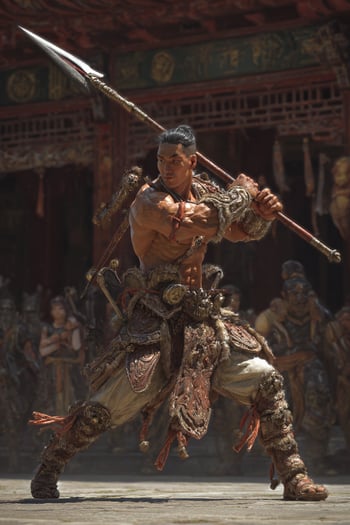
The Xigis Turgindar possess the ordinary human form, with no documented physical specialization separating them sharply from the other human subcultures of Otan. Their most consistent physical trait is their hair, which is almost universally found in shades ranging from deep brown to midnight black. Their skin tones vary considerably, reflecting the diverse geography of the eastern territories, while most possess dark eyes. Green, hazel, and the particularly striking golden-yellow eyes occur occasionally and are sometimes interpreted by Xigis Sophists as evidence of a powerful ancestral “echo.”
As humans, the Xigis Turgindar remain physically unremarkable when compared with the more specialized strains of Otan. Their distinction lies less in their bodies than in what they do with them. The Xigis place extraordinary value on discipline, precision, and mastery, and this philosophy extends even to physical pursuits. Their warriors train with quiet intensity, treating mastery of weapons and martial arts as an expression of craft and tradition rather than simply preparation for war.
The Xigis reputation for physical mastery is therefore somewhat misleading. They have produced warriors of legendary ability despite enjoying centuries of peace, but the culture does not regard martial skill as evidence of a naturally superior body. It is another craft to be studied, practiced, documented, and perfected. Even the supposedly humble Brute has a place in this system, with some Xigis Brutes entrusted with the defense of the Emperor himself.
Xigis Turgindar Culture
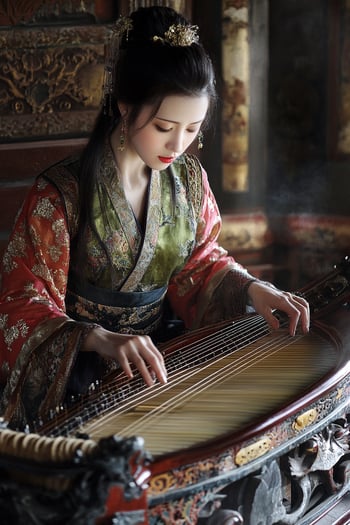
Xigis Turgindar society is built around tradition to an almost absurd degree. Etiquette governs everything from greeting a stranger to holding eating sticks and pouring tea, and violating established custom can be treated with a severity normally reserved for criminal behavior. The Ministry of Sophistry has preserved these traditions in an enormous body of written instruction, producing everything from imperial decrees to pocket-sized etiquette guides for commoners and children. To the Xigis, the fact that a custom cannot be remembered from before the Great Erasure does not make it new; many believe their traditions are centuries or even millennia old.
This reverence for tradition extends directly into the arts. Xigis artists, musicians, writers, and sculptors are highly respected, but creativity is expected to leave a record behind. New melodies, poems, jokes, and artistic techniques are supposed to be documented and cataloged rather than allowed to disappear into improvisation. The resulting accumulation of written material produced one of the Empire’s great institutions: the library at the Imperial Seat in Asiltas, which is considered the greatest library on Otan.
The Sophists occupy an unusual position within this society. They are not merely scholars but an influential intellectual and noble class established by the first Emperor to investigate the Great Erasure, catalogue human Powers, and seek an explanation for the mysterious force called the Will to Power. Their influence reaches directly into government, where the Emperor may elevate exceptionally talented commoners into important positions despite the otherwise rigid feudal structure. Such appointments are accompanied by an education in court politics, where intellectual ability is useful but knowing whom not to offend is arguably more immediately practical.
The Xigis are also a people of striking contradictions. They are famously distrustful of outsiders, yet their merchant fleet is second only to that of the Kuulik Trade Company. Their craftsmen produce fine paper, books, silk, fabrics, dyes, garments, ceramics, and metalwork for distant markets, while their merchants travel abroad to acquire the metals, stone, and raw materials that the relatively flat Empire lacks. Foreigners are kept at arm’s length whenever possible, but commerce is too useful to abandon; the Empire even maintains a southern Free Trade Zone on Balikawlaw so outsiders can conduct business without being forced too deeply into polite Xigis society.
Despite the formalism, ordinary Xigis life contains plenty of opportunities for pleasure. Holidays center on feasting, with flatbreads, seafood, noodles, rice, spicy dishes, rice wine, and tea. Team sports involving a feather-filled ball and a net attract both participants and spectators, while gambling is enormously popular. Games involving bones, numbered tiles, or painted cards are regarded less as vice than as intellectual exercises in attempting to impose order on randomness.
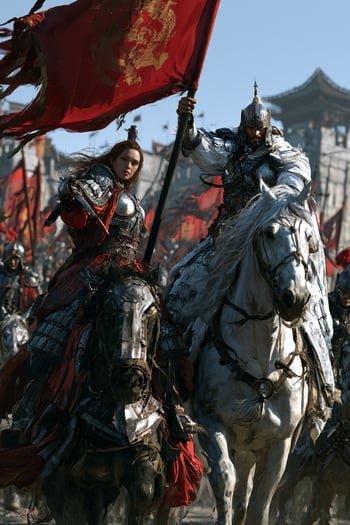
Their martial traditions provide another paradox. The Empire has experienced remarkably little warfare, yet its warriors and weapons are renowned across Otan. The Xigis approach combat as they approach everything else: through patience, repetition, discipline, and technical mastery. Even outside the formal military, the culture produces exceptional specialists; Xigis Rogues are notorious for disguising themselves as useful members of respectable society, while their Bards are welcomed into the courts and households of powerful people, sometimes with unfortunate consequences for their hosts.
Xigis Turgindar Geography
The Xigis Empire occupies a compact territory in southeastern Otan along the temperate waters of the Great Sea. It is the sixth-smallest nation on the continent, covering approximately 46,000 square Gorom, yet supports roughly 2.7 million inhabitants, making it one of the most densely populated human nations. The country is predominantly flat and low-lying, with extensive deciduous forests and a remarkably stable subtropical climate. Warm ocean currents moderate the coast throughout the year, producing the least seasonal variation of any nation in Otan.
Most of the Empire’s borders are maritime. To the south lies the Garis Nation, whose hostility has produced a dangerous frontier, while Altinqor borders the Empire to the southwest. The northern connection to the rest of human civilization is unusually narrow: a fortified land corridor only about 60 Gorom wide links Xigis to the Tsardom of Ortalyk. The corridor lies barely two days' ride from Kala Astanals and carries an ancient trade route through which Xigis books, silk, and paper flow northward into the continental markets.
The combination of flat terrain, extensive waterways, and coastline has made the Xigis exceptionally dependent on ports and engineered transportation. Xigis communities commonly develop around either riverports, seaports, or both, and their distinctive architecture makes aggressive use of vertical construction. Rather than spreading endlessly across the landscape, their engineers build upward, packing multiple levels of facilities into increasingly valuable urban spaces. The result is a densely settled civilization in which architecture and infrastructure seem almost as carefully choreographed as its people.
The Empire’s geography has also shaped its unusual relationship with the outside world. Its flat landscape provides little of the heavy metal and quarried stone needed for large-scale construction and weaponsmithing, so Xigis merchants travel extensively to secure these resources. Their own exports—particularly silk, books, paper, fine fabrics, dyes, and finished goods—move in the opposite direction. Thus the Xigis may guard their borders with considerable suspicion, but their ships and trade routes reach almost everywhere else.
At the center of this densely populated world stands Asiltas, the imperial capital and seat of the Xigis government. It contains the Imperial Seat and the greatest library on Otan, making the city both the administrative heart of the Empire and the intellectual center of Xigis civilization. In Xigis, even geography seems to obey the national philosophy: space is limited, records are extensive, and almost everything has a proper place.
| Copyright © 2021-2026 by Robyn Blaber and Will to Power Games. All rights reserved. Content on this website may not be reproduced without written permission of the copyright owner. |
