Araldar Creole
| General Information | |
|---|---|
| Native Name | Pidgin |
| Language Family | Ortaluyk Til |
| Usage | Spoken, Written |
| Speakers | |
| Where Spoken | Araldar Archipelago, many coastal cities |
| # of Speakers | 6,700,000 |
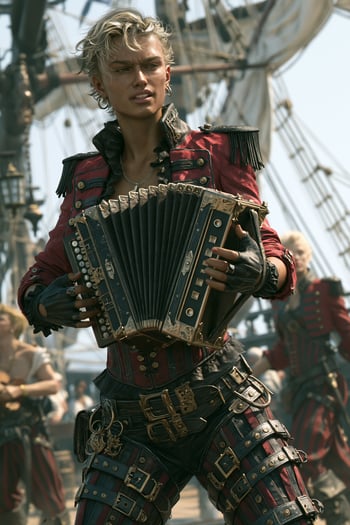
Araldar Creole is a distant dialect of the Ortalyk Language, though calling it merely a dialect does the language something of a disservice. Educated Araldikars can speak standard Ortalyk, particularly for trade and diplomacy, but virtually every Araldikar speaks the Creole among their own people. They affectionately call it Pidgin, and on the smaller, more isolated islands it remains the true language of the heart. Its western accent is distinctive even when an Araldikar is speaking ordinary Otani, shaped by generations spent around the sea.
Pidgin is a linguistic mishmash born from the Araldikar habit of doing business with everyone who owns a ship. Its grammatical foundation is Otani, but words, expressions, and constructions from Aelfen, Sweardaelf, Ontustik, and other languages have been pushed into it over generations. The source material even describes it as a mishmash stretching from Aelfen to Grendel. The result is a language that often sounds familiar to outsiders without ever becoming quite understandable. Anyone can pick up a few words, but genuinely understanding a conversation takes time, experience, or rather more magic than a literal translation spell is prepared to provide.
This makes Pidgin particularly well suited to the Araldikar way of life. Ships bring together people from wildly different backgrounds, and life aboard them requires constant compromise, cooperation, and communication. Pidgin provides a common tongue for people who may have little else in common. A magical translator illustrates the problem rather neatly: the literal rendering of one ordinary expression, “You stay, wait, the thing. Have you horseflesh?”, produces something much closer in meaning to “One moment please, are you OK?” The language has apparently decided that being understood is more important than making life easy for translators.
Speakers and Distribution
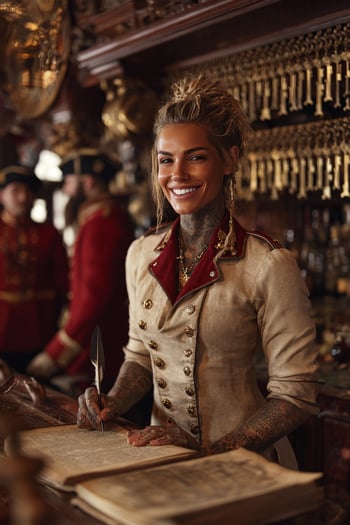
Nearly six million native Araldikars speak Araldar Creole, with the Araldar population recorded at approximately 5.75 million. The language is concentrated throughout the Araldar archipelago, where the islands and their communities are bound together by an intensely maritime culture. Standard Ortalyk is more dominant in the larger ports, particularly where trade and diplomacy demand it, while Pidgin remains strongest in the smaller and more isolated communities.
The language travels much farther than its native population. Araldar's navy and merchant vessels carry Pidgin across Otan's sea lanes, and the Araldar Navy itself draws recruits from an unusually broad range of backgrounds. Aelfes, Dweorges, Misiq, Grendel, and others have served alongside human Araldikars, giving the language yet more opportunities to absorb words and expressions from abroad. It can consequently be heard wherever Araldar ships make port, with sailors, merchants, and dockworkers carrying bits of it well beyond the islands themselves.
Writing and Literature
Araldar Creole was not invented with literature in mind. It grew from conversation, trade, shipboard necessity, and the peculiar social pressures of living in close quarters with other people for weeks or months at a time. Formal documents such as contracts, leases, and other legal instruments are generally written in Ortalyk, where precision is expected and nobody wants a magistrate asking whether “horseflesh” was supposed to mean a horse. Pidgin belongs more naturally to everyday life and culture.
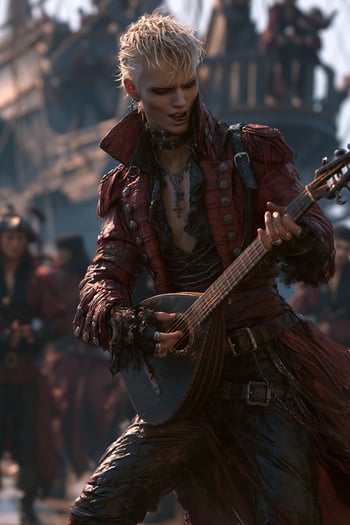
That distinction has not prevented the Araldikars from putting Pidgin to good literary use. The language is closely associated with the sounds and rhythms of maritime life, and songs, sea shanties, stories, and epic ballads naturally find their way into it. Araldar culture places considerable value on music and entertainment, particularly aboard ship, where a good singer, a good cook, or simply someone capable of making everyone laugh can be a valuable member of the crew. Pidgin is therefore not merely a practical sailors' tongue. It is the language in which Araldikars tell stories, sing about the sea, and remind one another that surviving another voyage is worth celebrating.
| Copyright © 2021-2026 by Robyn Blaber and Will to Power Games. All rights reserved. Content on this website may not be reproduced without written permission of the copyright owner. |
