Batis Language
| General Information | |
|---|---|
| Native Name | Batish |
| Language Family | Batish |
| Usage | Spoken, Written |
| Speakers | |
| Where Spoken | Batis |
| # of Speakers | 4,700,000 |
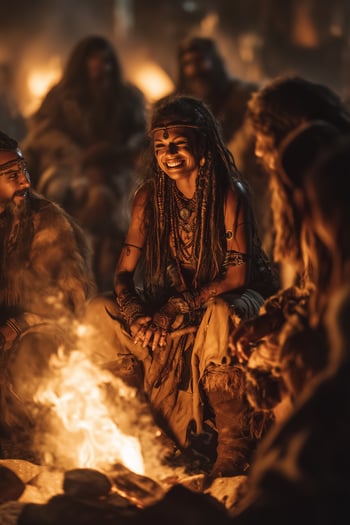
The Batis Language is an anomaly on Otan. It bears little apparent resemblance to any other language on the continent. It is soft-spoken, and even when shouted, lacks the hard consonants heard in nearly every other tongue. Meaning relies heavily on intonation and shifting volume, with the most common consonant being an “m” sound. To an Aydahar, accustomed to sharper consonants and draconic speech patterns, Batis can be particularly difficult to form. To the untrained ear, it sounds less like conversation than people humming verses of a song to one another.
The Batistikar closeness to nature has also left its mark on the language. Animal sounds are incorporated directly into speech, and these sounds can carry several meanings at once. A wolf's call may represent a word, invoke the Wolf god Kaskir, and recall a passage from an old Batis story. A particular utterance might therefore function as vocabulary, religious reference, and oral history depending on its tone and context. This makes the language difficult enough for outsiders to learn without adding the small complication that a phrase may also be a prayer.
Speakers and Distribution
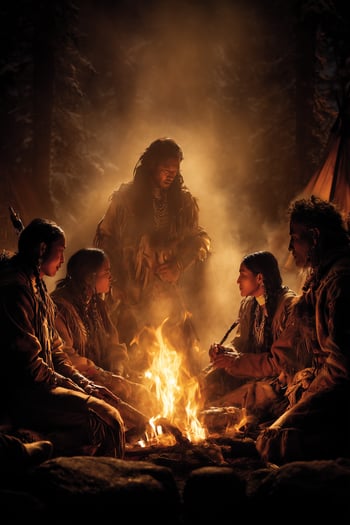
Nearly five million Batistikars speak Batis as their native language. It is spoken throughout the Republic of Batis and along its borders, with occasional non-native speakers found in neighboring Aelfgarad and Soltustik. The language remains closely tied to Batistikar identity and the agrarian, nature-centered society in which it developed. The Batistikar relationship with animals is particularly deep, extending from farming and hunting into religion, art, medicine, and everyday life.
Batis traders generally have little incentive to teach their language to outsiders. Those conducting business beyond their homeland are far more likely to use Ortalyk or the Traders Cant, both of which make commerce considerably easier. Batis therefore travels with its people more readily than it travels through trade, and native speakers encountered elsewhere are usually Batistikars themselves or people who have spent considerable time among them.
Writing and Literature
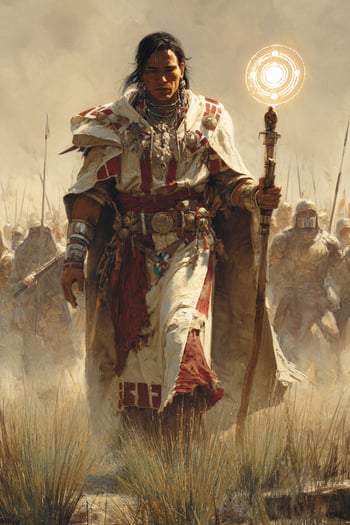
Sophists believe the Batis Language was once written entirely in pictograms, with individual symbols representing whole sentences, stories, or ideas rather than individual sounds or words. Nothing from that earlier system survived the Great Erasure. Since then, the Batistikar have adapted Ortalyk script to represent their spoken language, giving scholars and Sophists their first practical means of recording and studying Batis in a durable written form.
Batistikar literature is therefore a young tradition, even though the stories themselves are ancient. For the first time, the people of Batis are systematically recording the stories of their gods and preserving them beyond the oral tradition. The animal deities of Janyarism, including Kaskir the Wolf, Karga the Raven, Ogiz the Bison, and the other spirit guides and messengers of the Batistikar, feature prominently in these works. Their stories are now beginning to circulate beyond Batis, allowing the rest of Otan to encounter a body of mythology that, until recently, existed primarily in memory, ritual, and voice.
| Copyright © 2021-2026 by Robyn Blaber and Will to Power Games. All rights reserved. Content on this website may not be reproduced without written permission of the copyright owner. |
