Shuwalu
| General Information | |
|---|---|
| Capital | Nergal |
| Culture | Tozakh |
| Government | |
| Government Type | Brotherhood |
| Demographics | |
| Total Pop | 1,753,645 |
| Urban Pop | 178,204 |
| Rural Pop | 1,575,441 |
| Settlements | 13 |
| Geography & Economy | |
| Area | 31,172 sq. Gorom |
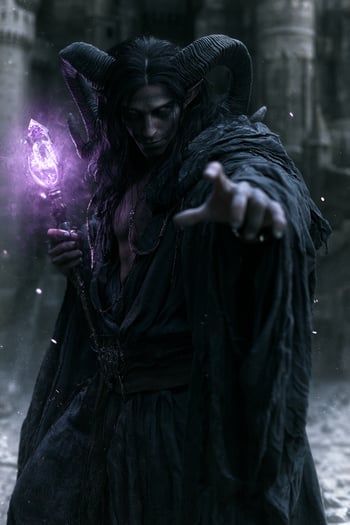
There is a popular belief across Otan that Shuwalu is the gateway to the Nether Lands and the Tozakh are Daemons, put on the world to usher the living and the dead to the next life. The Tozakh who inhabit Shuwalu don't often see the upside of visitors, especially raiders, and would much rather keep Shuwalu free of them. They do little, if anything, to dissipate these rumors, preferring the protective shield of superstition to foreign interference.
Further adding to these rumors is the very real nature of their settlements, which tend to shock the first-time visitor. Their cities are built in concentric rings dug deep into the earth, an architectural design engineered specifically to protect from northern predators and potential invaders, as only one ring of the city can ever be attacked at once. The outer ring houses most of the settlement's heavy defenses, while the core business and civic infrastructure are found closer to the central hubs. Visitors, awestruck by the shadowy earthen architecture, frequently compare this design to cities seen or imagined in the Nether World.
The other striking difference is that Tozakh settlements are aggressively alive every hour of the day. Some metropolitan cities across Otan claim they never sleep, but in Shuwalu this is both a literal truth and a governing maxim. Not a single settlement, business, or public endeavor ever halts its work, except perhaps on sacred holy days.
Population
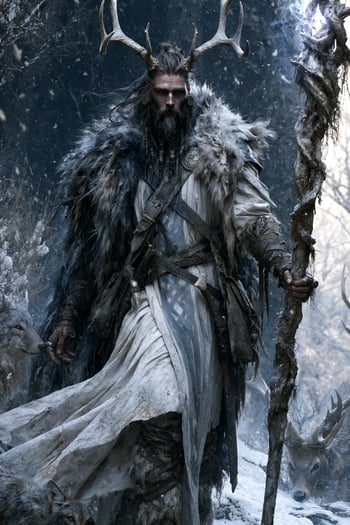
The population of Shuwalu stands at approximately 1.7 million residents. The nation is very densely populated, composed almost entirely of Tozakh with a nearly even split between the diurnal Faun and the nocturnal Infernal substrains. Small, industrious pockets of Kuulik can also be found residing in the major coastal settlements and port districts to facilitate maritime commerce.
Unlike many other nations that fear overcrowding or resource scarcity in frozen climates, the Tozakh view their steadily growing population as an absolute good. Every new birth represents an additional set of hands to support their massive, endless public works and sustain their non-stop civilization.
Culture
Tozakh society is built upon a fundamental temporal divide: the diurnal Faun occupy the light of day while the nocturnal Infernal claim the dark of night. This split was adopted almost immediately following the Great Erasure and has remained virtually unchanged for centuries. Because their sleep cycles typically last eight hours or less, there is a natural window of overlap every twenty-four hours.
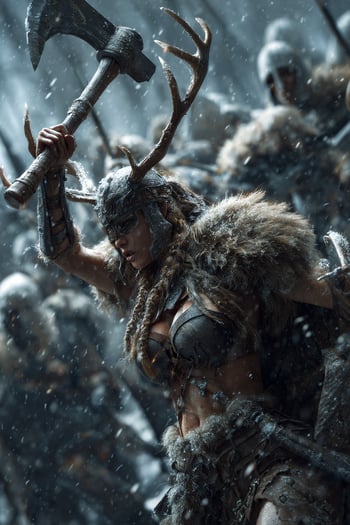
This "crossover period" is the heartbeat of their civilization, allowing day-timers and night-timers to exchange information, update ledgers, and maintain the continuity of their shared lives. Their continuously roused existence makes the Tozakh a terrifying military prospect. While other nations utilize night raids or rotate weary sentries, an invader of Shuwalu must be prepared for "round-the-clock" warfare against fresh, fully awake ranks of soldiers at any hour.
To sustain their relentless pace, the Tozakh utilize specialized galley wagons that prepare hot meals for front-line troops in the heat of battle, ensuring their warriors are at peak physical condition for non-stop carnage. For most of Otan, the advice to leave this insular strain alone is not merely a suggestion; it is a survival tactic.
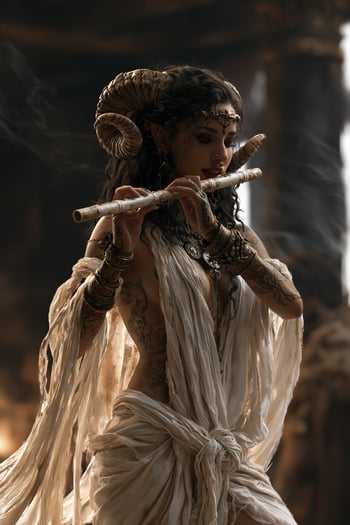
The inner life of the Tozakh is reflected in art and music that carries a distinct "hint of the wild." Their music is notably louder and more percussive than that of any other strain, punctuated by driving rhythms that mirror the heartbeat of the frozen north. Similarly, their poetry eschews the flowery metaphors of the Aelfen for a style that is startlingly direct and to the point. While this raw, aggressive aesthetic is often a "nightmare" for Aelfen sensibilities, many human listeners find it astonishing and even praiseworthy for its unvarnished honesty.
At the core of an individual’s life is the practice of "pairing." During their early years, Tozakh seek out a counterpart from the opposite cycle who shares their interests or professional goals. These day/night pairs, whether business partnerships or marriages, typically last a lifetime, as each individual becomes almost completely dependent on their partner to manage the "other half" of their shared existence. The loss of a partner in such a pairing is considered the most traumatic experience a Tozakh can endure; the survivor often faces a recovery period of many years, and some never truly regain their footing in a world that now feels half-empty.
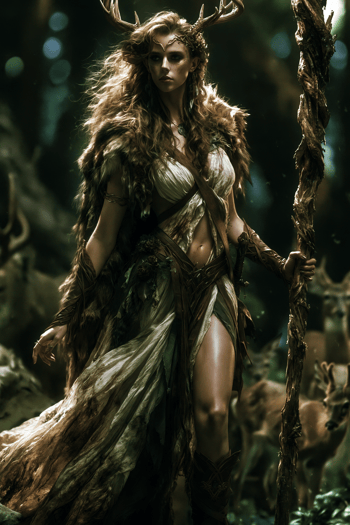
Their religious practices are equally distinct. The Faun Tozakh tend to worship Bloncamann, god of the Forest, while the Infernal Tozakh prefer to worship Aeski, goddess of the night. The two are related only by the "Cult of Personality" faith that lumps all of the lone Deities devoid of a pantheon into the same group. The two gods could not be more different. The Divines of Bloncamann celebrate life in all its many forms and preach for a path to an afterlife in the Heavens, where they will regroup their spirits and understanding of Otan and one day be reborn on Otan, with a rested and refreshed soul.
The Divines of Aeski observe a path to the Nether World, believing that the Heavens are a lie and that true learning happens through the torment that only the Nether Worlds can offer. Aeski represents the promise of divine protection and an ever more powerful rebirth through the trauma of the Nether World afterlife. Despite these seemingly opposite dogmas, the Tozakh tend to build dual-faith temples, holding their masses at opposite ends of the day.
Politics
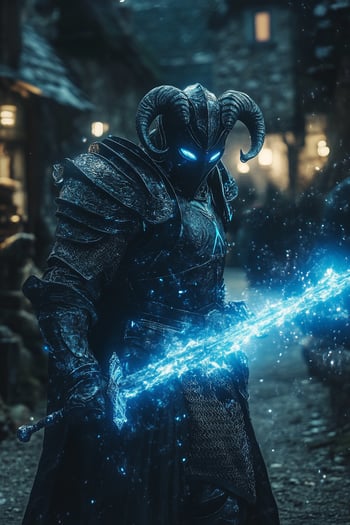
Tozakh politics have the same duality as their society. They have day and night governments who meet during crossover periods to compare notes, forming what they call the "Brotherhood of Day and Night", or simply the "Brotherhood of Shuwalu". Most initiatives of the Brotherhood, particularly those that involve large public works, require intense coordination between the two substrains. It might stand to reason that projects would take twice as long to build, but in practice, their construction speed can be up to ten times faster than human builders. Public projects never rest as the two substrains keep the momentum running on a 24-hour basis; tar and mortar prepared by one shift continues to be laid seamlessly by the next shift in a never-ending torrent of productivity.
The nation is divided into four administrative regions: Hades, Sheol, and Gehenna, the hellish theme being entirely intentional to ward off outsiders, all managed from the central capital region of Kur and its subterranean capital city of Dis. The system of government is somewhat anarchistic, operating at times as a democracy and at others as a meritocracy, but ultimately it functions as a pure bureaucracy dedicated to public works.
If a bridge must be built and a voice shouts, "Get this guy to build it!", that recommendation is immediately considered by the Brotherhood council, the candidate is evaluated, and a decision is made then and there, with the craftsman dispatched to work on the spot. Decisions that directly suit the overarching needs of the bureaucracy do not even require a vote; a few nods around the council room are enough to pass the motion.
When an unpopular set of choices faces the bureaucratic Brotherhood, other forms of decision-making are brought into play. In these moments, the Brotherhood relies on what it considers "higher forms" of government, such as an oligarchy, deferring the matter to wise elders. If that decision proves widely unpopular with the bureaucracy at large, they will stoop to lower forms of government like democracy, first voting among themselves, and then, most embarrassingly, asking the general public to vote. This final step of public referendum is widely viewed as a complete failure of the government to do its job.
The Brotherhood's political stance toward other nations is shaped by two simple criteria: who leaves Shuwalu alone the most, and who can help Shuwalu the most. They maintain warm relations with the Kuulik Trading Company, whose merchant vessels regularly dock in the port city of Dis. They keep tepid, pragmatic relations with human nations like Batis and Soltustik to facilitate trade, but they make no effort to reach out to the Grendel, Dweorger, or Aelfen nations for trade, defense, or diplomacy.
Economy
The Shuwalu economy relies on a steady flow of taxes from every individual, paid to the Brotherhood on what can best be described as an honor system. The Brotherhood immediately sinks these funds back into massive public infrastructure and national defense. While no other nation on Otan can fathom such an honor-based tax system working, it succeeds remarkably well in Shuwalu. Blessed with a country made of solid rock and thick forests, the Tozakh are rarely at a loss for timber, stone, or coin to complete their ongoing national projects.
For imports, Shuwalu receives vital grain and food supplies, as well as wool and linen, directly from Batis. In exchange, their primary exports include high-grade lumber and a remarkably sure-footed variety of war horse that is prized by militaries across Otan.
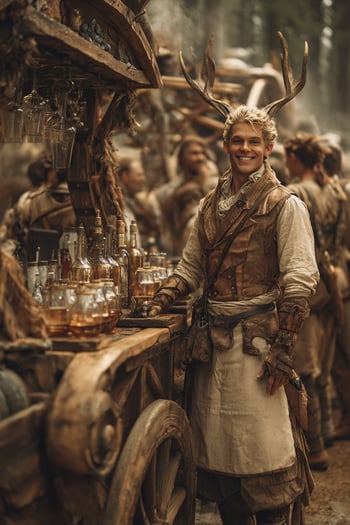
The infrastructure supporting these public works is uniquely mobile. Whenever roads, bridges, or watchtowers are constructed, armies of private vendors follow the workforce with specialized carts. Some of these elaborate, heavy-duty wagons feature fully appointed bakeries, taverns, and mobile forges to keep both the laborers and the bureaucracy fed and supplied on-site. The cart owners are famously paired teams of Faun and Infernal Tozakh, ensuring that services remain available around the clock. Just as Tozakh labor never ceases, the supporting commercial economy never sleeps.
Geography
The nation of Shuwalu is a relatively compact territory covering approximately 31,172 Gorom. During the freezing winter months, they expand their borders by laying claim to several square Gorom of ocean ice, setting up seasonal camps for ice fishing. This extra influx of fresh seafood significantly reduces their reliance on foreign food imports from Batis.
The country's four subregions divide the realm neatly: the Gehenna Peninsula occupies the far north and west, the Hades Reservation borders Batis to the south to provide a key land trade route, the capital Kur Reservation borders Soltustik to its south, and the Sheol Reservation borders Soltustik to the east. The entire northern frontier of Shuwalu is bounded only by the sea and thick ocean ice.
The terrain of Shuwalu is uniformly rocky and densely covered with pine forests. Three major rivers carve through the landscape from south to north, the greatest of which, the Cloudfall River, feeds into the basin where the capital city of Dis is built. The remainder of Shuwalu's major settlements are situated along the coastline, granting the Tozakh year-round access to rich fishing grounds.
History
The history of the Tozakh began in the immediate aftermath of the Great Erasure. As they roused from the fog of the past, they quickly identified what outsiders perceived as a debilitating weakness: half the population being strictly nocturnal, and realized it could be leveraged into their greatest civilizational strength. By leaning into their natural rhythms, they established the dual-cycle economy that defines them today.
Tozakh history is also shaped by a deliberate embrace of their insular instincts; rather than viewing their isolationism as a drawback, they treated it as a core feature of their national identity. This led to a firm decision against maintaining an expansive navy. While Shuwalu allows foreign trade ships to enter its ports, few Tozakh feel any urge to leave their homeland on indefinite sea voyages. However, they have put a few highly capable patrol ships to sea to guard their coastline, crewed by day/night pairs that make these vessels functionally tireless.
Despite their formidable military preparations and non-stop operational readiness, the Tozakh have never officially been to war since the Great Erasure. While they have successfully repelled various raiders crossing their borders, their standing army and border sentries have never engaged in full-scale field combat. This lack of a formal war record does not imply weakness; rather, it reflects a society so efficiently guarded that few rival powers find it worth the risk of an invasion. They remain a mystery to the rest of Otan, a silent power watching the world from behind an impenetrable wall of pine, ice, and suspicion.
During the Grendel War, the Tozakh were approached by embassies from both Maercland and Soltustik, representing the Grendel and Human alliances. The Tozakh were notably surprised by the Grendel embassy; despite their own "hellspawn" nickname, Tozakh are biologically human. The diplomats from Maercland attempted to stir resentment, suggesting that the Tozakh had been manipulated into accepting the absolute worst, most frozen territory on the continent.
Coming to terms with their geography raised existential questions that still haunt Tozakh Sophists: Were they exiled to the cold north, or did their own insular nature lead them to migrate there voluntarily before the Great Erasure? Ultimately, they found no definitive answers in their fragmented history. Choosing caution over conflict, they sat out the Grendel War entirely, though they paid incredibly close attention to the shifting tides of power beyond their borders.
Subregions of Shuwalu
Gehenna Reservation
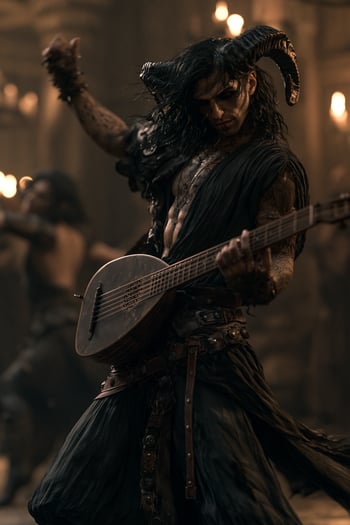
Capital: Mantus
Population: 739,244
Area (sq. Gorom).: 12,376
Hades Reservation
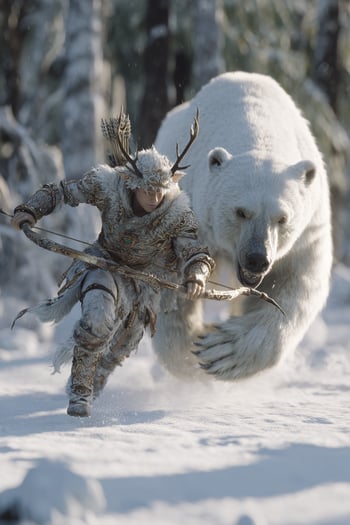
Capital: Whiro
Population: 379,809
Area (sq. Gorom).: 8,324
Kur Reservation
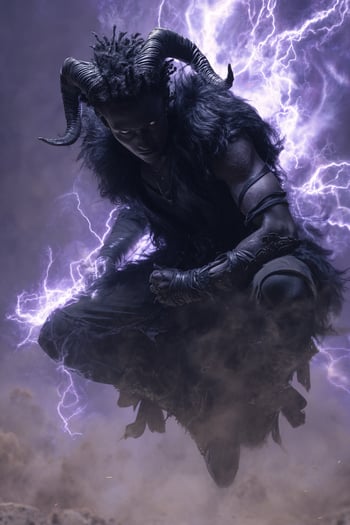
Capital: Dis
Population: 416,227
Area (sq. Gorom).: 7,332
Sheol Reservation
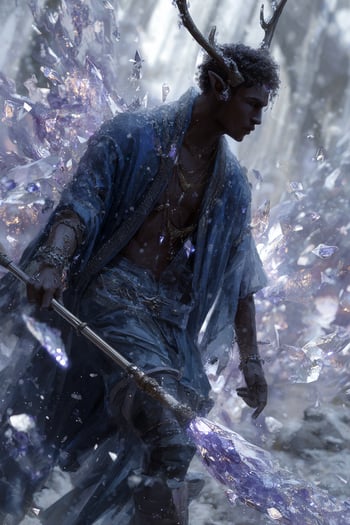
Capital: Mot
Population: 218,365
Area (sq. Gorom).: 3,140
| Copyright © 2021-2026 by Robyn Blaber and Will to Power Games. All rights reserved. Content on this website may not be reproduced without written permission of the copyright owner. |
