Ungir
| Strain | Ungir |
|---|---|
| Scientific name | Homo Draconiculus |
| Plural | Ungir |
| Possessive | Ungirsi |
| Substrains | Juzuu, Karangi, Usatin, Ustinde |
| Language | Human, Draconic |
| Climate | Continental |
| Terrain | Coastal,Plains,Hills,Underground,Ocean/Subsurface |
| Skin Color | Black, Orange, Sand, Aquamarine, Light Blue |
| Hair Color | Orange, Brown, Black, Gray |
| Eye Color | Any |
| Build | Slight |
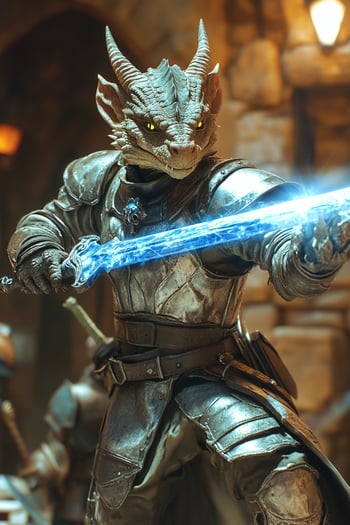
| Distinctions | DIminutive, with slight build, draconic head, taloned feet and a tail. Some have wings. |
| Disposition | To hoard |
The Ungir (Homo Draconiculus) are a highly gregarious and industrious people defined by a singular, obsessive drive to explore and reshape the subterranean world. Their genetic heritage is a complex "great mélange," the result of ancient experimentation involving human and draconic lineages, further enriched by the distinct flavors of the various Aydahar strains. This unique ancestry has produced a race that possesses a sturdy, grounded physiology, often retaining subtle reptilian markers, such as toughened skin or amber-slitted eyes, that hint at their dragon-kin origins.
While individual Ungir can range in temperament from the painfully timid to the fiercely aggressive, they are almost universally united by a relentless work ethic. It is rare to encounter an Ungir who is not actively engaged in a project; they are a people in constant motion, whether they are engineering a new tunnel, constructing a multi-level dwelling, or launching an ambitious commercial enterprise. This industrious nature makes them the premier architects of the underground, transforming raw earth into sophisticated, functional habitats with a speed that baffles surface-dwelling observers.
Their mastery of the deep is most evident in their specialized technical skills. The Ungir are world-renowned for their tunnel-boring capabilities, primarily utilized for large-scale mining operations that fuel the economies of Otan. However, this architectural genius has a more dangerous side: they are peerless experts in the design of intricate traps and the preparation of ambushes. To navigate an Ungir-controlled tunnel system without an invitation is to walk through a masterpiece of lethal engineering, where the very walls and floors are designed to defend the community’s hard-earned progress.
Society and Culture
The Ungir are four societies merged into one. Despite this, all four societies share a common background marked by persecution from other strains. There is no historical evidence to prove that Ungir and the Aydahar once shared common territory, but there are clues. The Aydahar language has nicknames and idioms that refer to "small dragons" that are present in their culture.
It is assumed by sophists in both cultures that the Ungir were driven out of Aydahar territory for a reason that would cause the same division today. That behavior is hoarding. The Ungir love to hoard, while the Aydahar find such behavior to be abhorrent. Dragons in Aydahar territory hoard, and this is a trait of dragons, not people, or so the Aydhar believe.
The Ungir love to hoard, and their society is dominated by those who are most successful at it. The Ungir with the largest hoard is made their king. Ungir who have provided great services to their people are awarded tokens, which can supplement their hoard, allowing a less wealthy Ungir to seize political power. Survival of their people is naturally more important than any hoard.
Meanwhile, the four distinct Ungir lifestyles developed mostly as survival tactics. The Ustinde culture lives above ground in keeping with Aydahar tradition. Due to their small size, they are more likely to create easily abandoned edifices with their hoards on indoor carts ready to roll.
Their Karangi cousins dig. They build deep underground to escape pursuers from above. The Karangi can collapse tunnels, make others too small to enter, and create elaborate traps to confound anyone crazy enough to pursue them in their underground homes.
The Juzuu took to the sea and created small settlements underwater. They continue to build temporary settlements on beaches adjacent to their underwater territory. These settlements enable the Ungir to trade with air-breathing traders. These settlements can be abandoned at the first hint of trouble with little cost to the Juzuu, who will replace them quickly when trouble has subsided.
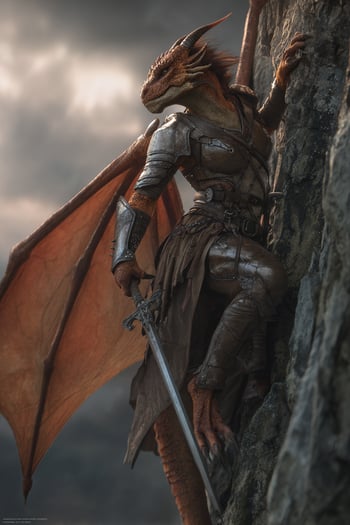
The last of the cultures is the Ustinde, those Ungir who have sprouted wings. The Ustinde can fly and throughout most of their youth, are concerned with little else than flying. They "nest" in high places and won't begin to hoard until later in life, their preoccupation with flying being a large part of their daily life.
Physical Characteristics
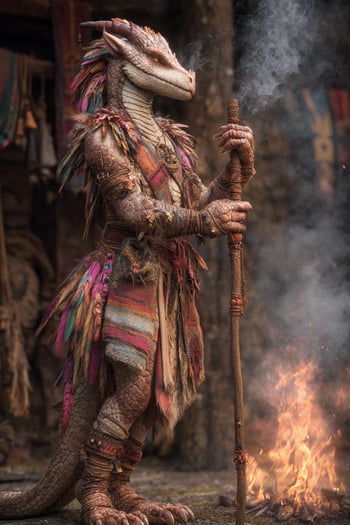
The Ungir are a striking testament to their mixed heritage, appearing as diminutive, slight humanoids with undeniable draconic features. They stand between 60cm and 90cm tall and are remarkably light, usually weighing between 16kg and 20kg. Their bodies are a mosaic of textures; while primarily skin-covered, they possess clusters of scales on their hands and feet, with additional scaly patches appearing sporadically across their limbs and torso. Interestingly, the pigment of their scales rarely deviates far from their skin tone, creating a subtle, textured aesthetic rather than a clashing pattern.
The true markers of their draconic ancestry are found in their specialized anatomy, beginning with hands that feature robust, claw-like nails. These are significantly tougher than human keratin, and while their advanced industry means they rarely resort to digging by hand, these claws remain a powerful evolutionary vestige of their tunnel-boring roots. This draconic lineage is even more apparent in their facial structure, which features a powerful, elongated crocodilian jaw that gives them a formidable profile and a bite far stronger than their size would suggest.
Adding to this unique appearance, every Ungir possesses between two and four small, fixed horns at the back of the skull, typically ivory or tan in color. Finally, they sport short, dragon-like tails that are fully prehensile. While these tails provide excellent balance in the uneven terrain of deep caverns and can serve as a secondary grip, very few Ungir possess the fine motor control required for tasks involving high dexterity, such as writing or intricate tool-work. Despite this limitation, the tail remains a vital part of their physical identity, often twitching in rhythm with their industrious thoughts as they plan their next great architectural feat.
Natural and Latent Abilities
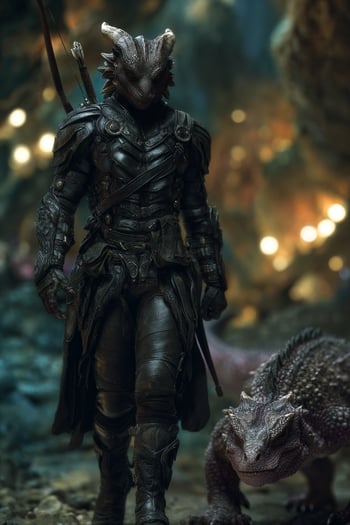
The draconic essence within the Ungir bloodline manifests in a variety of physical advantages that set them apart from baseline humans. Their skin is naturally tougher, reinforced by a layer of small, flexible scales that provide a significant degree of protection; while they move with the fluidity of flesh, they possess a natural resistance to cuts and abrasions that would easily mar human skin. This resilience is paired with sensory adaptations, particularly in the Karangi variant, whose eyes are finely tuned to pierce the gloom of the deep earth, allowing them to navigate and work in low-light conditions that would leave others blind.
Their physical frame is perfectly engineered for the verticality of subterranean life. The short, dragon-like tail serves as a vital counterweight, granting the Ungir superior balance and a natural aptitude for acrobatic maneuvers within cramped spaces. When combined with their talon-like feet and diminutive, lightweight stature, this balance makes them remarkably skilled at jumping and climbing, allowing them to traverse cavernous terrain with surprising speed.
Beyond these general traits, certain lineages of the Ungir possess extraordinary specialized abilities. The Usatin Ungir are born with functional wings, granting them the rare gift of flight, which they use to maintain and navigate the highest reaches of their vaulted tunnel-cities. Perhaps most mysterious are the Juzuu, who possess the ability to breathe underwater indefinitely. Despite intensive study by Sophists, no visible gills or respiratory organs have been found to explain this feat; it remains an enduring biological enigma, suggesting that the Juzuu's connection to their draconic ancestry may be as much magical as it is physical.
History
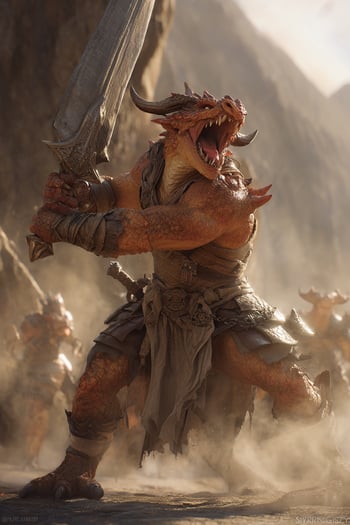
There are two important histories of the Ungir: the pre-history and written history. As with all strains, the pre-history is all that happened before the Great Erasure, which happened over 260 years in the past. While this little-understood erasure of history literally erased all memories and written documents, clues remain.
Ungir sophists and historians recognize the tell-tale signs of Ungir culture that exist throughout the Aydahar nation of Altinquor and in the surrounding nations as well. They surmise that they had a clear history of living with and trading with the Aydahar. With the Ungir all living in ceded Grendel lands post-Erasure,
Since the Great Erasure, the Ungir people have been finding their feet. They built up towns and cities out of essentially nothing in the gods forsaken lands they were given. With nothing of value on their lands, they were rarely harassed by any but faraway travelers who wandered too close.
It wasn't until the Grendel War that the Ungir took up arms in any serious way. Clashing over the human land grab, the Grendel felt penned in on all sides and declared war on humans, nearly overtaking the neighboring country of Soltustik. When the crown prince of Ortalyk got involved in the war, the Ungir dropped the gauntlet and invaded Ortalyk from the West.
The move in solidarity with the Grendel would cost the Ungir dearly, as their campaigns were disastrous. The Ungir, who are masters of defensive tactics, stalled when on the offense. With little plunder to add to their hordes, they eventually found themselves on the defensive by the war's end as their armies were pushed back. After the war, few nations would trade with them or offer any level of trust.
Ungirsi Substrains
Usatin Substrain
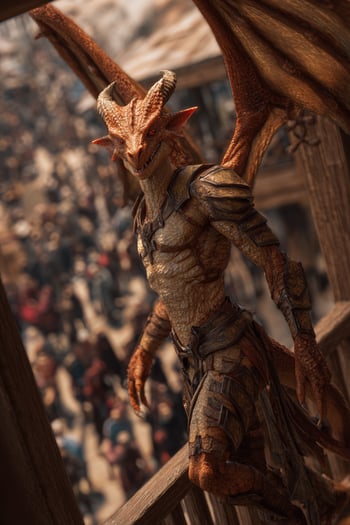
Description:The Usatin (🔊 oo-SAH-tin) can be of any other type of Ungir, save that they have wings. This feature often grants them the power of flight.
Overview:The Usatin (Homo Draconiculus Volans) represent the rarest and most liberated branch of the Ungir family tree. Their emergence is a biological marvel: depending on the specific family line, roughly one in every hundred Ungir is born an Usatin. Regardless of their parents' coloring or substrain, these individuals differ fundamentally by the development of a fully articulated pair of wings.
Even as infants, these natural-born "tunnellers" exhibit a peculiar instinctual shift; they shun the dark of the caves and seek the surface, taking to the air with the same ease as a fledgling bird. They quickly attain a mastery of flight that rivals, and often exceeds, that of any other sapient avian species on Otan. Because they are born to ground-dwelling or subterranean parents, the Usatin have developed a unique social system to ensure their young are properly trained.
Winged delegations are sent down from the high peaks to the lowlands, beaches, or cave entrances to "adopt" newly born Usatin children. These infants are carried up into the high hills to be raised in an environment that caters to their aerial nature. The Usatin take immense pride in their status as the world’s premier aviators, a confidence rooted in their rare ability to combine instinctual flight with the Ungir capacity to reason, plan, and, most importantly, train.
Culturally, the Usatin are known for an almost obsessive preoccupation with their craft. They talk about flying incessantly, detailing every nuance of altitude, speed, payload capacity, and complex maneuvers to the point of exhaustion for any listener. This hyper-focus makes them technically brilliant but socially overwhelming to those who do not share the sky. While they are theoretically Wodenists who honor the great snake, Jormungandr, their practical devotions lean toward various bird and sky gods, as the image of a subterranean serpent feels increasingly distant to those who spend their lives above the clouds.
Despite their literal and metaphorical distance from the ground, the Usatin remain fiercely loyal to their kin. They participate in all national holidays and events, swooping in to demonstrate their mastery of the sky in breathtaking displays of aerial choreography. More importantly, they take the leadership of the Ustinde and the goals of the Ungir Federation with the utmost seriousness. They serve as the eyes of the nation, providing constant reconnaissance and border patrols. By spotting bandit movements or mobilizing armies long before they reach the "Gravel Shields," the Usatin ensure that their flightless cousins are never taken by surprise.
Karangi Substrain
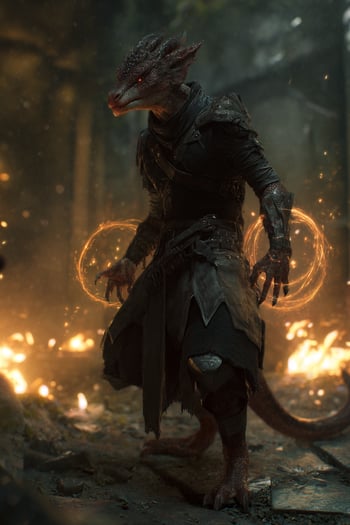
Description:The Karangi (🔊 kah-RAHN-gee) are a dark-featured variety of the Ungir who are content to live their entire lives far beneath the surface of Otan.
Overview:The Karangi Ungir (Homo Draconiculus Tenebricus) are the quintessential excavators of Otan. While other subterranean races like the Oradweorges or the Scraefaelfes dwell within the earth, none can match the sheer velocity or precision of the Karangi when it comes to boring through solid stone. They possess a unique tunneling philosophy; while their service tunnels are often unnervingly narrow, barely wider than the width of their own skulls, these claustrophobic arteries lead to massive, sprawling underground complexes. Rumors persist among surface scholars that these works are so extensive they form a subterranean shadow-map of the world above, physically connecting every one of their major settlements.
This relentless tunneling fervor makes the Karangi the primary source of rare minerals and gems in the region. However, their contribution to the Ungir economy is filtered through a powerful, innate instinct for hoarding. Typically, only a tithe of an individual’s personal finds is surrendered to the community for external trade.
These limited resources are used as a vital lifeline, exchanged for surface-grown foods and specialized supplies that are impossible to produce or acquire in the deep dark. This scarcity of trade goods often makes Karangi-sourced gems among the most expensive and sought-after commodities in the markets of the surface world.
The spiritual life of the Karangi is as hidden as their cities, centered around the worship of the world-serpent Jormungandr. They view the Great Serpent as the ultimate architect of the earth's foundations, and their own digging is seen as a form of terrestrial communion. For their Holy Days, they emerge from the earth only under the cover of night, sending somber delegations to the surface to celebrate the turning of the seasons.
Cross-cultural gatherings such as the Holy Days are not merely religious; they serve a vital administrative purpose. It is during these moonlit rites that the Karangi receive their "digging orders" for the coming year, a strategic blueprint that coordinates their expansion and ensures the structural and social integrity of their hidden empire. The ability to hide away their people is a survival instinct that will never leave the Ungir psyche.
Juzuu Substrain
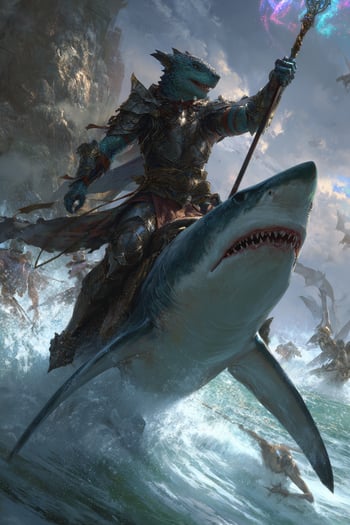
Description:The Juzuu (🔊 joo-ZOO-oo) are an aquatic variety of Ungir. They possess the unexplained ability to live underwater indefinitely. and have established underwater settlements.
Overview:The Juzuu (Homo Draconiculus Oceanicus) are an exceptionally rare aquatic variety of Ungir who have mastered the depths of Otan’s oceans. While they lack visible gills, they possess an internal biological apparatus that allows them to live underwater indefinitely, a feat that remains one of the great mysteries of modern Sophistry.
Despite their maritime environment, the Juzuu remain "tunnellers" at heart. Rather than building structures on the seabed, they carve their elaborate cities into the rock and silt beneath the ocean floor. To an outside observer, an entire Juzuu metropolis might appear to be nothing more than a stretch of untouched, tranquil seafloor, hiding a bustling civilization beneath the sand.
These aquatic Ungir lead a distinctive dual life, bridging the gap between the deep trenches and the sunlit coasts. They frequently establish temporary markets on secluded beaches to trade ocean-harvested treasures, such as rare pearls, deep-sea minerals, and unique corals, for goods from the surface world.
When it comes to defense and travel, the Juzuu exhibit the same talent for animal husbandry seen in other dragon-descended strains, though their focus is decidedly more predatory; they patrol their territorial waters from the backs of great sharks, which they train with a firm and expert hand.
The Juzuu are far from isolated, maintaining regular and sophisticated lines of communication with their terrestrial Ungir cousins. They act as the "eyes beneath the waves" for the broader Ungir population, serving as a first line of defense against seaborne threats. By patrolling the coastlines and securing the submerged portions of coastal tunnel systems, the Juzuu ensure that Ungir shores remain impenetrable to any enemy foolish enough to approach from the sea.
Ustinde Substrain
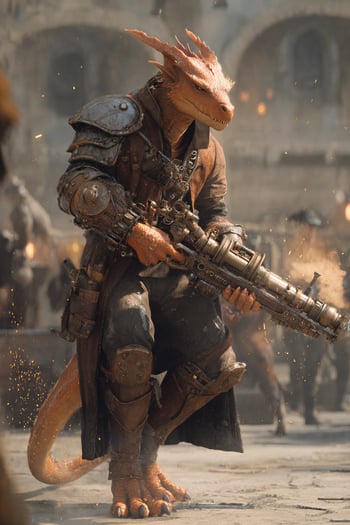
Description:The Ustinde (🔊 oo-STIN-dey) are the gregarious surface-dwelling Ungir most commonly seen by other peoples. Their scaly skin color ranges from brown to orange.
Overview:The Ustinde (Homo Draconiculus Praefectus) serve as the terrestrial face of the Ungir, occupying the precarious surface-level territories of their homeland. Unlike their cousins, they possess no biological escape route; they cannot retreat into the deep earth like the Karangi, vanish into the waves like the Juzuu, or take to the skies like the Usatin.
This permanent presence on the ground forces them to face their enemies directly, standing as the frontline shield for the entire Ungir race. They are easily identified by their striking orange-tinted skin and the characteristic industriousness that defines their lineage, even in the face of constant external pressure.
Life for the Ustinde is a grueling exercise in survival. They are deeply despised by the neighboring Ortalykshilar Humans, many of whom still harbor the bitter prejudices of the Grendel War and view the dragon-blooded Ungir as remnants of that dark era. Consequently, Ustinde settlements are frequent targets of human raids. Being physically small and slight, they are no match for the crushing weight of human cavalry in a direct engagement. To prevent being overrun, they have become the world’s foremost experts in defensive engineering, utilizing extremely clever traps, layered fortifications, and landscape-altering defenses that turn their rocky terrain into a death trap for mounted invaders.
They find little sympathy from their more powerful draconic relatives, the Aydahar. These larger, more formidable beings generally view the Ustinde as unworthy of their notice or assistance. To the Aydahar, the monumental effort required to engage the Ortalyk Army on a traditional battlefield is simply not worth the survival of their smaller cousins.
This abandonment has forced the Ustinde to develop a fierce self-reliance and a sophisticated diplomatic network. They have become the primary coordinators of the Ungir Federation, weaving the disparate aquatic, subterranean, and aerial substrains into a unified political body that protects their collective interests. The Ungirsi Federation is truly more grand than the sum of its parts.
Despite inhabiting a dry, rocky territory that yields little natural wealth, the Ustinde have managed to build a burgeoning economy through sheer perseverance. They leverage their most significant advantage: a population that is among the fastest-growing in Otan. By mobilizing their massive numbers and coordinating the trade of resources between the other Ungir substrains, the Ustinde ensure that their nation remains a rising power. They prove every day that while they may be the most vulnerable branch of the draconic tree, they are also the most resilient, holding their ground when the rest of the world expects them to crumble.
| Copyright © 2021-2026 by Robyn Blaber and Will to Power Games. All rights reserved. Content on this website may not be reproduced without written permission of the copyright owner. |
