Batis
| General Information | |
|---|---|
| Capital | Astik |
| Culture | Batistikar |
| Government | |
| Government Type | Republic |
| Demographics | |
| Total Pop | 4737832 |
| Urban Pop | 171946 |
| Rural Pop | 4565886 |
| Settlements | 18 |
| Geography & Economy | |
| Area | 225676 sq. Gorom |
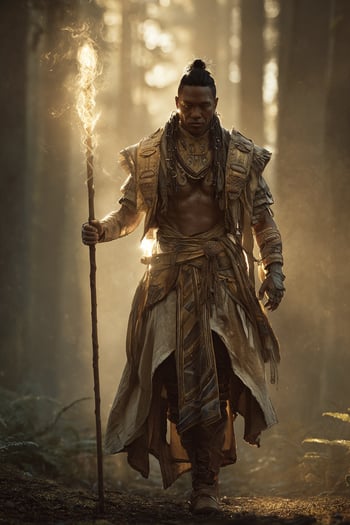
The Batis Republic stands as a testament to what humanity can achieve when perfectly attuned to the natural world. Unlike other realms across Otan that rely heavily on the overarching guidance or magical intervention of an Archetype, the Batis people have forged an entirely self-reliant agrarian society. Through an almost intuitive understanding of soil, weather, and fauna, their farmers consistently cultivate the highest-yielding crops on the continent. Their hunters and trappers navigate the wilderness with unparalleled efficacy, returning with abundant game, while their ranchers raise livestock noted for exceptional health and vitality.
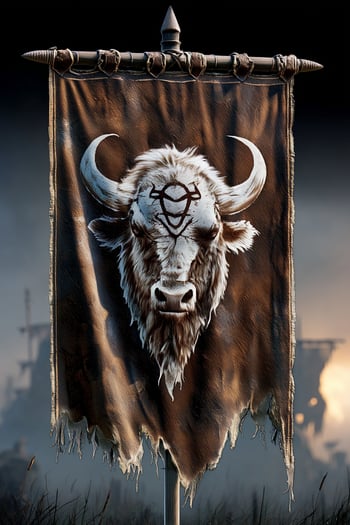
Much of this unparalleled success is deeply intertwined with their spiritual life, which is profoundly rooted in the soil they till. The dominant faith, Janyarism, is an animistic religion that rejects abstract cosmic entities in favor of tangible animal gods representing the foundational aspects of human existence. The Batistikar people offer regular sacrifices and reverence to primordial figures such as the Great Bisan, the cunning Raven, and the watchful Wolf. Within Batis society, it is universally understood that these animal deities possess a far deeper, more practical insight into the intricate workings of ecosystems and agriculture than the grand pantheons of neighboring nations, guiding their devotees with grounded, pragmatic wisdom.
Geographically, this prosperous nation occupies the northwestern coast of Otan, blessed with a landscape where nearly half of the territory consists of remarkably fertile, arable grassland. This exceptional soil quality, combined with the innate talents of the population, results in a structural surplus of food. The Batis produce agricultural bounty at a rate that far outstrips their domestic capacity to process or consume it, turning their realm into a natural breadbasket for the surrounding regions.
Population
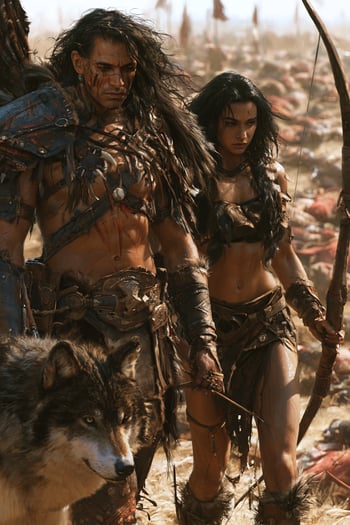
Despite the vastness of their fertile territories, the Batis Republic remains remarkably sparse in its population density. The land itself possesses the ecological capacity to sustain a population several times larger than its current demographic count of 4.7 million citizens. The overwhelming majority of these inhabitants belong to the distinct Batistikar substrain. Society is largely oriented toward the sea; nearly all permanent settlements are established within a tight ribbon of land less than 100 Gorom, roughly a ten-day ride, from the coastline, with even the most remote frontier outpost situated no further than 200 Gorom from the grand capital city of Astik.
Beyond the settled coastal borders lies a significant, unaccounted-for segment of the population that rejects sedentary life entirely. Known as the Kospendi, these nomads wander the vast, open spaces of the southern territories and drift across the borders into the Free States, entirely shunning the concept of a formalized social contract. They live a fluid existence, sometimes allowing years to pass between brief visits to established Batistikar settlements, serving as a cultural bridge to the wilder interior of Otan.
In recent generations, the Kospendi have become the first line of defense against a rising existential threat originating from the wilderness. Feline monsters that walk upright like men, known as the Misiq, have begun to push into the edges of the realm. The Kospendi view these creatures as terrifying abominations despised by the animal gods, warning that they must be decisively eradicated before they can permanently establish territory in the fertile southeast. This ongoing tension frequently erupts into localized warfare, prompting the nomadic Kospendi to actively seek military coordination and aid from the formal Batis Republic to end the Misiq presence once and for all.
Culture
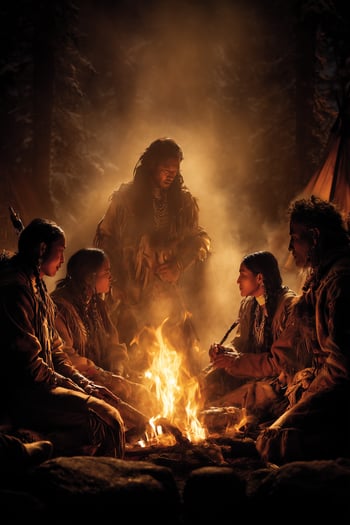
The cultural landscape of Batis is defined by a distinct lack of the competitive, hoarding instincts that characterize many other human substrains across Otan. Instead, an inherent egalitarian drive toward sharing wealth and resources laid the groundwork for the continent's first true democracy. This political evolution did not spring from dense philosophical treatises or revolutionary intellectual movements, but rather from a biological and social instinct to ensure that every individual has a recognized voice in the community.
This cooperative mindset shapes the lifecycle of the Batistikar people, particularly as they age. Regardless of the profession an individual pursues during their youth, be it farming, hunting, or crafting, older citizens naturally transition into the role of educators. They do not merely pass down technical skills; they emphasize cognitive empathy, teaching the younger generation that their personal perspectives can be misleading without careful investigation. Youth are taught not just what to think, but how to teach others, how to systematically investigate the unknown, and how to gracefully reconcile themselves with the mysteries of the world that they may never truly comprehend.
In stark contrast to work-centric Otani cultures, the Batistikar do not view labor as the primary purpose of existence. They live to enrich their immediate lives and the collective well-being of their communities. Their vibrant festivities are not merely breaks from toil but celebrations of collective knowledge, marking breakthroughs that lead to higher-yielding crops, faster-breeding horse bloodlines, and better food preservation. Song and dance are foundational to these gatherings, characterized by complex rhythmic patterns found nowhere else in the world, where community-wide prizes are joyfully awarded to the villages of those who triumph in festival trials, whether the victory is claimed by the strongest wrestler or the cultivator of the finest gourd.
Politics
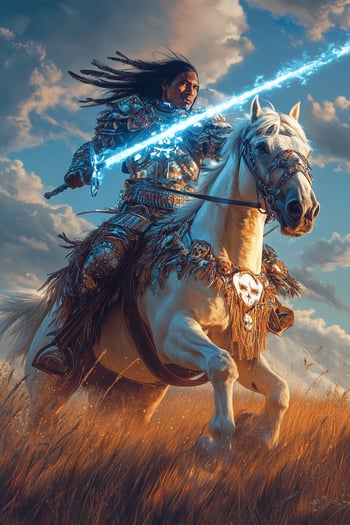
The democratic systems of the Batis Republic emerged organically at the dawn of their recorded history. Following their awakening from the Great Erasure, the early ancestors of the Batistikar found themselves making immediate communal decisions through a simple show of hands. This popular, highly transparent technique quickly evolved into a cultural staple, giving rise to localized variations involving wagers, the casting of marked pebbles, and various sophisticated polling methods. Over the centuries, public consultation transitioned from a convenient habit into a strict societal expectation.
Today, this foundational requirement governs every level of administration. Elected officials within the Batis Republic operate under the constant weight of public scrutiny, fully aware that they can only execute policies for which they possess a clear, demonstrable electoral mandate. Attempting to govern through personal decree or unauthorized executive action is viewed as a severe transgression that invites immediate societal chaos and administrative paralysis.
Every single administrative position in the nation is filled via democratic election, culminating in the highest office of the land, the President of the Batis Republic. Should the President, or any subordinate official, attempt to enact a measure without explicit public backing, they are promptly subjected to a vote of non-confidence. If the vote fails, the official is removed, and a replacement is chosen through a highly streamlined election process. Because village, city, and regional elders maintain pre-arranged "pooled" votes and clear succession plans, the nation is never left without governance, ensuring vacancies are filled almost instantly.
Economy
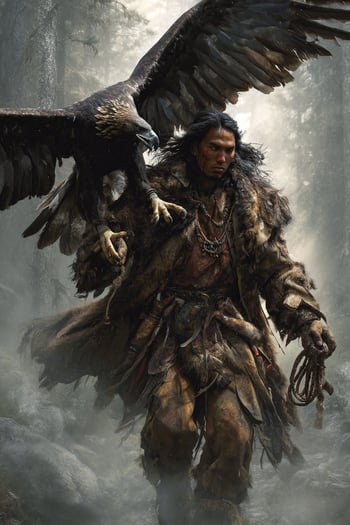
The engine of the Batis economy is its staggering agricultural surplus, producing sustenance at a volume that vastly exceeds domestic demand. However, because the extraction of minerals and heavy metalwork runs entirely counter to their fresh-air oriented, land-focused culture, the Republic experiences a perpetual shortage of domestic hardware. To bridge this gap, they rely heavily on a well-established network of foreign trade, leveraging their agricultural dominance to secure the martial assets they refuse to manufacture themselves.
Each spring, massive trade delegations depart from the coastal ports and overland routes, laden with high-grade seed, prime livestock, and expertly prepared salted provisions. These expeditions venture out with the explicit mandate to return with quality arms and armor. This symbiotic economic strategy is consistently successful, as neighboring powers, including the Soltustikers, the Grendel, the Kuulik, the Tozakh, and even the enigmatic Aelfes, are entirely willing to trade their finest metallurgical goods in exchange for the absolute food security that only Batis can provide.
Geography
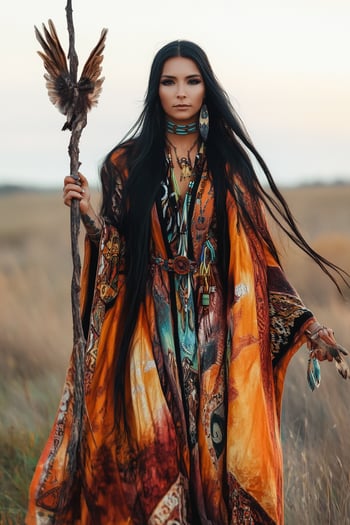
The northern territories of the Batis Republic feature a scenic, well-watered countryside dotted with prosperous settlements and intersected by a network of wide rivers. Despite a characteristically short planting season, the exceptional fertility of the soil ensures that crops mature at an accelerated rate, making harvests swift and remarkably bountiful. To the south, the terrain shifts dramatically; two-thirds of the interior is dominated by rolling hills that gradually elevate until they meet an impassable, jagged mountain range marking the southern border, beyond which lie the deep Dweorgen Quarrylands.
The remaining borders frame the Republic within a complex geopolitical matrix. The entire northern boundary opens to the sea, providing vital maritime trade lanes. To the west lies the realm of Aelfgarad, while Soltustik borders the east. The nation also maintains two shorter terrestrial borders: one to the northeast shared with Shuwalu, and a highly volatile southwestern border with the Free States. This southwestern frontier remains a constant source of friction, presenting a far greater administrative and defensive challenge to the Republic than all its other borders combined.
History
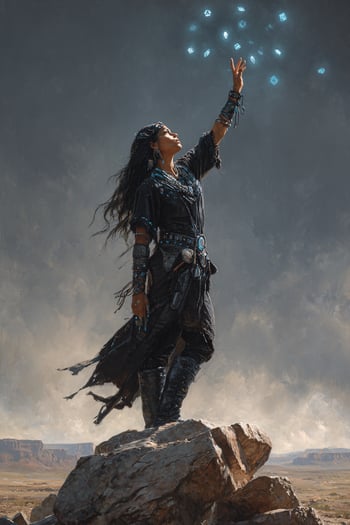
The Sophists and historical scholars of Batis face unique philosophical puzzles that set them apart from the chroniclers of other human substrains. Upon awakening from the collective amnesia of the Great Erasure, the early Batistikar immediately recognized that they possessed a fundamentally different nature from other human populations they encountered. They found themselves entirely devoid of reverence for the widespread Wodenist gods, wondering why the Great Bisan and the animal pantheon had uniquely claimed them, and why neighboring peoples like the Soltustikers felt an innate comfort living in stone fortresses and cladding themselves in heavy steel.
This profound cultural and biological divergence has fostered a widespread belief among the Batis that they possess a hidden history stretching back thousands, or perhaps millions, of years prior to the Great Erasure. They struggle to comprehend how their lineage could have diverged so thoroughly from the rest of humanity, with some scholars boldly positing that their substrain may share a deeper ancestral or spiritual connection with the natural fauna of Otan than with the other human nations that share the continent.
In terms of geopolitical conflict, the 260-year written history of the Batis Republic is remarkably peaceful, characterized by an absolute absence of domestic civil war or aggressive expansion. Their peaceful record was tested during the historical Grendel War, when the nation was formally called upon to send military aid to defend their neighbors in Soltustik. While the plight of the Soltustikers garnered many passionate sympathizers within the Republic, the proposal failed to secure the necessary democratic votes to mobilize. Interestingly, a significant portion of the populace expressed open sympathy for the Grendel, democratically recognizing the tragic validity of their plight and noting the inherent difficulty of sustaining a population trapped within barren, unforgiving swampland.
Subregions of Batis
| Copyright © 2021-2026 by Robyn Blaber and Will to Power Games. All rights reserved. Content on this website may not be reproduced without written permission of the copyright owner. |
