Batistikar
| Scientific Name | Homo Sapiens |
|---|---|
| Plural | Batistikar |
| Possessive | Batistikari |
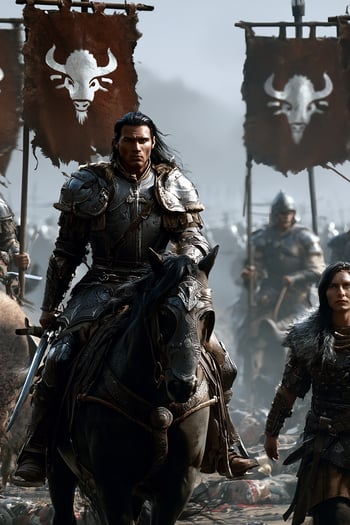
The Batistikar are the foundational providers of western Otan, primarily inhabiting the sprawling, fertile plains of the Republic of Batis. Once a largely reclusive and self-sufficient people, they were thrust onto the world stage by the sheer, undeniable scale of their agricultural success. There is a common adage in the grain markets that "for every handful of seed a Batistikar sows, they yield seven in return."
This preternatural talent extends beyond the soil to the art of animal husbandry; the Batistikar are famed for raising massive herds of bison and other high-yield livestock with a level of care and efficiency that borders on the magical. Historically, the Batistikar harvested only what they required for their own survival, but the fires of the Grendel War changed the trajectory of their nation. As their neighbors in Soltustik faced the desperate need for supplies to fuel the war effort, the Batistikar stepped forward as the breadbasket of the human alliance.
The Batistikar wartime contribution revealed their immense productivity to the wider world, and it was not long before the Kuulik Trade Company established permanent shipping routes to every major coastal city in Batis. Today, the Republic has shifted from isolation to a global hub of commerce, exporting massive surpluses of food by sea and land to Soltustik and Aelfgarad in exchange for the metals and magical components their own lands lack.
Spiritually, the Batistikar maintain a complex and layered identity. While some sporadically practice Wodenism to align with the broader human consensus, most prefer their own ancient, animistic traditions. Their faith is built upon a pantheon of gods representing the major wildlife species of Batis, a religion passed down through a vibrant oral tradition rather than holy texts. This lack of "bookishness" is compensated for by a staggering wealth of religious art; the bold, stylized symbols of the Wolf, Raven, and Orca are instantly recognizable to any native and are carved or painted onto nearly every home and sanctuary in the Republic.
Physically, the Batistikar are typically distinguished by their deep, earthy features. Tanned skin, brown eyes, and black hair are the standard, with both men and women often wearing their hair long as a sign of their connection to the natural world. Given their intimate bond with the land and its creatures, it is no surprise that those Batistikar who take up the life of an adventurer often excel as rangers, druids, or rogues. However, as with all human subcultures, these are merely trends; the Republic produces individuals of every possible coloration and calling, united more by their "Will to Power" over the wild than by any single physical trait.
Physical Characteristics
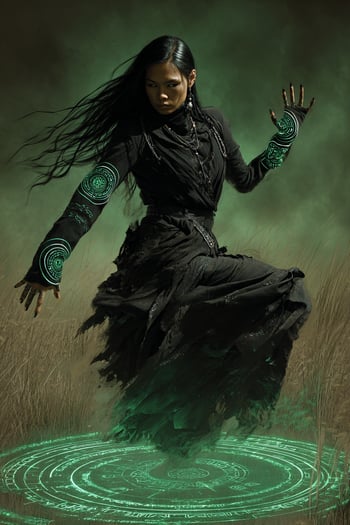
The Batistikar are generally distinguished by their earthy appearance, with tanned skin, brown eyes, and black hair being the most common combination. Both men and women frequently wear their hair long, a practice associated with their close relationship with the natural world. As with the other Human substrains, these characteristics are tendencies rather than absolutes; Batistikar individuals may display considerable variation in appearance.
Their greatest physical distinction is less a particular anatomical feature than an unusual affinity for the living world around them. Batistikar hunters and trappers move through the wilderness with remarkable effectiveness, while their ranchers are known for producing exceptionally healthy livestock. Their connection with horses is particularly strong, to the point that the sources describe an almost supernatural understanding between Batis horsemen and their animals.
This affinity naturally appears among Batistikar adventurers. Rangers, Druids, and Rogues are common expressions of their relationship with the land, while Knights patrol the enormous Batis plains and Brutes defend the borders. Their abilities are not limited to these paths, however. Batistikar Warlocks, for example, find that their traditional understanding of nature and the cycle of life and death meshes readily with the practice of summoning and necromantic magic.
Batistikar Culture
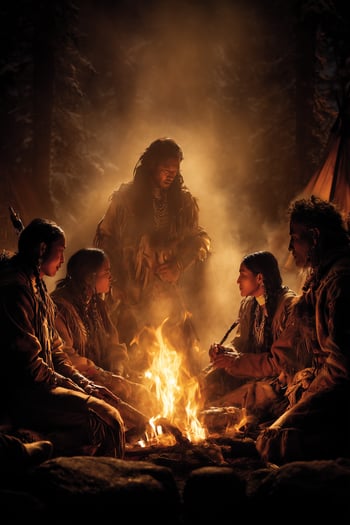
Batistikar culture is fundamentally cooperative. Their instinct to share wealth and resources helped produce the first true democracy on Otan, while older members of the community naturally transition from their earlier professions into teaching. Education is therefore not simply about passing down a trade; elders teach younger Batistikar how to investigate the world, recognize the limits of their own assumptions, and pass knowledge onward.
They also have little interest in treating work as the sole purpose of life. Farming, hunting, herding, crafting, and other occupations are necessary, but the fruits of those efforts are celebrated through festivals, song, dance, games, and communal competitions. A successful harvest, an improved horse bloodline, or a better method of preserving food can become a reason for an entire village to celebrate. Even the strongest wrestler and the person who grows the finest gourd can contribute to the same festival.
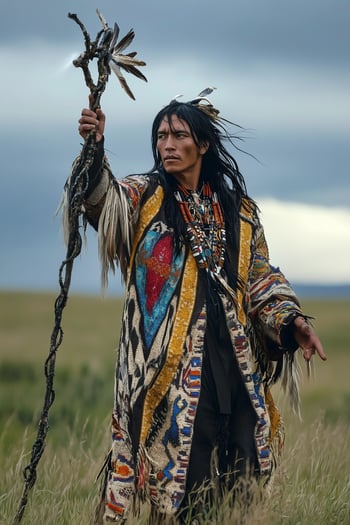
The relationship between Batistikar culture and nature is especially visible in their religion and art. Janyarism is an animistic faith centered on animal gods such as the Great Bison, Raven, and Wolf, whose wisdom is understood through the ecosystems and animals of Batis rather than through abstract theology. Religious knowledge is traditionally passed through oral traditions, while the physical symbols of those gods appear throughout the landscape on homes, sanctuaries, clothing, jewelry, and carved totems.
The Batistikar are also practical traders despite their long history of self-sufficiency. Their smithies produce everything from household implements and farming equipment to weapons and armor, often incorporating turquoise into their work as a symbol of protection, fortune, healing, and the connection between sky and water. Their agricultural surplus is exchanged for the metals, weapons, armor, gunpowder, and other technologies they do not readily produce themselves. Batis has consequently transformed from a quiet agricultural society into one of the major commercial suppliers of western Otan.
Batistikar Geography
The Batis Republic occupies a large territory in north-central and northwestern Otan, with nearly half of its land consisting of exceptionally fertile, arable grassland. The northern territories are well watered, with prosperous settlements scattered among wide rivers. Despite a short planting season, the soil is so productive that crops mature quickly, producing harvests large enough to create a permanent surplus.
Southward, the landscape changes. Roughly two-thirds of the interior consists of rolling hills that gradually rise toward an impassable, jagged mountain range along the southern border, beyond which lie the Dweorge Quarrylands. The settled population is concentrated relatively close to the coast, with most permanent communities lying within 100 Gorom of the shoreline. Farther inland, the Kospendi maintain a much more mobile existence, wandering through the open southern territories and occasionally crossing into the Free States.
Batis is bounded by several very different neighbors. The northern border opens onto the sea, providing its maritime trade routes, while Aelfgarad lies to the west and Soltustik to the east. Shuwalu borders the Republic to the northeast, while the southwestern frontier meets the Free States and is described as the Republic's most difficult border to administer and defend.
The geography explains the peculiar balance of Batis life. The north provides fertile farmland and water, the interior provides enormous open spaces for hunting and livestock, and the southern hills form a natural barrier before the mountains. The result is a land where agriculture can be extraordinarily productive without requiring the population to crowd together; the Batistikar have plenty of room, and rather more food than they know what to do with.
| Copyright © 2021-2026 by Robyn Blaber and Will to Power Games. All rights reserved. Content on this website may not be reproduced without written permission of the copyright owner. |
