Sawdager
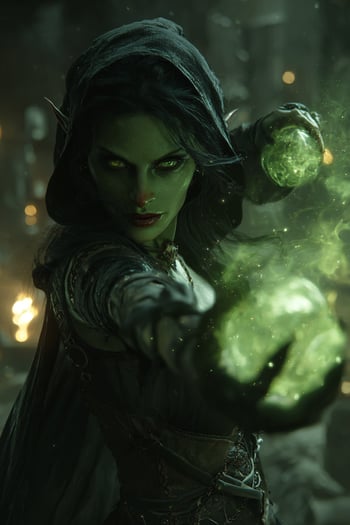
| Scientific Name | Homo Ingeniosus Mercator |
|---|---|
| Plural | Sawdager |
| Possessive | Sawdager |
Homo Ingeniosus Mercator
The Sawdager (Homo Ingeniosus Mercator) represent the apex of commercial evolution within the Kuulik strain, possessing a cognitive architecture uniquely specialized for the complexities of global trade. While a standard human perceives commerce as a simple exchange of currency for goods, a Sawdager views the world through a dense tapestry of interlocking variables.
Sawdager minds instinctively calculate the "true cost" of any commodity, accounting for production durations, completion schedules, logistical overhead, and the often-overlooked expenses of insurance and long-term storage. This innate talent for macro-economics is what allows the Kuulik to navigate the fragmented markets of Otan, turning the challenges of high-risk transport into opportunities for massive profit.
Beyond mere calculation, the Sawdagers possess an intuitive grasp of the entire product lifecycle. They automatically visualize complex distribution networks, maintaining meticulous customer relations with retailers while seamlessly navigating the cultural and localization hurdles of distributing products in foreign lands. This worldly instinct allows them to manage special requests and unforeseen logistical crises with a speed that borders on the supernatural.
Whether they are coordinating a Dweorgen ore shipment to the western Araldar Islands or localizing Aelfen art for the high mountain markets of Altinquor, Sawdager ingenuity and resilience stand behind their indispensable architecture of Otani prosperity. They strive to ensure that the wheels of the world keep turning even when political tensions have boiled over.
Physical Characteristics
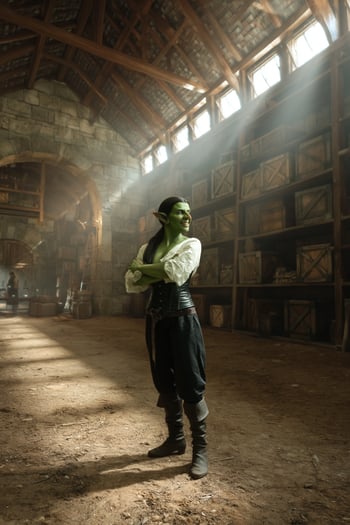
The Sawdager are among the smallest people of Otan, standing at approximately 8 Kul (120 cm) in height. They are readily distinguished from other Kuulik by the reddish coloring of their noses and ears, although the intensity of that coloration varies considerably between individuals. Their hair is uniformly black, with men sometimes beginning to lose it as early as their twenties, while both men and women generally begin to gray around forty. Despite their advancing years, Sawdagers tend to remain slim and agile well into old age.
The Sawdager body is not especially imposing, but their minds are another matter. They possess an almost instinctive sensitivity to numbers, distances, schedules, and other variables involved in commerce, with a persistent urge to calculate, compare, and improve any situation that presents an opportunity. Some individuals can also see in low light, although this is an uncommon mutation rather than a universal trait.
Their physical agility serves them well in the many occupations surrounding the Kuulik Trade Company. Sawdagers can be found not only behind counters and ledgers but managing shipping facilities, inns, warehouses, workshops, and other businesses. Rare individuals even enter occupations normally associated with their Tenizi or Uris cousins, including Knights, Wizards, Tinkers, and Brutes. Such exceptions are unusual precisely because the Sawdager talent for commerce is so valuable to the company, but they demonstrate that the smallest Kuulik are not without the ability to make themselves considerably more troublesome than their stature suggests.
Sawdager Culture

Sawdager culture is remarkably portable. Few families remain confined to a single place for generations, and it is common for Sawdager families to have relatives living abroad. Rather than attempting to impose Kuulik customs upon their hosts, Sawdagers usually adopt the local traditions of whatever community they inhabit. A Sawdager shopkeeper will decorate a business for a local festival, contribute money to community celebrations, and may cheerfully participate in ceremonies that they privately consider ridiculous. It is, quite simply, good for business.
This habit of adaptation makes the Sawdager unusually cosmopolitan. Their ability to fit into foreign communities is not necessarily evidence of deep cultural assimilation; it is a practical skill. They learn local manners, foods, songs, dances, customs, and expectations because understanding the customer is part of understanding the market. Their cuisine reflects the same attitude. Sawdagers happily adopt local eating habits and will generally accept whatever food is placed before them, provided it can reasonably be called a meal.
The Kuulik Trade Company is the center of Sawdager life. Their minds are almost never entirely free from commercial calculation, regardless of where they are or what they are doing. A conversation, a damaged wagon, an empty warehouse, a late shipment, or even a stranger's problem can become another variable in the mental machinery of a potential deal. The company itself is divided functionally among the three Kuulik substrains: Sawdagers create and manage the deals, Tenizi transport the goods, and Uris provide the muscle when someone decides that a contract was merely a suggestion.
This corporate identity also produces a peculiar Sawdager attitude toward personal ambition. Service to the Kuulik Trade Company is regarded as a fundamental social imperative, but individual success is not discouraged. A prosperous Sawdager can own businesses, manage trade routes, accumulate wealth, and eventually purchase their own ships or other enterprises while remaining firmly connected to the company. The company benefits from successful individuals, and successful individuals benefit from the company's immense network.
Sawdager businesses are consequently famous for efficiency. Inns and taverns are designed around repeat customers, with carefully managed food, service, stabling, and accommodations. Their livery operations can be prepared to handle everything from ordinary horses to the more exotic mounts of Aydahar and Grendel travelers. Contracts, fees, and opportunities to purchase additional services are generally involved. The Sawdager would probably call that good customer service.
Religion occupies a much smaller place in Sawdager culture than commerce. They do not deny the existence of the gods; their powers are too obvious for that. Instead, Sawdagers question whether the gods deserve to be considered truly divine, noting that the gods display many of the same petty, ambitious, and self-interested qualities found among mortals. Wodenism is nevertheless the preferred faith among the Kuulik, although some Sawdagers have an affinity for Loki, and the Kuulik Temple of Woden maintains its own more relaxed interpretation of the faith.
Their most important observance is therefore not particularly religious. Sawdagers refuse to work on Senbi, the sixth day of the week, except in extreme circumstances. The day is explicitly intended to remind them that they are individuals before they are employees of the Kuulik Trade Company. Most spend Senbi with their families, tending to their homes, enjoying the local community, or simply doing something that has no obvious commercial purpose. Few Sawdagers manage to resist the urge to calculate what that activity might eventually be worth.
Sawdager Geography
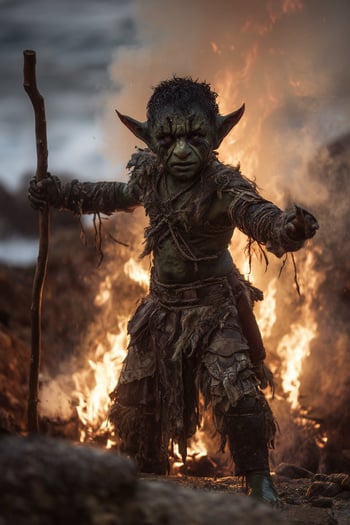
There is no single Sawdager homeland in the ordinary sense. Sawdagers can be found in nearly every significant city and village on Otan, wherever commerce has created an opportunity for a Kuulik business. Roughly half of the Sawdager population lives on the Kuulik Peninsula and its associated islands, while the remainder is scattered throughout the continent in shops, warehouses, shipping facilities, inns, and other commercial enterprises.
The Kuulik Peninsula is the only recognized territory of the Kuulik Trade Company. It lies adjacent to the Grendel-controlled territory of Maercland and serves as the physical center of the corporate nation. The Kuulik maintain their own territorial defenses, with Uris guarding the landward boundaries and Tenizi controlling the sea. The military strength of these forces is modest compared with the great armies of Otan, but attacking the Kuulik carries a different sort of risk: disrupting Kuulik trade can leave entire nations without goods they have come to depend upon.
The Sawdager presence beyond the peninsula follows the commercial arteries of Otan rather than political borders. Kuulik settlements take three broad forms: permanent communities on the peninsula, itinerant communities traveling by ship, airship, or along trade routes, and foreign settlements embedded within cities and villages across the continent. Sawdagers overwhelmingly occupy the third category, establishing themselves wherever there is enough commerce to sustain another business.
A Sawdager settlement can therefore be surprisingly difficult to identify as a settlement at all. It may be a storefront on a crowded city street, a warehouse beside a river, a shipping office near a port, an inn along an old road, or an entire cluster of businesses quietly operating under the protection of the Kuulik Trade Company. Sawdagers are constantly searching for communities that lack a Kuulik presence. If a town has no Sawdager business, there is a reasonable chance that a Sawdager is already sitting in the local inn trying to determine whether the town can support one.
This distribution gives the Sawdager an influence vastly disproportionate to their physical territory. The Kuulik may possess only a small peninsula as their recognized homeland, but their people and businesses span almost the entire continent. The Sawdager are the commercial connective tissue of that network, while their Tenizi cousins move goods and their Uris cousins protect the interests of the company. Their territory is small. Their address book is not.
| Copyright © 2021-2026 by Robyn Blaber and Will to Power Games. All rights reserved. Content on this website may not be reproduced without written permission of the copyright owner. |
