Jer Qurilissi
| Scientific Name | Homo Elementalis Lapidus |
|---|---|
| Plural | Jer Qurilissi |
| Possessive | Jer Qurilissi |
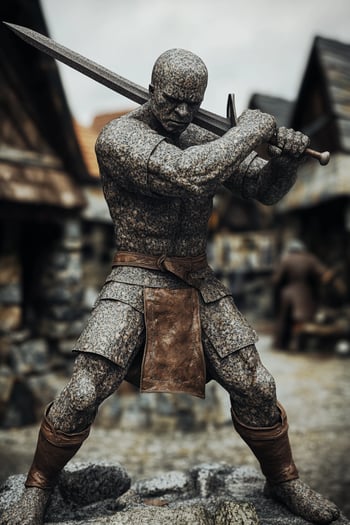
The Jer Qurilissi (Homo Elementalis Lapidus) are the foundational architects of Otan, the divine masons who literally laid the ground upon which all civilization stands. In the primordial era, they walked the surface by the tens of thousands, their singular purpose being the crystallization of the world's crust. By commanding the Material elements, Rock, Metal, and Crystal, they forged the continental plates, raised the jagged mountain ranges, and seeded the earth with the veins of ore and gemstone that fuel modern industry. To a Jer Qurilissi, the world map is not a drawing, but an intimate, living memory of every tectonic fold and subterranean vault they once helped to shape.
The power of the Jer Qurilissi is one of absolute density and structural integrity. They possess the uncanny ability to transition their physical form into the hardest substances known to Otan, becoming living statues of granite, tempered steel, or faceted diamond. This mastery allowed them to carve the very foundations of the world with their bare hands, ensuring that the earth could withstand the weight of the oceans and the fury of the storms. Even in their modern, amnesiac state, a Jer Qurilissi possesses an instinctive "stone-sense," allowing them to feel the hidden geometry of the earth and detect flaws in any structure or cavern.
Like their elemental kin, the Jer Qurilissi were largely purged from the world during the Great Erasure, as the gods sought to reset the memory of Otan. For centuries, the "ground-shapers" were believed to be extinct, their legacy buried under the very soil they created. However, legends persist of a single survivor known as Spire. According to these accounts, Spire was accidentally entombed by a massive rockslide during the chaos of the Erasure, his body preserved in a state of stasis deep within the mountain's roots. Over two centuries later, he was reportedly unearthed by a group of quarrying stone giants who, recognizing his non-human resilience, restored him to health.
The veracity of Spire’s recovery remains a subject of intense debate among the Sophists. Some claim he has integrated into the giant-kin societies of the high peaks, while others believe he wanders the deep mines of the Ungir, seeking the resonance of his lost brothers. If Spire truly exists, he is a living relic of the world’s creation, a silent witness to the era when the mountains were still soft and the gods spoke in the language of shifting stone.
Physical Characteristics
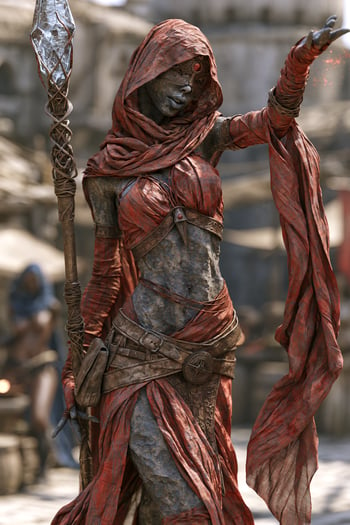
Like every Qurilissi, the Jer are physically indistinguishable from baseline humans, sharing the same range of skin, hair, and eye color found across Otan's human populations, and betraying no outward sign of the dormant power in their cells. There is nothing about a resting Jer that would separate them from any other miner, laborer, or traveler underground.
Discovery changes that only for a moment. Where an Aya is found woven into living wood, a Jer is pulled from stone itself, entombed in a vein of ore, sealed behind a rockslide, or fused so seamlessly into a cavern wall that a pickaxe strikes flesh before anyone realizes it isn't rock. Once freed, they revive as a healthy human adult, carrying no memory of how long they'd been buried or what the world looked like before.
Their elemental command, once awakened, can manifest anywhere between a simple toughening of the skin and a full transformation into granite, tempered steel, or faceted diamond. Even before that power fully surfaces, most Jer carry an innate "stone-sense," an instinctive feel for the hidden geometry of rock and cavern that no amount of amnesia seems able to erase.
Jer Qurilissi Culture
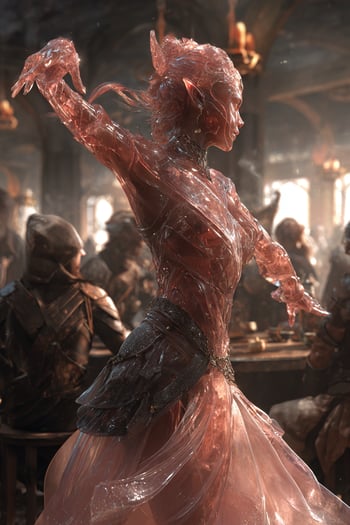
Like their Aya cousins, the Jer have no culture of their own to wake up to, so they take on the culture of whoever pulls them from the stone. Because their discovery is almost always tied to mining, it's the underground races who find them most often, and it's their customs, guilds, and gods that a newly revived Jer inherits.
An Oradweorge-rescued Jer typically settles into the quiet, trade-driven rhythm of the cave dwarves, adopting their guild structure and their preference for a life spent almost entirely out of the sun. One found by the reclusive Scraefaelfes takes on a far more guarded existence, absorbed into communities so secretive that most surface-dwellers never confirm they've met one at all.
A Jer discovered by the Karangi Ungir inherits something closer to reverence than routine. The Karangi already view digging as a form of communion with Jormungandr, architect of the earth's foundations, so a person pulled living from that same stone can be received less as a curiosity and more as a fellow traveler in their faith, whatever the Jer themselves make of that welcome.
Not every discovery ends in quiet assimilation. The legend of Spire, said to have been freed by quarrying stone giants rather than any of the usual mining folk, suggests that a Jer's fate isn't always decided by whichever guild happens to be digging that day. As with their kin, the training of an old life, a fighting stance, a mason's instinct, a smith's eye for metal, sometimes survives in a Jer's hands even when every memory attached to it is gone.
Jer Qurilissi Geography
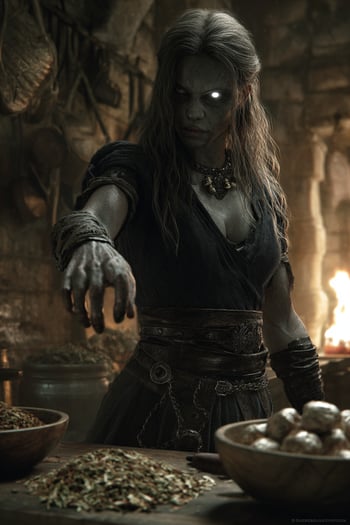
Like their Aya cousins, the Jer have no culture of their own to wake up to, so they take on the culture of whoever pulls them from the stone. Because their discovery is almost always tied to mining, it's the underground races who find them most often, and it's their customs, guilds, and gods that a newly revived Jer inherits.
An Oradweorge-rescued Jer typically settles into the quiet, trade-driven rhythm of the cave dwarves, adopting their guild structure and their preference for a life spent almost entirely out of the sun. One found by the reclusive Scraefaelfes takes on a far more guarded existence, absorbed into communities so secretive that most surface-dwellers never confirm they've met one at all.
A Jer discovered by the Karangi Ungir inherits something closer to reverence than routine. The Karangi already view digging as a form of communion with Jormungandr, architect of the earth's foundations, so a person pulled living from that same stone can be received less as a curiosity and more as a fellow traveler in their faith, whatever the Jer themselves make of that welcome.
Not every discovery ends in quiet assimilation. The legend of Spire, said to have been freed by quarrying stone giants rather than any of the usual mining folk, suggests that a Jer's fate isn't always decided by whichever guild happens to be digging that day. As with their kin, the training of an old life, a fighting stance, a mason's instinct, a smith's eye for metal, sometimes survives in a Jer's hands even when every memory attached to it is gone.
| Copyright © 2021-2026 by Robyn Blaber and Will to Power Games. All rights reserved. Content on this website may not be reproduced without written permission of the copyright owner. |
