Faun Tozakh
| Scientific Name | Homo Cornutus Cervinus |
|---|---|
| Plural | Faun Tozakh |
| Possessive | Faun Tozakhi |
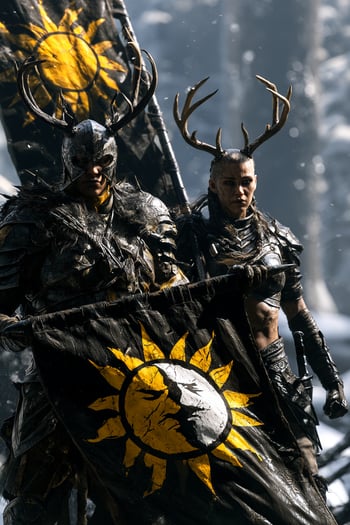
The Faun Tozakh (Homo Cornutus Cervinus) are the diurnal stewards of Shuwalu, defined by their majestic, antler-like horns and their tireless dedication to the daylit hours of the arctic north. They share the same physical hardiness as their Infernal kin, yet they are distinguished by the unique decennial molting of their antlers, a painful cycle of shedding and regrowth that serves as a recurring rite of passage. Because they are the face of the Tozakh most often encountered by foreign traders and diplomats, they act as the primary ambassadors of their culture, managing the markets, ports, and horse stables that bring the wealth of the world into their frozen territory.
In a significant departure from the traditional Wodenism practiced by many of their neighbors, the Faun Tozakh have largely embraced the Cult of Personality, specifically the worship of the centaur god Bloncamann. This theological shift is deeply rooted in their cultural identity as master equestrians and animal husbandmen. To a Faun Tozakh, Bloncamann represents the ultimate synthesis of the rider and the mount, a divine ideal of the bond they share with their legendary horses. This devotion often manifests in their art and public iconography, where the image of the centaur god is elevated as the protector of the hearth and the patron of the northern fields.
Within the dual-use structure of Tozakh society, the Faun are responsible for the vital groundwork of the nation. They manage the logistics of the day, ensuring that when the sun dips below the horizon and their Infernal partners wake, the transition is seamless. Their spiritual life under Bloncamann reinforces this sense of duty and physical excellence; for a Faun, the workday is a form of worship, and the health of their livestock is a direct reflection of their devotion.
Physical Characteristics
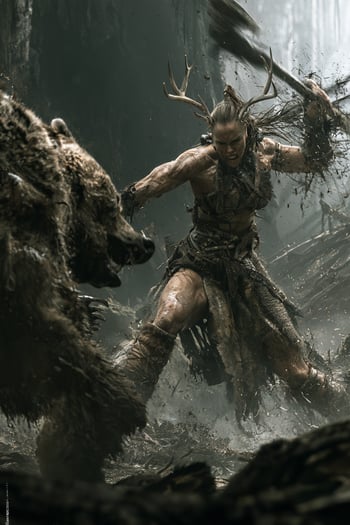
The Faun Tozakh are physically close to baseline humans, distinguished primarily by the elegant, branching antlers that crown their heads. Their skin, hair, and eye colors follow the same broad range found among human populations, although the northern climate often leaves them with a ruddy complexion from windburn and cold. Their bodies are well suited to the harsh conditions of Shuwalu, possessing the same resilience that allows their people to thrive in the frozen north.
Unlike the permanent ram-like horns of their Infernal kin, Faun antlers are renewed throughout their lives. Roughly once every decade, a Faun undergoes a painful and physically exhausting molt, shedding the old rack before beginning the equally uncomfortable process of growing a new one. During this period, the developing antlers are soft and vulnerable; damage can leave them permanently stunted or asymmetrical until the next cycle.
The antlers are more than a biological curiosity. The Faun regard them with considerable pride, seeing their size and form as a visible expression of endurance. A well-developed rack is a mark of health and resilience, while an imperfect one may carry a personal history that is difficult to hide. The process is unpleasant enough that outsiders are advised not to describe it as “just like losing a tooth.”
Faun Tozakh Culture
Faun Tozakh society is organized around the daylight half of Shuwalu’s shared existence. They manage the markets, workshops, ports, stables, and other businesses that keep the nation functioning while the sun is above the horizon. Their Infernal partners assume responsibility when night falls, allowing the same buildings, tools, and enterprises to operate continuously. The arrangement requires careful records, reliable routines, and a great deal of trust between the two halves of a household.
That trust is formalized through the practice of pairing. During their early years, Tozakh seek a counterpart from the opposite sleep cycle who shares their interests, profession, or ambitions. These partnerships may be marriages, business arrangements, or both, and most last a lifetime. A Faun does not simply manage a shop during the day; they manage half of a shared life, with the expectation that their partner will do the same when darkness arrives.
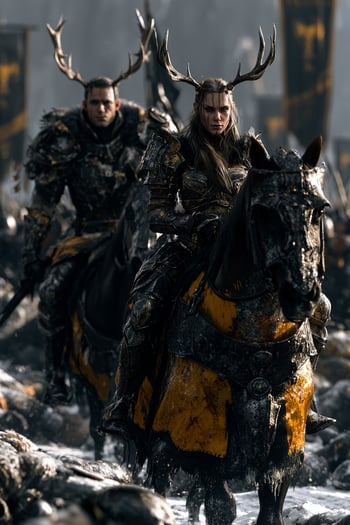
The Faun are the more visible and outward-facing representatives of Tozakh culture. They handle much of the nation’s foreign trade and are more likely than their Infernal kin to meet visiting merchants, diplomats, and adventurers. Their reputation for animal husbandry is well deserved, particularly in the breeding and training of horses capable of enduring Shuwalu’s extreme climate. Their mounts are prized throughout Otan for their stamina, intelligence, and ability to remain useful where ordinary horses would fail.
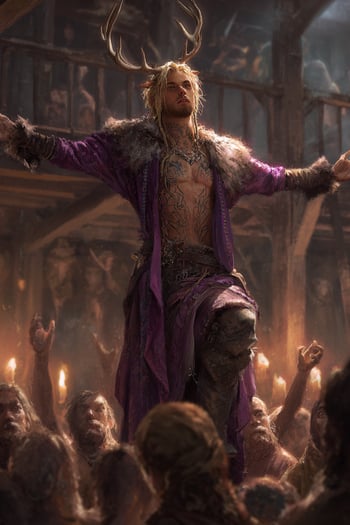
Their devotion to Bloncamann reinforces this connection between rider and animal. The centaur god is understood as the ideal union of human purpose and animal strength, and his image appears frequently in Faun art, shrines, and public spaces. Faun Divines celebrate life in its many forms and teach that the spirits of the faithful will one day be gathered in the Heavens before returning to Otan renewed. For many Faun, caring for an animal is therefore not merely a trade or responsibility, but a practical expression of worship.
The Faun also possess a strong tradition of music and poetry, although their artistic style is markedly different from that of the Aelfen. Their music is loud, percussive, and driven by rhythms that evoke the heartbeat of the north. Their poetry is direct and unadorned, often favoring blunt honesty over elaborate metaphor. Human listeners may find this refreshing; Aelfen listeners may require a quiet room afterward.
Faun Tozakh Geography
The Faun Tozakh inhabit Shuwalu, the northernmost territory of Otan. The nation covers approximately 31,172 Gorom sq. and is bounded to the north by the sea and thick ocean ice. Its landscape is rocky and heavily forested with pine, while three major rivers run south to north through the country. The largest, the Cloudfall River, feeds the basin in which the capital city of Dis is built.
Shuwalu is divided into four principal subregions: the Gehenna Peninsula in the far north and west, the Hades Reservation along the southern border with Batis, the Kur Reservation surrounding the capital and bordering Soltustik, and the Sheol Reservation along the eastern frontier. Most major settlements lie along the coast, giving the Tozakh reliable access to rich fishing grounds. During the freezing winter months, the nation also extends its practical territory onto the sea ice, establishing seasonal camps for ice fishing.
The Faun are particularly associated with the settlements, ports, and agricultural holdings that remain active during the day. Their work ensures that food, trade goods, livestock, and information are ready for the Infernal Tozakh when the sun disappears. Foreign ships are permitted to enter Shuwalu’s ports, although the Tozakh maintain only a small number of highly capable patrol vessels rather than an expansive navy. These ships are crewed by day/night pairs and can remain operational for long periods without the fatigue that would limit other nations’ crews.
The country’s forests, rivers, and open northern fields support the Tozakh’s celebrated animal husbandry. Horses are the most important of their domestic animals, but the broader culture also maintains a close relationship with the natural world. The Faun’s antlers are sometimes believed to contribute to this bond through sensory or spiritual means, though the sources do not establish precisely how that connection functions. What is clear is that the Faun know how to raise animals that can survive the cold, and they have built much of their public identity around that achievement.
| Copyright © 2021-2026 by Robyn Blaber and Will to Power Games. All rights reserved. Content on this website may not be reproduced without written permission of the copyright owner. |
