Aelfwode
| General Information | |
|---|---|
| Capital | Stapol |
| Culture | Aelf |
| Government | |
| Government Type | Kingdom |
| Demographics | |
| Total Pop | 2,333,939 |
| Urban Pop | 144,388 |
| Rural Pop | 2,189,551 |
| Settlements | 12 |
| Geography & Economy | |
| Area | 69,028 sq. Gorom |
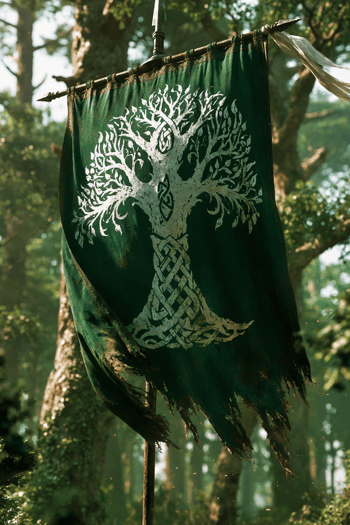
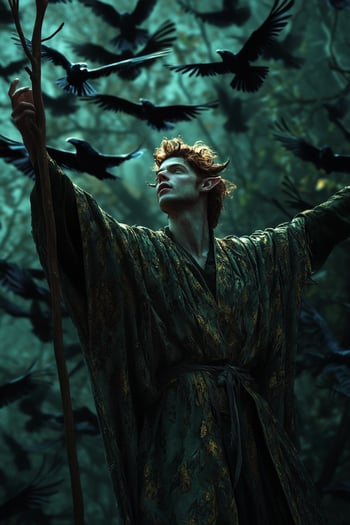
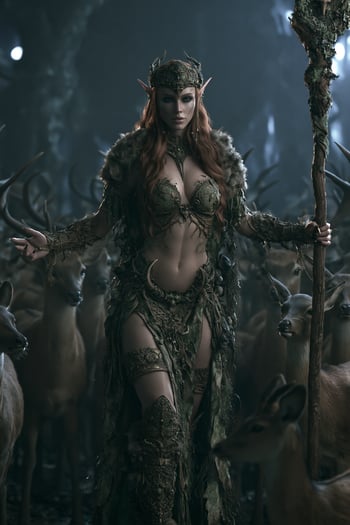
The Kingdom of Aelfwode is a proud and storied nation populated by the Wodaelfes. These Aelfen adherents stick to the principles first instilled by Woden, namely to protect and worship the forests and keep this duty at the core of their value system. The Wodaelfes don't just live among the trees; they live in the trees and spend a good amount of their time protecting the forest from those who would harm its natural beauty.
Wodaelfes are the premier stewards of Otan, believing that a healthy forest is the only true measure of a society's wealth. Their culture is built on the mastery of forestry and conservationism, ensuring that the ecosystem provides for them while they, in turn, protect its vitality. They do not merely live in the woods; they manage the wild with a sophisticated, invisible hand.
Headed by the Forest Council of Aelfwode and their king, the Wodaelfes live so closely with nature that to the untrained eye, one might assume no one lives there at all. Their tree-house settlements high above the ground allow nature to walk freely below where it might otherwise be hindered or displaced by an Aelf settlement. Only the capital city of Stapol features sections at ground level. This decision, which defies their national aesthetic, serves as a solution for housing and trading with those who are not Wodaelfes and prefer to stay on the ground.
Stapol is about as metropolitan as any Wodaelf settlement will likely ever be, featuring a spire dedicated to Frigg and a vast market that attracts traders and merchants from Soltustik, Shuwalu, and the Kuulik Trading Company. One might even find the occasional Grendel or Ungir in the city with a mind for trading. Here, foreign mounts are tethered, while the Wodaelfes themselves rely on horses that seem to run free, yet know when and where they are needed.
Population
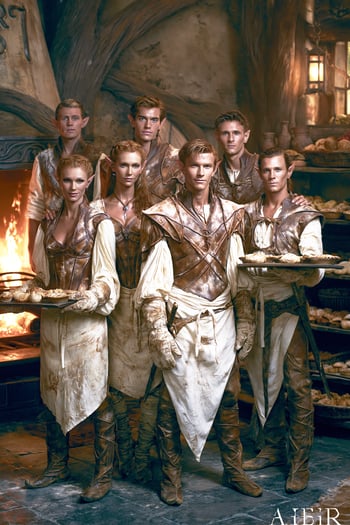
With a total population of 2.3 million, Aelfwode is one of the less diverse nations of Otan. The Dunaelf Land subregion of the country is populated by nearly half a million Dunaelfes, but other non-Wodaelf populations are kept at a bare minimum. The Wodaelfes do not permit foreigners to settle in their forests without permission, which only comes if the petitioner can prove that their presence in Aelfwode is a net benefit to everyone. Needless to say, this cold reception does little to spike their population or their trade figures.
Wodaelf populations were thinned as a result of the Grendel War, and post-war repopulation hasn't been a priority for younger Wodaelfes. Their innate understanding of the female cycle helps them to enjoy one another's company in the treetops without significantly boosting Aelfwode's population. While this eventuality has been a topic of discussion in the higher councils, it hasn't been registered as an imminent problem as the birth rate continues to increase the population, though perhaps more slowly than some would wish.
Culture

The Wodaelf aesthetic is the cornerstone of all Wodaelf culture. To the core of their essence, they believe that only nature can provide a pure aesthetic. The Friggaelfes, who believe that this is only true of art, hold this view with such adamance that it led to their schism, leaving the Wodaelfes to start a separate nation free of what they viewed as backward thinking.
Meanwhile, the Dunaelfes, who enjoy a technological aesthetic, stayed in the woods, some say purely to spite the Wodaelfes. The Wodaelfes naturally pay tribute to Woden as their patriarchal deity, viewing him as the god of the forest and a walking personification of Yggdrasil, the tree of life. Their nationally shared religion operates independently from the main Temple of Woden based in Ortalyk, though the leaders of the various Wodenist sects do meet to compare practices and liturgies.
Cultural events in Aelfwode are invariably related to horticulture and animal husbandry, mirroring the communal energy of a massive state fair. They are loath to partake in large-scale agriculture or heavy forestry so as to leave the smallest possible mark on the land, choosing instead to use what Powers they have to boost the yields of smaller specialty plantings. They practice forest farming, cultivating hidden groves of high-yield crops and tending to wild herds with a gentle, watchful authority. The greatest of their successes are submitted to the National Exhibition in Bealo, and expeditions to Aelfgarade take place every year in hopes of shaming the Friggaelfes and bringing home all their prizes.
Wodaelfen agriculture is a marvel of symbiotic cooperation between sentient and beast. Their most famous cross-cultural achievement is Tabigi Sarap, a rare and exquisite wine produced through a unique method of animal husbandry. They train small forest rodents and birds to harvest perfectly ripe grapes, ensuring the delicate fruit is collected without bruising from heavy hands or iron tools. The animals are meticulously taught to identify the ideal sugar content for natural fermentation while resisting the urge to consume the crop themselves. This process results in a wine that is prized across Otan for its purity and deep, earthen complexity.
Wodaelfen music and dance is a spritely affair with nature-inspired themes and melodies. Wodaelfen art imitates life and never strays from that imitation. During seasonal festivals, the first pressing of the wine is celebrated alongside displays of animal training, where a Wodaelf might demonstrate the perfect obedience of a forest predator. The Dunaelfes celebrate their technical advancements in Dunaelf Land and only occasionally take their works to Bealo, feeling separate from the grand Aelfen aesthetic schisms.
Politics
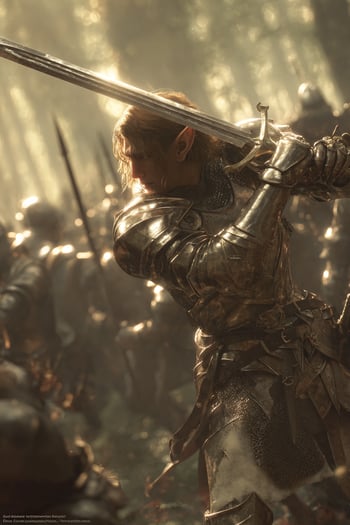
The Forest Council of Aelfwode serves as the main governing body of the nation alongside the King, yet the government remains almost invisible by design. Bound by the belief that the only true aesthetic is that which is produced by nature itself, the leadership is content to let the world take its course without the heavy hand of standard bureaucracy. There are no legislative committees to debate the look or layout of a forest; the forest simply exists as Woden intended.
This hands-off governance fosters a culture of radical individual initiative. When a major decision must be made regarding land use or resource management, a Wodaelf acts on their own intuition and trusts the outcome to the natural order or the whims of the gods. In Aelfwode, the perfect choice is the one that aligns most seamlessly with the wild, requiring no debate or formal committee to validate its beauty.
When disputes do arise between settlements or subregions, the Forest Council convenes not to pass sweeping statutes, but to mediate using the core Wodenic mandate of environmental preservation. A decision is judged successful only if it leaves the canopy intact and the ecosystem balanced. Outside of Stapol, where ground-level trade requires a touch of formal oversight for foreign merchants, the legal framework of Aelfwode relies almost entirely on shared cultural taboos against nature's destruction.
Economy
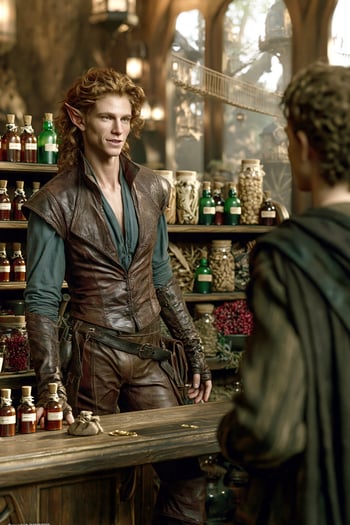
Aelfwode is entirely self-sufficient, though landlocked. Because their forest farming practices yield rich yields without depleting the soil, the nation rarely suffers from resource scarcity. Imports are kept strictly to rarities that cannot be cultivated within their borders, such as exotic spices and fine metallic fabrics.
Exports are centered on high-value artisanal goods, most notably their fine wines like Tabigi Sarap, specialized timber harvested only from naturally fallen ancient trees, and unique horticultural strains. Trade was historically discouraged by the Forest Council to minimize outside corruption, but in recent years, access has been opened up. Trade routes first expanded to the Soltustikers to the north, and more recently to the Kuulik Trading Company and all border neighbors, including limited trade with the Ungir and Grendel.
Geography
Aelfwode encompasses 69,028 square Gorom of landlocked terrain. It is bordered on the north by the Kingdom of Soltustik, on the northeast by the Grendel of Maercland, on the southeast by the Ungirsi Federation, and on the south by the Tzardom of Ortalyk.
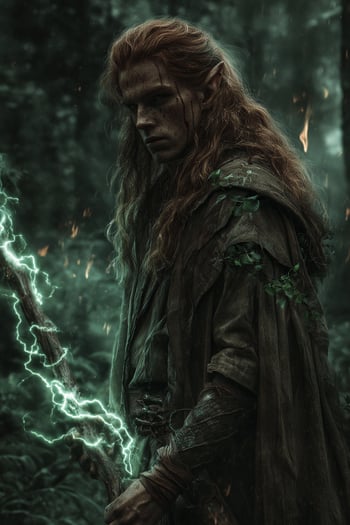
The country is divided into five distinct subregions: Beorc Land, Dunaelf Land, Larbeam Reservation, Midlen Land, and Scieno Land. The vast majority of the landscape consists of dense, primeval canopy forests, broken only by hidden agricultural groves, winding riverways, and the ground-level trading quarters of the capital city, Stapol, located in Midlen Land.
History

For the Aelfes, as with all the inhabitants of Otan, history began in the first year IM (Incipit Mundi). They awoke from the Great Erasure not as a unified people, but as distinct groups already physically and philosophically divided. The shock of the Erasure left them with no memory of their origin, only the overwhelming Aesthetic Pulse that drove the Wodaelfes into the primeval cathedrals of the forest, the Friggaelfes to the shimmering marble of the coasts, and the Dunaelfes into their technological pursuits. This immediate divergence prevented the formation of a singular Aelfen empire, ensuring that the tribes would develop as separate, often distant, cousins.
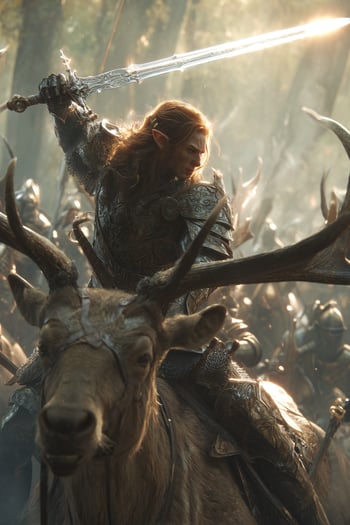
For over two centuries, the Wodaelfes remained largely insular, viewing the burgeoning human nations with a mix of pity and detached curiosity. This changed abruptly when the Grendel War began to spill out of the northern human territories. As Grendel warbands ravaged settlements in the North, the Wodaelfes faced a grim choice. Though they often viewed human expansion as a blight, they recognized that the Grendel’s sheer destructive power posed a far greater threat to the Wodenic Beauty of the natural world.
The Wodaelfes eventually entered the fray on the side of the human alliance. While human historians record this as an act of selfless compassion, Aelfen chronicles suggest a pragmatic motivation: the realization that if the human shield fell, the Aelfwode would be the next victim of Grendel aggression. Regardless of the motive, their archers and forest scouts proved pivotal in turning the tide of the conflict. Since the signing of the Concord of Kala Astanals, old Aelfen isolationism has begun to thaw, leading to the cautious opening of border markets in Stapol and a growing demand for Wodaelfen goods across Otan.
Subregions of Aelfwode
Beorc Land
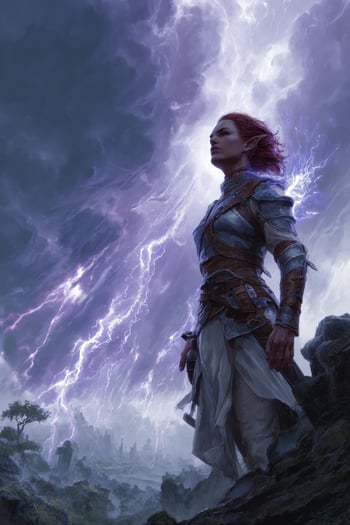
Capital: Beorc
Population: 307,643
Area (sq. Gorom).: 7,600
Dunaelf Land
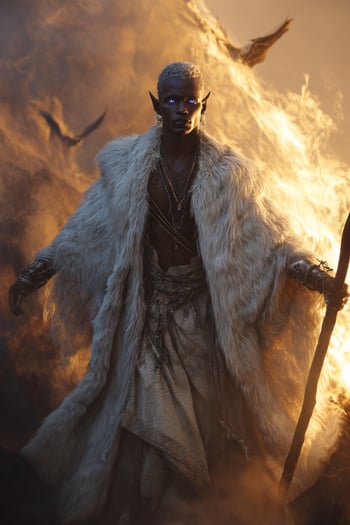
Capital: Firgenbeam
Population: 496,654
Area (sq. Gorom).: 8,160
Larbeam Reservation
Capital: Unknown
Population: 226,125
Area (sq. Gorom).: 25,724
Midlen Land

Capital: Stapol
Population: 415,311
Area (sq. Gorom).: 13,100
Scieno Land
Capital: Cirisbeam
Population: 888,207
Area (sq. Gorom).: 14,444
| Copyright © 2021-2026 by Robyn Blaber and Will to Power Games. All rights reserved. Content on this website may not be reproduced without written permission of the copyright owner. |
