Jolbaris
| Scientific Name | Homo Felinus Tigrinus |
|---|---|
| Plural | Jolbaris |
| Possessive | Jolbarisi |
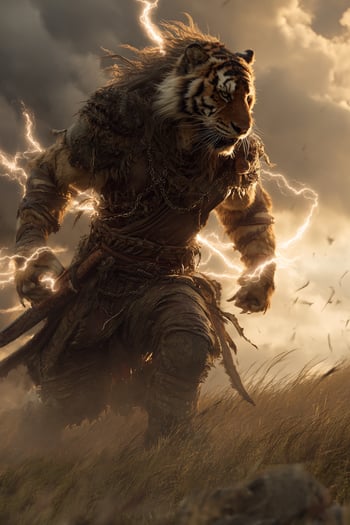
The Jolbaris (Homo Felis Tigris) are the reclusive, tigrine elite of the Misiq strain. Characterized by their striking striped coats and a temperament as solitary as the great cats they resemble, they exist as a silent shadow within Misiq society. While the Baris manage the politics and the Aristan provide the muscle, the Jolbaris eschew the "rank and file" lifestyle entirely. They inhabit secluded forest enclaves, far from the prying eyes of both the Batis and their own kin, dedicated to a life of quiet, intense preparation.
This isolation is not a sign of indifference, but of a specialized martial philosophy. The Jolbaris do not deploy regular troops to the front lines; instead, they remain hidden, training until a master of a specific Archetype (be it a martial or mystical path) reaches a pinnacle of power. Only when these individuals have attained a devastating level of lethality are they "sent into the fray."
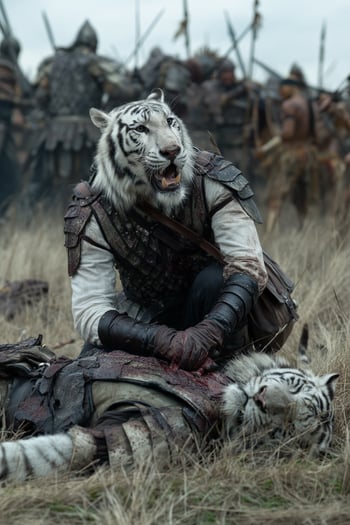
These Jolbaris heroes act as tactical scalpels rather than hammers, appearing on the battlefield to hack and blast through scores of enemies in a single engagement. The results are often catastrophic for the Batis, who find their formations shattered by a single, striped whirlwind of destruction. The results are often devastating for Batistikar manpower and morale.
Despite their distance, the bond between the Jolbaris and the broader Misiq population is defined by deep mutual respect. While other variants might technically prefer to have Jolbaris regulars bolstered within their ranks, none begrudge them their methods. The staggering sacrifices made by Jolbaris heroes in turning the tide of war are legendary, earning them a permanent place in Misiq song and story.
When the Jolbaris emerge to attend communal functions, they remain true to their nature, rarely participating in the speeches, games, or contests of strength. They appear simply to show their solidarity, standing as silent sentinels of the Misiq cause before retreating into the safety of their verdant sanctuaries. They live to train for another day.
Physical Characteristics
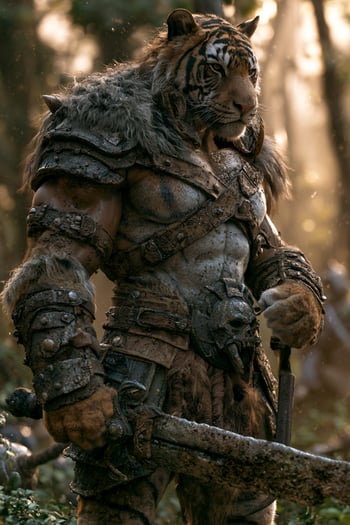
Like all Misiq, the Jolbaris carry the strain's baseline feline traits: an extended snout, rotatable ears with acute hearing, and clawed, paw-like feet set atop an otherwise human skeletal frame. What immediately sets them apart is their coat: a bold pattern of thick orange-and-white or black stripes that makes them the most visually striking of the four substrains, and the hardest to mistake for anything but what they are.
Where the Baris tend to be lean and the Aristan broad, the Jolbaris are simply bulky, carrying dense muscle across a powerful frame built for both ambush and endurance. Their bite alone is capable of rending flesh from bone, a fact that does as much to explain their fearsome reputation as their combat record does.
The Jolbaris share the Baris' low, ground-hugging stalking crouch, adapted for closing the distance on prey without being seen. Paired with this is a talent for climbing that few in Otan can match; scaling walls, trees, and cliff faces comes as naturally to them as walking upright, making them equally dangerous on the ground or three stories up.
Jolbaris Culture
Jolbaris culture runs on deep, narrow bonds rather than broad ones. Where a Baris might call half a settlement "friend", a Jolbaris keeps a small circle of family and trusted companions and invests everything into it; outsiders are met with suspicion until trust is earned, which can take years rather than days.
That same caution defines their trade. Jolbaris blacksmiths, some of the finest weapon and armor smiths in Tosenis, insist on inspecting and handling any deal themselves, alert to the possibility that a buyer might turn a purchased blade on the seller. Long-term traders who prove their good faith are welcomed warmly, but new faces earn nothing more than watchful tolerance.
Archetypally, the Jolbaris lean hard into raw power and instinct. They were the first to domesticate the bison as mounts, and their Hunters and Brutes are considered the most fearsome on Otan, alongside strength-fused Witches, nature-attuned Shamans, fearless Warlocks who advance in their craft with startling speed, and Psychics whose powers tend to operate on an outsized scale. Even their Tinkers, working with whatever scraps a resource-poor forest life allows, are prized for their ingenuity.
This same intensity shows up in their martial institutions. Groups like the Black Guards and the Revenants exist quietly for most of the year, keeps and enclaves minding their own business, until a call to arms brings them out as fully assembled forces capable of unmaking an army in a single engagement. Legends like Yerik Grizl, the self-styled Guardian of Korap, are the exception that proves the rule: the moment a Jolbaris hero fully arrives, the war changes shape around them.
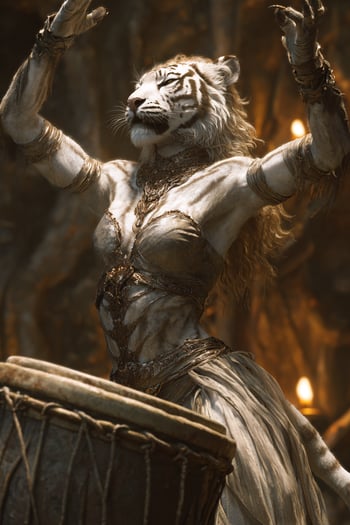
For all their distance, the Jolbaris remain bound to the wider Misiq cause. The one thing that reliably draws them out to mix freely with the other substrains is the Batis themselves; the instant the threat becomes existential, old reservations disappear. In quieter times, it's telling that a Jolbaris Bard is considered the most treasured performer at the Otan-wide Holy Week festivities, proof that even the most reclusive Misiq still know how to hold a room when they choose to.
Jolbaris Geography
True to their nature, the Jolbaris keep to the deep forest interior of Tosenis, settling in secluded enclaves well away from both the Batis and their own more populous kin. These verdant sanctuaries are chosen deliberately for their remoteness, prized as much for what they keep out as for what they offer.
Where Baris settlements cluster around the wells that sit on well-traveled routes, Jolbaris communities favor the wells that don't, the isolated waterholes off the beaten path that see few visitors by design. Their inns and stables, tending water buffalo, zebra, and donkeys, offer a reserved but genuine hospitality; travelers are welcome to rest, eat, and trade, provided they don't overstay their welcome.
As the smallest of the four Misiq substrains by population, the Jolbaris preserve their solitude even when they live in proximity to others, constructing bivouacs on the outskirts of shared settlements rather than settling within them. It's a quiet but firm boundary, a way of remaining present for their people without surrendering the distance their culture depends on.
Fittingly, it was the forested reaches the Jolbaris call home that gave rise to one of Tosenis's most consequential innovations: the domestication of the bison, first tamed by Jolbaris hands for travel, hunting, and war, long before the practice spread to the Batistikar and beyond.
| Copyright © 2021-2026 by Robyn Blaber and Will to Power Games. All rights reserved. Content on this website may not be reproduced without written permission of the copyright owner. |
