Karangi
| Scientific Name | Homo Draconiculus Tenebricus |
|---|---|
| Plural | Karangi |
| Possessive | Karangi |
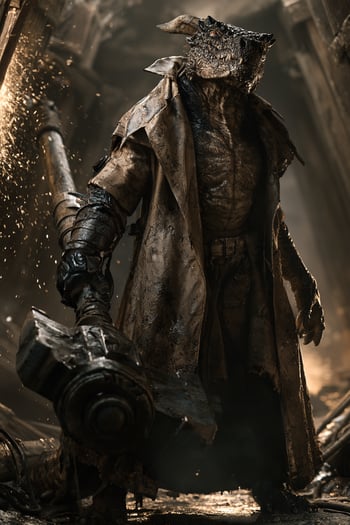
The Karangi Ungir (Homo Draconiculus Tenebricus) are the quintessential excavators of Otan. While other subterranean races like the Oradweorges or the Scraefaelfes dwell within the earth, none can match the sheer velocity or precision of the Karangi when it comes to boring through solid stone. They possess a unique tunneling philosophy; while their service tunnels are often unnervingly narrow, barely wider than the width of their own skulls, these claustrophobic arteries lead to massive, sprawling underground complexes. Rumors persist among surface scholars that these works are so extensive they form a subterranean shadow-map of the world above, physically connecting every one of their major settlements.
This relentless tunneling fervor makes the Karangi the primary source of rare minerals and gems in the region. However, their contribution to the Ungir economy is filtered through a powerful, innate instinct for hoarding. Typically, only a tithe of an individual’s personal finds is surrendered to the community for external trade.
These limited resources are used as a vital lifeline, exchanged for surface-grown foods and specialized supplies that are impossible to produce or acquire in the deep dark. This scarcity of trade goods often makes Karangi-sourced gems among the most expensive and sought-after commodities in the markets of the surface world.
The spiritual life of the Karangi is as hidden as their cities, centered around the worship of the world-serpent Jormungandr. They view the Great Serpent as the ultimate architect of the earth's foundations, and their own digging is seen as a form of terrestrial communion. For their Holy Days, they emerge from the earth only under the cover of night, sending somber delegations to the surface to celebrate the turning of the seasons.
Cross-cultural gatherings such as the Holy Days are not merely religious; they serve a vital administrative purpose. It is during these moonlit rites that the Karangi receive their "digging orders" for the coming year, a strategic blueprint that coordinates their expansion and ensures the structural and social integrity of their hidden empire. The ability to hide away their people is a survival instinct that will never leave the Ungir psyche.
Physical Characteristics
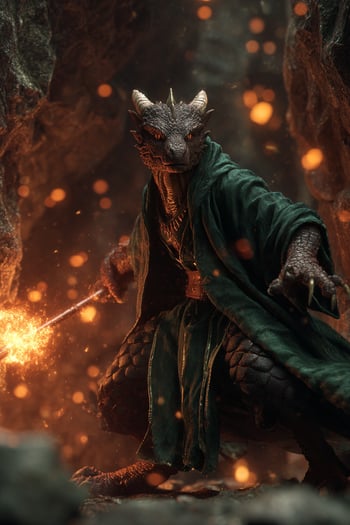
The Karangi possess the same compact, draconic physiology found throughout the Ungir strain. They are small, lightweight humanoids with toughened skin, scattered scales, claw-like nails, elongated crocodilian jaws, small fixed horns, and short dragon-like tails. Their tails provide excellent balance in the uneven terrain of the deep earth and can sometimes be used as a secondary grip, though they lack the dexterity required for delicate work.
The Karangi are particularly well adapted to life where there is very little light. Their eyes are finely tuned to the gloom of the deep earth, allowing them to navigate and work in conditions that would leave most surface-dwellers helpless. This adaptation, combined with their diminutive size and natural balance, makes them exceptionally effective at moving through the narrow passages they create.
Their greatest physical advantage, however, may be their sheer tolerance for confined spaces. Karangi tunnel systems routinely include passages that would be difficult or impossible for larger humanoids to navigate, yet the Karangi move through them with remarkable speed. Their ability to work, fight, and travel in these cramped environments has made them the undisputed masters of subterranean movement.
Karangi Culture
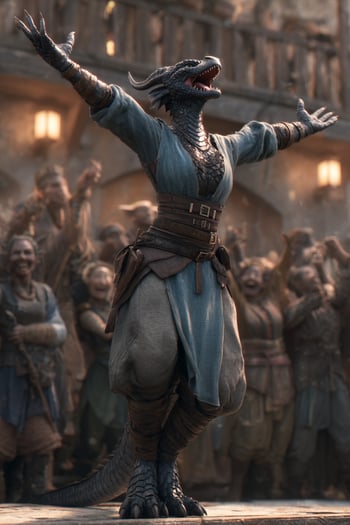
The Karangi are legendary diggers, and excavation is more than an occupation for them. They dig because they need to, because their communities need them to, and sometimes simply because there is stone in front of them that has not yet been removed. They carve escape tunnels, caverns, agricultural galleries, roads, and enormous interconnected networks with an enthusiasm that borders on compulsion.
Hoarding is equally fundamental to Karangi life. Ungir tradition recognizes personal, community, and national hoards, with each individual expected to contribute to the larger whole before adding to their own wealth. The Karangi's extraordinary access to gems and minerals makes this tradition particularly consequential, although much of what they uncover remains within Karangi hands rather than reaching surface markets.
The Karangi also carry a substantial responsibility for protecting their fellow Ungir. They regularly carve escape routes for surface communities and can transform their tunnels into formidable defensive systems, collapsing passages, creating bottlenecks, and preparing traps for anyone foolish enough to follow them underground. Their work has made the subterranean regions of the Ungirsi Federation exceptionally difficult to invade.
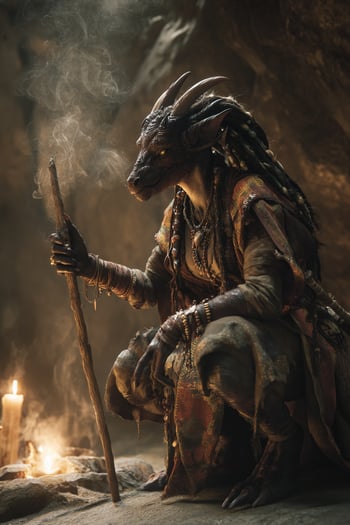
Karangi life is not entirely about digging and defense. Shamans hold an important place in their isolated communities, helping their people understand the dangers of the world above and providing guidance in the darkness. The Karangi also participate in the larger religious and cultural life of the Ungir, emerging from their hidden settlements for communal gatherings and celebrations.
The Karangi have developed a remarkable relationship with the strange creatures found in their underground world. Glass Salamanders are kept as mounts and beasts of burden, capable of squeezing through passages scarcely wider than their riders. Karangi Knights have turned this advantage into a military art, allowing them to appear almost anywhere within their tunnel network with alarming speed.
Karangi Geography
The Karangi occupy the deep subterranean regions of the Ungirsi Federation. Their communities are hidden beneath the surface and connected by an immense network of tunnels, roads, caverns, and underground structures. Surface visitors rarely encounter them unless they are specifically seeking the tunnels or happen to witness a Karangi emerging for supplies.
Their tunnels serve purposes far beyond simple transportation. Karangi excavations include agricultural galleries, escape routes, defensive positions, and the infrastructure connecting underground settlements. Some underground roads extend for days of travel, creating a hidden transportation network that allows the Karangi to move people and goods while remaining almost entirely concealed from the surface.
The deep earth is also the source of the Karangi's greatest economic resource. Their relentless excavation exposes rare minerals and gems, which enter the wider Ungir economy through underground markets and trade with the surface-dwelling Ustinde and other communities. The Karangi therefore occupy an unusual position: they live in a world largely hidden from everyone else while simultaneously supplying some of the wealth that keeps the visible Federation functioning.
The tunnels themselves are also a formidable geographic defense. Military analysts consider the subterranean Karangi a major reason the Ungir homeland is so difficult to invade, with an ever-expanding maze of passages and hazards beneath the surface. An invading army might conquer the settlements it can see and still find itself surrounded by an enemy that has been moving beneath its feet the entire time.
| Copyright © 2021-2026 by Robyn Blaber and Will to Power Games. All rights reserved. Content on this website may not be reproduced without written permission of the copyright owner. |
