Dweorgen Language
| General Information | |
|---|---|
| Native Name | Dweorgish |
| Language Family | Ortaluyk Til |
| Usage | Spoken, Written |
| Speakers | |
| Where Spoken | Quarrylands |
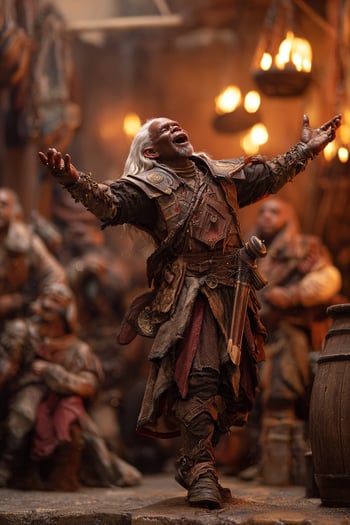
The Dweorgen Language is spoken almost exclusively by the Dweorges of the Quarrylands. It belongs to the Ortaluyk Til family and shares much of the grammatical structure of the Otani language, though the rules of Dweorgen are considerably more rigid. With far less contact with outside languages than its Ortalyk cousin, Dweorgish has retained older structures and developed a reputation for precision. What it lacks in linguistic flexibility it makes up for in being remarkably difficult to misunderstand once one has learned it properly.
To an outsider, however, Dweorgish may not sound particularly precise. The language is breathy and punctuated by frequent little squeaks and excited ticks, giving the impression of yaks arguing over their breakfast. This peculiar rhythm varies somewhat between the dialects, but the general impression remains unmistakably Dweorgen. Speakers themselves seem entirely unaware that a language can sound simultaneously industrious and mildly indignant.
Speakers and Distribution
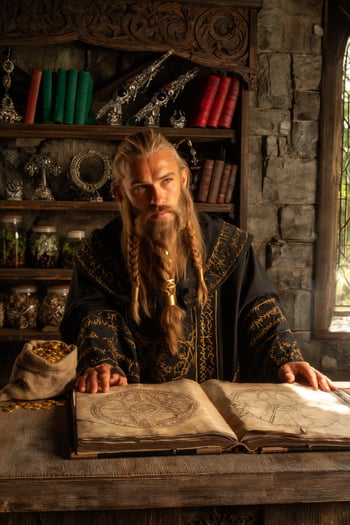
There are just under 4 million speakers of Dweorgen, divided into dialects that broadly follow the four Dweorgen substrains. The high-altitude Beodweorg dialect is itself divided into dozens of smaller regional forms, reflecting the isolation of communities scattered throughout the northern mountains. The Common Dweorgish tongue is most widely associated with the Fyldweorges and is also spoken by some Haefdweorges, providing a useful common form between the more specialized dialects.
The Haefdweorg dialect has developed a distinct maritime character, complete with such an abundance of slang that outsiders sometimes wonder whether it contains more informal expressions than actual language. The Oradweorg dialect is generally regarded as the closest surviving form to the language's older roots and has an unusually formal character. When an Oradweorg speaks to another Dweorg, the result can sound less like conversation and more like someone reading aloud from a carefully composed letter.
The Oradweorges have taken this tendency toward precision one step further with the development of the Miners Code. Rather than speaking, the Code represents Dweorgen through a system of taps that can be transmitted through stone, allowing miners to communicate when separated by rock or working in different passages. Centuries of use have produced shortcuts, conventions, and an extensive slang of its own. The result is no longer merely a method of representing Dweorgen, but a specialized language of the deep earth.
Writing and Literature
The Book of Woden, translated into Dweorgen, is by far the most common major publication found throughout the Quarrylands. Copies can be found in temples, settlements, and private collections, and the work provides a common written reference across the otherwise varied Dweorgen dialects. Religious writing therefore remains one of the strongest forces holding the written language together, even as spoken Dweorgen continues to develop along substrain and regional lines.
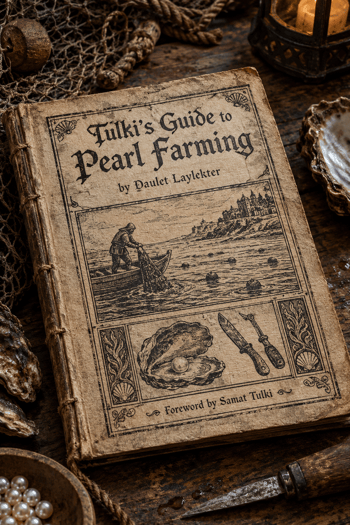
Dweorgen literature is nevertheless dominated by something considerably more practical than theology: the Tulki Guides. Originally published informally by Samat Tulki as loose unbound pages, these concise manuals became useful collections of practical knowledge and eventually grew into an entire publishing enterprise. Different specialists have since contributed to the series, allowing a guide to yak grooming to sit comfortably beside one covering sail repair, with neither requiring the original author to have known much about the other.
The Tulki library has long since outgrown its namesake. Its guides cover the practical arts of Dweorgen life and have become so useful that the collection rivals, and in some subjects surpasses, the practical holdings of many Sophist libraries. A Tulki volume is therefore less likely to be treated as great literature than as something far more valuable to a Dweorg: a book that tells you how to fix the thing that has just broken.
| Copyright © 2021-2026 by Robyn Blaber and Will to Power Games. All rights reserved. Content on this website may not be reproduced without written permission of the copyright owner. |
