Human: Difference between revisions
Robyn.Blaber (talk | contribs) No edit summary |
Robyn.Blaber (talk | contribs) No edit summary |
||
| (One intermediate revision by the same user not shown) | |||
| Line 24: | Line 24: | ||
| climate = Tropical,Dry,Alpine/Polar,Continental,Temperate | | climate = Tropical,Dry,Alpine/Polar,Continental,Temperate | ||
| terrain = Coastal,Plains,Hills,Mountains,Ocean/[[Sur]]face,[[Un]]derground,Metropolitan | | terrain = Coastal,Plains,Hills,Mountains,Ocean/[[Sur]]face,[[Un]]derground,Metropolitan | ||
| location = [[Araldar]] | | location = [[Araldar]],[[Karazalik]],[[Ontustik]],[[Ortalyk]],[[Soltustik]],[[Batis]] | ||
| disposition = Self-aggrandizing | | disposition = Self-aggrandizing | ||
}} | }} | ||
| Line 83: | Line 83: | ||
== [[Human]] Substrains == | == [[Human]] Substrains == | ||
=== [[Araldikar]] Substrain === | |||
{{LoreImage|https://imagedelivery.net/TNzzP2IqyQLYoHEs2ZN5aQ/e42e0747-f428-411a-89f0-c94b369e1200/wiki#.png|350px|right}} | |||
'''Description:'''The [[Araldikar]] (🔊 ah-RAWL-dih-KAR) are islanders who hail from the island nation of [[Araldar]] on the western coast of [[Otan]]. | |||
'''Overview:'''The [[Araldikar]] are the undisputed masters of the western horizon, hailing from the rugged island nation of [[Araldar]]. Positioned at the westernmost edge of [[Otan]], these islanders are forged by the salt and spray of the sea, possessing wind-beaten bronze complexions and dark, resilient features that mirror the deep waters they inhabit. Their identity is so inextricably linked to the ocean that they are often recognized by a distinct western dialect of [[Otan]]i, a speech pattern shaped by the rhythms of the coast. | |||
A unique characteristic of the [[Araldikar]] is their near-universal bilingualism. While they maintain a command of the common [[Otan]]i language for trade and diplomacy, they speak a secondary tongue known as [[Araldar]] Pidgin among themselves. This linguistic hybrid is a functional tapestry woven from [[Otan]]i, [[Sweardaelf]], and [[Aelf]]ish, serving as a practical tool for a seafaring people who have historically traded and interacted with the diverse cultures of the western shores. While standard [[Otan]]i dominates the larger ports, the Pidgin remains the true language of the heart on the smaller, more isolated islands. | |||
The spiritual life of the [[Araldar]] is governed by [[Mujitism]], a faith as fluid and powerful as the tides. [[Mujitism]] is a collection of nautical legends where heroes frequently cross the threshold between the human and the oceanic, engaging with, or even transforming into, the great creatures of the deep. This religion instills a profound moral code centered on a deep-seated respect for the sea. To an [[Araldikar]], the ocean is not a resource to be plundered, but a sovereign entity to be honored; a belief that dictates their sustainable fishing practices and their cautious, respectful approach to maritime travel. | |||
Economically and socially, the sea is the pulse of the nation. While inland [[Araldar]] supports traditional farming and trade, more than half of the population lives either adjacent to the water or directly upon it at any given time. Nautical skills like sailing, deep-water fishing, and swimming are not merely hobbies but fundamental life skills acquired in early childhood. This maritime focus is reflected in the nation's wealth distribution; the most prestigious and highest-paying occupations almost exclusively involve a life at sea, whether as a master navigator, a deep-sea harvester, or a captain of the most powerful navy in [[Otan]]. | |||
{{-}} | |||
=== [[Soltustiker]] Substrain === | |||
{{LoreImage|https://imagedelivery.net/TNzzP2IqyQLYoHEs2ZN5aQ/78d84123-0fcc-4030-a6f2-3c32a8c46e00/wiki#.png|350px|right}} | |||
'''Description:'''The northern [[Soltustik]]ters (🔊 sol-TOO-stik-er) have a human culture largely influenced by the terribly cold weather of their native country of [[Soltustik]]. | |||
'''Overview:'''The [[Soltustiker]]s are a people forged by the unrelenting frost of the northernmost reaches of [[Otan]]. Their national identity is inseparable from the frozen geography of [[Soltustik]], a land eternally plunged into a sub-arctic climate. This environment has granted the [[Soltustiker]]s a physiological edge; they possess a natural, preternatural resistance to the cold that allows them to thrive and operate in temperatures that would leave the other inhabitants of [[Otan]] stiffly frozen. Their architectural and sartorial skills are entirely dedicated to the preservation of heat, turning the act of survival into a sophisticated cultural art form. | |||
Politically, [[Soltustiker]] society is structured as a rigid, traditionalist feudal hierarchy. While the system tends toward a patriarchal model in its historical roots, the modern division of labor is split pragmatically between the sexes. This is best exemplified by the current sovereign, Queen [[Kara]] [[Muz]], who holds absolute authority over the realm. The nation is divided into distinct Baronies, governed by Barons or Baronesses who swear fealty to the Queen. These nobles, in turn, oversee a network of Governors responsible for individual settlements, ensuring that every citizen of the land is bound by a chain of homage that reaches directly to the throne. | |||
The spiritual life of the north is dominated by an unwavering, almost militant devotion to [[Wodenism]]. To a [[Soltustiker]], there is no other pantheon worthy of acknowledgment, and [[Woden]] stands as the undisputed Primarch of all existence. This devotion permeates their daily speech to an obsessive degree; [[Soltustiker]]s are known to invoke the name of [[Woden]], or any of his nearly one thousand liturgical nicknames, in almost every other sentence. Their faith is not one of quiet contemplation, but of boisterous, constant recognition of the divine will in the face of the howling northern winds. | |||
Physically, the northerners are adapted to their low-light environment, with skin tones ranging from a ruddy pinkish hue to a stark, porcelain white. While their hair can span the spectrum from flaxen blonde to a deep black, their eyes are most commonly found in shades of piercing blue or glacial green. Interestingly, the [[Soltustiker]] bloodline is more diverse than its isolation might suggest; due to their geographic proximity to the ancient [[Aelfwode]], these northern communities produce a significantly higher number of Half-[[Aelf]]es than any other human subculture, blending the resilience of man with the ethereal echoes of the forest. | |||
{{-}} | |||
=== [[Karazalikar]] Substrain === | === [[Karazalikar]] Substrain === | ||
| Line 97: | Line 123: | ||
{{-}} | {{-}} | ||
=== [[ | === [[Ontustiker]] Substrain === | ||
{{LoreImage|https://imagedelivery.net/TNzzP2IqyQLYoHEs2ZN5aQ/ | {{LoreImage|https://imagedelivery.net/TNzzP2IqyQLYoHEs2ZN5aQ/6dd9118c-77d4-4131-5c4a-4b86647c4000/wiki#.png|350px|right}} | ||
'''Description:'''The [[ | '''Description:'''The [[Ontustiker]] (🔊 on-TOO-stik-er) are the southern people of [[Otan]]. They are generally recognizable by their olive complexions, brown eyes, and thick black hair. | ||
'''Overview:'''The [[ | '''Overview:'''The [[Ontustiker]]s are the resilient and devout inhabitants of the southern reaches, a people whose identity is forged by the stark extremes of the Caliphate of [[Ontustik]]. Their homeland is a country of dramatic contrasts, where lush, verdant riverbeds and fertile lake basins are carved into the heart of vast, unforgiving deserts. This geography has created a society of dual mastery; the [[Ontustiker]]s are at once expert agriculturalists who coax life from the water’s edge and peerless survivalists capable of navigating the shifting sands of the deep arid wastes. | ||
Physically, the [[Ontustiker]]s are characterized by a wide spectrum of olive-toned complexions that range from light to exceptionally dark, with these variations appearing randomly across the Caliphate rather than being tied to specific regions. Their hair is typically thick and ranges from deep brown to a lustrous black, though it is often cosmetically or magically altered, and fades into distinguished shades of peppered grey or silver with age. | |||
While their eyes are almost universally a warm, deep brown, the rare occurrence of green or grey irises is whispered to be a sign of a unique destiny. Beyond these cosmetic traits, they possess a distinct physiological advantage over their northern cousins: a remarkable natural resistance to sunstroke and heat exhaustion, allowing them to endure the rigors of the desert sun with a stoicism that baffles outsiders. | |||
The true defining feature of an [[Ontustiker]], however, is not found in their blood but in their soul. They are a people defined by an absolute, visible devotion to [[Aspan]], the god of the sky, and the broader [[Aspan]]ist pantheon. It is nearly impossible to find an [[Ontustiker]] whose clothing or person is not adorned with symbols of their faith. This religious influence creates a fascinating cultural paradox; [[Aspan]]ist theology teaches both the supreme sovereignty of the gods and the radical responsibility of the individual. An [[Ontustiker]] is just as likely to shrug off a tragedy as the "Will of [[Aspan]]" as they are to immediately rise and apply their "[[Will to Power]]" to rectify the situation. | |||
This balance between divine submission and human agency makes them one of the most stable and focused subcultures in [[Otan]]. Whether they are tending to the irrigation of a desert oasis or leading a pilgrimage across the scorched plains, the [[Ontustiker]]s move with a sense of purpose derived from the belief that they are the chosen stewards of the sky-god’s domain. In the eyes of the Caliphate, the desert is not a barrier, but a sacred proving ground where the strength of one's faith and the sharpness of one's survival instincts are tempered into a single, unbreakable force. | |||
{{-}} | {{-}} | ||
| Line 125: | Line 151: | ||
Linguistically, the [[Ortalykshilar]] are perhaps the most versatile people in the world. While the common [[Otan]]i language is their mother tongue, the necessities of their "Center of the [[Un]]iverse" lifestyle mean that a significant portion of the population is multilingual. It is not unusual for an [[Ortalykshilar]] tradesman or diplomat to be fluent in the tongues of their various trading partners, allowing them to navigate the complex social and political waters of [[Otan]] with a grace that other, more isolated subcultures often lack. | Linguistically, the [[Ortalykshilar]] are perhaps the most versatile people in the world. While the common [[Otan]]i language is their mother tongue, the necessities of their "Center of the [[Un]]iverse" lifestyle mean that a significant portion of the population is multilingual. It is not unusual for an [[Ortalykshilar]] tradesman or diplomat to be fluent in the tongues of their various trading partners, allowing them to navigate the complex social and political waters of [[Otan]] with a grace that other, more isolated subcultures often lack. | ||
{{-}} | |||
=== [[Batistikar]] Substrain === | |||
{{LoreImage|https://imagedelivery.net/TNzzP2IqyQLYoHEs2ZN5aQ/d2b95020-5e60-4e5a-5084-65c3bde8ac00/wiki#.png|350px|right}} | |||
'''Description:'''The [[Batis]]tiktar (🔊 bah-TIS-tih-KAR) are natives of northwestern [[Otan]]. Formerly a withdrawn people, they came to the world's attention that the [[Batis]]tiktar were exceptional agriculturalists. | |||
'''Overview:'''The [[Batistikar]] are the foundational providers of western [[Otan]], primarily inhabiting the sprawling, fertile plains of the Republic of [[Batis]]. Once a largely reclusive and self-sufficient people, they were thrust onto the world stage by the sheer, undeniable scale of their agricultural success. There is a common adage in the grain markets that "for every handful of seed a [[Batistikar]] sows, they yield seven in return." | |||
This preternatural talent extends beyond the soil to the art of animal husbandry; the [[Batistikar]] are famed for raising massive herds of bison and other high-yield livestock with a level of care and efficiency that borders on the magical. Historically, the [[Batistikar]] harvested only what they required for their own survival, but the fires of the [[Grendel]] War changed the trajectory of their nation. As their neighbors in [[Soltustik]] faced the desperate need for supplies to fuel the war effort, the [[Batistikar]] stepped forward as the breadbasket of the human alliance. | |||
The [[Batistikar]] wartime contribution revealed their immense productivity to the wider world, and it was not long before the [[Kuulik]] Trade Company established permanent shipping routes to every major coastal city in [[Batis]]. Today, the Republic has shifted from isolation to a global hub of commerce, exporting massive surpluses of food by sea and land to [[Soltustik]] and [[Aelfgarad]] in exchange for the metals and magical components their own lands lack. | |||
Spiritually, the [[Batistikar]] maintain a complex and layered identity. While some sporadically practice [[Wodenism]] to align with the broader human consensus, most prefer their own ancient, animistic traditions. Their faith is built upon a pantheon of gods representing the major wildlife species of [[Batis]], a religion passed down through a vibrant oral tradition rather than holy texts. This lack of "bookishness" is compensated for by a staggering wealth of religious art; the bold, stylized symbols of the [[Wolf]], Raven, and Orca are instantly recognizable to any native and are carved or painted onto nearly every home and sanctuary in the Republic. | |||
Physically, the [[Batistikar]] are typically distinguished by their deep, earthy features. Tanned skin, brown eyes, and black hair are the standard, with both men and women often wearing their hair long as a sign of their connection to the natural world. Given their intimate bond with the land and its creatures, it is no surprise that those [[Batistikar]] who take up the life of an adventurer often excel as rangers, druids, or rogues. However, as with all human subcultures, these are merely trends; the Republic produces individuals of every possible coloration and calling, united more by their "[[Will to Power]]" over the wild than by any single physical trait. | |||
{{-}} | {{-}} | ||
| Line 144: | Line 185: | ||
{{-}} | {{-}} | ||
== [[Human]] Occupied Regions == | |||
''' | === [[Araldar]] === | ||
{{LoreImage|https://imagedelivery.net/TNzzP2IqyQLYoHEs2ZN5aQ/27c731ca-03d9-4318-f2a5-ce3dd4800d00/wiki#.png|350px|right}} | |||
'''Description:''' The [[Araldar]] (🔊 ah-RAWL-dar) Coast is an island archipelago off [[Otan]]'s western coast. The [[Araldar]] Coast is a collection of Baronies governed by its military, the [[Un]]ion of [[Araldar]]. | |||
'''Overview:''' The west coast of [[Otan]] is capped with the [[Araldar]] archipelago, known more commonly as the [[Araldar]] Coast. The main island, [[Jagalik]] Island, is home to its premier city and port of [[Jagalik]], with a total of 10 other islands making up the rest of [[Araldar]]'s territory. These islands are populated by the [[Araldikar]], a unique human substrain bound together by a shared maritime fashion sense, a highly distinct accent, and an unbreakable bond with the open sea. | |||
Because of its unique location, [[Araldar]] formed a highly distinctive government: a naval stratocracy. To an outside observer, this might resemble a military junta or dictatorship, but it operates as a deeply militarized meritocracy. Leaders are subject to stern reviews, rigid quotas, and operational metrics that must be continuously maintained to hold leadership positions. Ambition is channeled strictly through service; there are no shortcuts to power here. | |||
The | The [[Araldar]] Navy appoints governors to the various subregions of the nation, which they call Baronies. Each Barony, from the bustling shipyards of [[Jagalik]] to the outer reaches of [[Bezkat]], Kit, and Segizayak, is required to produce men, timber, and materiel for the navy. This constant pipeline of resources keeps the islands safe and, more importantly, keeps trade afloat, both literally and figuratively. | ||
With the West Coast of [[Otan]] being largely dominated by the anarchic [[Free States]], these waters are generally considered highly unsafe for unescorted merchant travel. The [[Araldar]] Navy’s constant presence acts as the single stabilizing force in an otherwise lawless expanse of ocean, ensuring that goods from distant ports can safely reach their destinations. | |||
{{-}} | {{-}} | ||
=== [[ | === [[Karazalik]] === | ||
{{LoreImage|https://imagedelivery.net/TNzzP2IqyQLYoHEs2ZN5aQ/ | {{LoreImage|https://imagedelivery.net/TNzzP2IqyQLYoHEs2ZN5aQ/ddb9fe0b-a84c-44d5-41d3-db4a2439a700/wiki#.png|350px|right}} | ||
'''Description:'''The | '''Description:''' The south-central nation of [[Karazalik]] (🔊 care-ah-ZAHL-ik) is populated by [[Human]]s, noted for their dark complexions and matriarchal society. | ||
'''Overview:''' | '''Overview:''' Of all the creatures who walk the lands of [[Otan]], perhaps the most gentle to their surroundings are the [[Karazalikar]]. Their worldview stems from their Baksist religion, which holds that the entire world is a child born to the goddess [[Ana]] and must be nurtured and raised as such. The result is a people who ease their way through nature, rather than confront it, living in harmony with the environment around them. | ||
The [[Karazalikar]] believe that women are born whole, but men are born without a soul. To collect the shards of their soul and enable them to traverse to the next life, men must perform acts of public duty and seek self-building education. They receive their education from elders who exchange care for knowledge. Whereas in other countries the youth can be a danger to society and the elderly a burden, [[Karazalik]] solves both problems at once through this single religious tenet. | |||
As men regain their souls and complete their education, they may step into leadership roles. Of course, they defer to the Baksist [[Mot]]hers who serve as the final arbiters on state and regional-level decisions, but these relationships are almost always collaborative partnerships as opposed to points of political tension. | |||
With a large territory and three diverse ecological biomes, there is no shortage of adventure and exploration for a [[Karazalikar]] to spend their whole life in [[Karazalik]]. The people of [[Karazalik]] are gifted with the same proportion of Archetypal individuals as other nations, supported by skilled craftsmanship, abundant resources, and an unhurried culture that takes time to get things right. Their Archetypal schools rank among the best, and their diverse wildlife provides [[Archetypes]] with materials that can be found nowhere else. | |||
{{-}} | {{-}} | ||
| Line 214: | Line 222: | ||
The temporal and spiritual architecture of the Caliphate is governed by the Flowers of [[Aspan]], a highly organized, matriarchal religious order. The tenets of [[Aspanism]] taught by this sisterhood are far from abstract theology; they function as a practical blueprint for survival and prosperity, meticulously guiding the population through the minutiae of daily life, law, and resource management. This divine hierarchy culminates in the coastal capital city of [[Anar]], where the supreme divine leader, the Ninth [[Lotus of Aspan]], reigns over the nation with absolute, unquestioned spiritual authority. | The temporal and spiritual architecture of the Caliphate is governed by the Flowers of [[Aspan]], a highly organized, matriarchal religious order. The tenets of [[Aspanism]] taught by this sisterhood are far from abstract theology; they function as a practical blueprint for survival and prosperity, meticulously guiding the population through the minutiae of daily life, law, and resource management. This divine hierarchy culminates in the coastal capital city of [[Anar]], where the supreme divine leader, the Ninth [[Lotus of Aspan]], reigns over the nation with absolute, unquestioned spiritual authority. | ||
{{-}} | {{-}} | ||
| Line 237: | Line 238: | ||
=== [[Soltustik]] === | === [[Soltustik]] === | ||
{{LoreImage|https://imagedelivery.net/TNzzP2IqyQLYoHEs2ZN5aQ/ | {{LoreImage|https://imagedelivery.net/TNzzP2IqyQLYoHEs2ZN5aQ/f395072a-0e9e-4f38-6631-600f6d28f000/wiki#.png|350px|right}} | ||
'''Description:''' The north-central Kingdom of [[Soltustik]] (🔊 salt-STIK) is ruled by the [[Muz]] Dynasty, from which the capital takes its name. It's known for its blond people and cold weather. | '''Description:''' The north-central Kingdom of [[Soltustik]] (🔊 salt-STIK) is ruled by the [[Muz]] Dynasty, from which the capital takes its name. It's known for its blond people and cold weather. | ||
'''Overview:''' | '''Overview:''' Nestled under the biting sky of [[Otan]]'s extreme north, [[Soltustik]] stands as a rugged, fiercely traditional feudal nation. Forged by a harsh climate and even harsher history, the realm operates under a strict, unyielding social hierarchy where every lord, vassal, and serf knows their place in the grand chain of homage. This rigid order is not merely a political preference; it is a proven necessity for survival in a land where the winter cold reigns supreme and deadly threats loom perpetually over the horizon. | ||
At the heart of the realm sits its absolute sovereign, Queen [[Kara]] [[Muz]], a heroic figure whose lineage and tactical brilliance came to define the nation. It was under her steadfast guidance, and through the bitter, unyielding resolve of her people, that [[Soltustik]] stood as the unbreakable shield of the south during the devastating [[Grendel]] war. While other lands might have buckled under the bloodthirsty onslaught of the [[Grendel]] horde, the [[Soltustiker]]s held their frozen strongholds, transforming their bleak landscape into a wall of iron and ice. | |||
Today, [[Soltustik]] enjoys a hard-won, albeit tense, era of peace. The scars of the war remain etched deeply into both the landscape and the social fabric of the realm, but the nation stands triumphant. [[Hel]]d together by an obsessive religious devotion, an unquestioned feudal system, and a pragmatic division of labor, the kingdom endures as the ultimate bastion of northern grit. | |||
{{-}} | |||
=== [[Batis]] === | |||
{{LoreImage|https://imagedelivery.net/TNzzP2IqyQLYoHEs2ZN5aQ/b4fb3a4c-c2ab-46f6-9962-53d376e3d100/wiki#.png|350px|right}} | |||
'''Description:''' The [[Batis]] (🔊 bah-TEESE) Republic is a large territory in north-central [[Otan]]. It is populated, primarily by the agrarian [[Batistikar]] people. | |||
'''Overview:''' The [[Batis]] Republic stands as a testament to what humanity can achieve when perfectly attuned to the natural world. [[Un]]like other realms across [[Otan]] that rely heavily on the overarching guidance or magical intervention of an Archetype, the [[Batis]] people have forged an entirely self-reliant agrarian society. Through an almost intuitive understanding of soil, weather, and fauna, their farmers consistently cultivate the highest-yielding crops on the continent. Their hunters and trappers navigate the wilderness with unparalleled efficacy, returning with abundant game, while their ranchers raise livestock noted for exceptional health and vitality. | |||
Much of this unparalleled success is deeply intertwined with their spiritual life, which is profoundly rooted in the soil they till. The dominant faith, [[Janyarism]], is an animistic religion that rejects abstract cosmic entities in favor of tangible animal gods representing the foundational aspects of human existence. The [[Batistikar]] people offer regular sacrifices and reverence to primordial figures such as the Great Bisan, the cunning Raven, and the watchful [[Wolf]]. Within [[Batis]] society, it is universally understood that these animal deities possess a far deeper, more practical insight into the intricate workings of ecosystems and agriculture than the grand pantheons of neighboring nations, guiding their devotees with grounded, pragmatic wisdom. | |||
Geographically, this prosperous nation occupies the northwestern coast of [[Otan]], blessed with a landscape where nearly half of the territory consists of remarkably fertile, arable grassland. This exceptional soil quality, combined with the innate talents of the population, results in a structural surplus of food. The [[Batis]] produce agricultural bounty at a rate that far outstrips their domestic capacity to process or consume it, turning their realm into a natural breadbasket for the surrounding regions. | |||
{{-}} | {{-}} | ||
{{Copyright notice}} | {{Copyright notice}} | ||
[[Category:Strains]] | [[Category:Strains]] | ||
Latest revision as of 19:16, 28 July 2026
| Strain | Human |
|---|---|
| Scientific name | Homo Sapiens |
| Plural | Humans |
| Possessive | Human |
| Substrains | Araldikar, Batistikar, Karazalikar, Ontustiker, Ortalykshilar, Soltustiker, Xigis Turgindar |
| Location | Araldar,Karazalik,Ontustik,Ortalyk,Soltustik,Batis |
| Language | Otani |
| Climate | Tropical,Dry,Alpine/Polar,Continental,Temperate |
| Terrain | Coastal,Plains,Hills,Mountains,Ocean/Surface,Underground,Metropolitan |
| Height | 10-12 Kol (150-180 cm) |
| Weight | 6-8 Tas (60-80 kg) |
| Skin Color | Porcelain, Fair, Olive, Medium, Light Brown, Tan, Dark Brown, Ebony |
| Hair Color | Black, Blonde, Brown, Red, Grey, White |
| Eye Color | Any |
| Build | Average |
| Distinctions | Average in every way |
| Disposition | Self-aggrandizing |
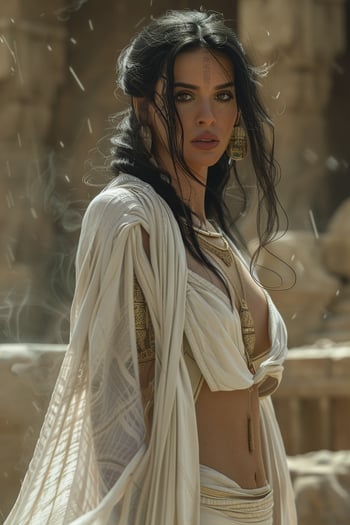
In the wake of the Great Erasure, humanity did not merely survive; they inherited the world. Awaking to find themselves the most pervasive and adaptable strain in Otan, they quickly organized into seven distinct subcultures spanning seven sovereign nations. With six complete religions and a presence in every climate, humans have positioned themselves as the self-appointed leaders of the continent by nearly every measurable metric.
This perceived supremacy is rarely questioned by the human mind; to them, dominance is a natural law that requires no evidence, fueled by an unwavering commitment to the "Will to Power" philosophy that defines their collective ambition. The center of this human web is held by the Ortalykshilar, who emerged from the dust of the Erasure as the wealthiest nation on the continent. Occupying a vital central swath of eastern Otan, they established the seat of Wodenism at the grand Temple of Woden.
While other Wodenist strains often interpret the faith through their own cultural lenses, a soft deference to the "official" word of the Temple remains the standard for human diplomacy. To the west, the Batistikar have transformed their lands into an agricultural powerhouse that rivals even the legendary productivity of the Sweardaelf, ensuring humanity’s belly is always full. Meanwhile, the Araldar have mastered the horizon, fashioning the most formidable navy in Otan to control the trade routes of the shifting seas.
This mastery of the material world is complemented by specialized excellence in the fringes of the human empire. The Soltustikers have turned the cold northern plains into a forge for the masters of field warfare, standing as the continent's premier land army. In the south, the Ontustikers have traded steel for spirit, elevating holy devotion to a state of being within their divine Caliphate. Intellectually, the Xigis Sophists operate in the high towers of the mind, coming closer than any other group to unraveling the fundamental secrets of the universe, while the Karazalik witches herald an era of practical magic that tethers the arcane to the everyday world.
Despite this internal diversity, a unified and often dangerous arrogance binds these subcultures together. This was most evident at the conclusion of the Grendel War. When the Concorde of Kala Astanals was finally signed, the common human consensus was that the treaty was an act of mercy toward the Grendel, believing that total human victory was inevitable. However, this bravado is not shared by the Xigis Sophists or the nation’s more grounded leaders; they recognize that humanity’s grip on Otan is a fragile thing, held together more by an unrelenting will to rule than by any inherent right to the throne of the world.
Society and Culture
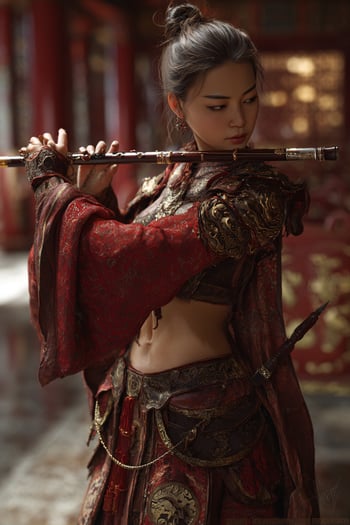
The diversity of the human experience on Otan is so vast that the very term "substrain" has been effectively replaced by the more accurate "subculture." While they are bound by a common tongue, this linguistic thread is one of the few things that unites them; on matters of faith, tradition, and aesthetics, they have diverged into entirely different worlds. To an outside observer, human culture is not a single tapestry but a collection of distinct, often clashing threads.
Even the most basic symbolic gestures carry no universal meaning. For example, a Xigis Turgindar in a celebratory mood might announce a grand feast under banners of deep red, whereas a Karazalik, whether from the north or the south, would signal the exact same sentiment with a display of bright yellow. These regional imperatives act as a foundational lens through which each society views the world, dictating everything from the rhythm of their music and the silhouette of their architecture to the very way they conduct warfare.
Fragmentation between these societies makes it nearly impossible to find a "true" human aggregate. To understand humanity, one must instead study a series of exhaustive and unique lists, as the priorities of one nation rarely translate to another. The Araldikar, for instance, define their national soul through the lens of naval superiority and the mastery of the tides, a passion that is entirely foreign to the inland farmers of the west.
In a similar vein, the Batistikar derive their cultural pride from the tilling of the earth and their unrivaled agricultural prowess, seeing the divinity of the world in the harvest rather than the hull of a ship. This stands in stark contrast to the southern Ontustikers, who exist in a state of perpetual religious fervor, believing they alone are the guardians of true divine relics.
Meanwhile, the Karazalik operate under a completely different mandate, focusing their social energy on the preservation and coalescence of the soul through devotion to national duty and practical magic. This lack of a common cultural center means that humanity is a species defined not by what they share, but by the fierce, unwavering commitment each subculture has to its own unique vision of power and purpose. Welcome to humanity.
Physical Characteristics
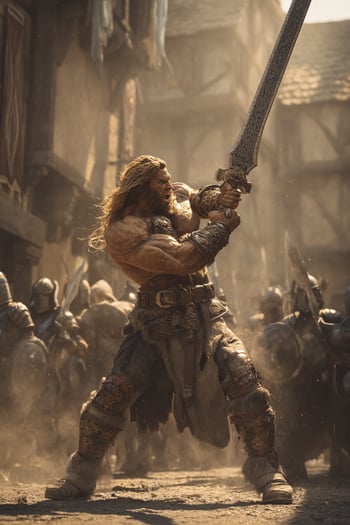
As the biological baseline for the rest of the terrestrial strains, there is deceptively little to say about the fundamental human form. They are noisy, air-breathing bipeds who retain distinct simian qualities, though they have long since shed the more primal features of their distant ancestors. They never grow a tail, and their body hair remains sparse and fine, never coalescing into a true coat of fur except upon their scalps, where it grows with a persistence that often requires ritualized grooming.
Their physical appearance is as varied as the landscapes they inhabit, forming a vast spectrum of traits that shift with the geography. Skin tones range from the deep, obsidian hues of the equatorial south to the pale, porcelain shades of the frozen north, with every imaginable mahogany, bronze, and olive tone represented in between. Hair color is equally diverse, ranging from the deepest crows-wing black and earthy browns to fiery coppers and the pale flaxen shades found in the colder climes. Their eyes, perhaps the most expressive of their simian features, can be found in any shade of piercing blue, mossy green, warm hazel, or various depths of amber and dark kohl.
While they exhibit a wide variance in internal traits such as raw intelligence, physical endurance, or the sheer force of their will, these characteristics transcend any single subculture. Despite the boastful claims of certain nations, no one group holds a monopoly on any particular virtue or vice. A peasant in the fields of the Batistikar may possess a mind as sharp as a Xigis Sophist, and a Karazalik witch may exhibit the same tireless endurance as a Soltustiker Knight. Humanity is a species defined by individual outliers rather than uniform excellence, making them as unpredictable as they are pervasive.
Natural and Latent Abilities
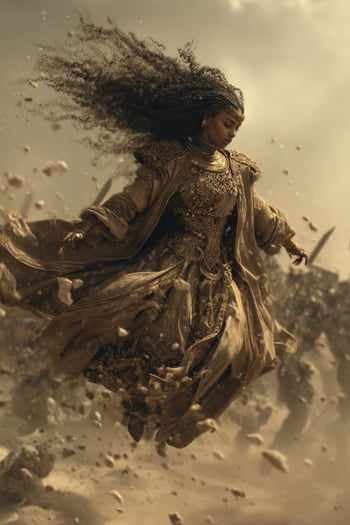
In the grand taxonomy of Otan, humans occupy the unique position of being the absolute zero on the scale of physical ability. As the baseline for all other strains, they possess no innate physical mastery, no wings for the sky, and no gills for the deep. Their natural state is one of profound biological limitation, restricted entirely to the physical laws that govern air-breathing bipeds.
However, if one were to categorize the human spirit as a functional ability, their true talent lies in the art of self-aggrandizement. Humans excel at the psychological feat of viewing their lack of specialization as a form of ultimate potential. They have turned self-promotion into a survival mechanism, convincing themselves, and often those around them, that their very "averageness" is the foundation of their right to rule.
History
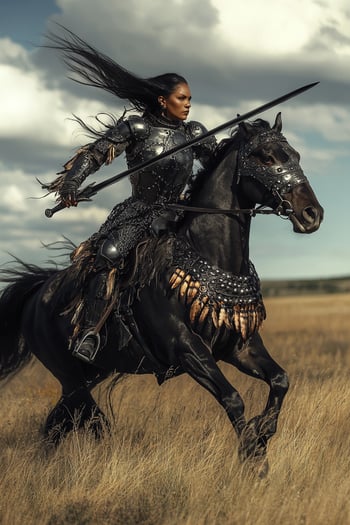
While the Xigis Turgindar Sophists argue that humanity has occupied Otan for millions, perhaps even billions, of years, the verifiable history of the species is a much shorter, more frantic tale. These scholars believe that the radical differences between human subcultures are not accidental, but rather "echoes" of a deep, forgotten past that survived the cosmic reset.
Whether these echoes are carried in the blood, whispered to the spirit, or etched into the subconscious mind remains the primary obsession of human academia. To the average citizen, however, time began only two hundred and sixty years ago with the Great Erasure, the moment the slate was wiped clean, and the current age of man was born.
In the vacuum left by the Great Erasure, the seven human subcultures developed with startling speed and independence. Though the Ortalyk and Soltustik nations shared enough common ground in their early years to maintain a wary kinship, most of the other nations grew in isolation, shaped entirely by their local environments.
These fledgling societies rapidly coalesced into powerful, independent states, each fueled by the "Will to Power" and a desire to dominate their respective corners of the continent. For over two centuries, this expansionist energy was largely directed outward against the wild or inward against each other, until the hegemony of man finally collided with the Grendel.
The Grendel, marginalized and pushed to the fringes of human activity, likely due to their physical appearance and a human refusal to share the fruits of Otan, eventually reached a breaking point. The resulting Grendel War was a brutal conflict that challenged the human assumption of total supremacy. Despite the internal belief among human soldiers that they were destined for victory, the war ground into a punishing stalemate that threatened to deplete the resources of every human nation.
Peace was finally brokered through the Concord of Kala Astanals, a document that effectively froze the conflict in place with very few changes to the pre-war borders. While human propagandists frame the treaty as an act of magnanimity, the reality is far more tense. The war did not resolve the underlying grievances of the Grendel, nor did it dampen the human drive for dominance. Today, Otan exists in a state of precarious equilibrium, a world holding its breath as the "echoes" of the past continue to pull at the strings of the present.
Human Substrains
Araldikar Substrain
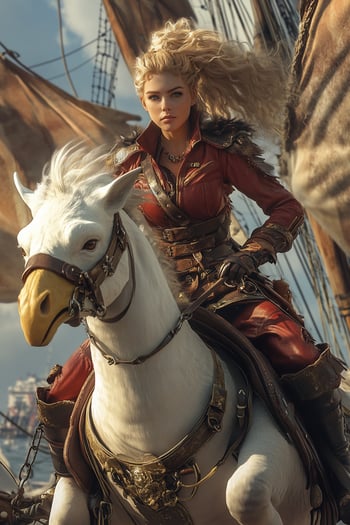
Description:The Araldikar (🔊 ah-RAWL-dih-KAR) are islanders who hail from the island nation of Araldar on the western coast of Otan.
Overview:The Araldikar are the undisputed masters of the western horizon, hailing from the rugged island nation of Araldar. Positioned at the westernmost edge of Otan, these islanders are forged by the salt and spray of the sea, possessing wind-beaten bronze complexions and dark, resilient features that mirror the deep waters they inhabit. Their identity is so inextricably linked to the ocean that they are often recognized by a distinct western dialect of Otani, a speech pattern shaped by the rhythms of the coast.
A unique characteristic of the Araldikar is their near-universal bilingualism. While they maintain a command of the common Otani language for trade and diplomacy, they speak a secondary tongue known as Araldar Pidgin among themselves. This linguistic hybrid is a functional tapestry woven from Otani, Sweardaelf, and Aelfish, serving as a practical tool for a seafaring people who have historically traded and interacted with the diverse cultures of the western shores. While standard Otani dominates the larger ports, the Pidgin remains the true language of the heart on the smaller, more isolated islands.
The spiritual life of the Araldar is governed by Mujitism, a faith as fluid and powerful as the tides. Mujitism is a collection of nautical legends where heroes frequently cross the threshold between the human and the oceanic, engaging with, or even transforming into, the great creatures of the deep. This religion instills a profound moral code centered on a deep-seated respect for the sea. To an Araldikar, the ocean is not a resource to be plundered, but a sovereign entity to be honored; a belief that dictates their sustainable fishing practices and their cautious, respectful approach to maritime travel.
Economically and socially, the sea is the pulse of the nation. While inland Araldar supports traditional farming and trade, more than half of the population lives either adjacent to the water or directly upon it at any given time. Nautical skills like sailing, deep-water fishing, and swimming are not merely hobbies but fundamental life skills acquired in early childhood. This maritime focus is reflected in the nation's wealth distribution; the most prestigious and highest-paying occupations almost exclusively involve a life at sea, whether as a master navigator, a deep-sea harvester, or a captain of the most powerful navy in Otan.
Soltustiker Substrain
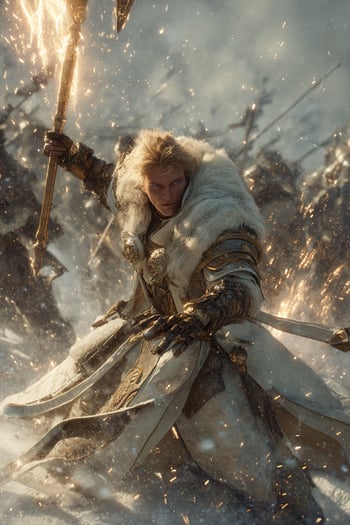
Description:The northern Soltustikters (🔊 sol-TOO-stik-er) have a human culture largely influenced by the terribly cold weather of their native country of Soltustik.
Overview:The Soltustikers are a people forged by the unrelenting frost of the northernmost reaches of Otan. Their national identity is inseparable from the frozen geography of Soltustik, a land eternally plunged into a sub-arctic climate. This environment has granted the Soltustikers a physiological edge; they possess a natural, preternatural resistance to the cold that allows them to thrive and operate in temperatures that would leave the other inhabitants of Otan stiffly frozen. Their architectural and sartorial skills are entirely dedicated to the preservation of heat, turning the act of survival into a sophisticated cultural art form.
Politically, Soltustiker society is structured as a rigid, traditionalist feudal hierarchy. While the system tends toward a patriarchal model in its historical roots, the modern division of labor is split pragmatically between the sexes. This is best exemplified by the current sovereign, Queen Kara Muz, who holds absolute authority over the realm. The nation is divided into distinct Baronies, governed by Barons or Baronesses who swear fealty to the Queen. These nobles, in turn, oversee a network of Governors responsible for individual settlements, ensuring that every citizen of the land is bound by a chain of homage that reaches directly to the throne.
The spiritual life of the north is dominated by an unwavering, almost militant devotion to Wodenism. To a Soltustiker, there is no other pantheon worthy of acknowledgment, and Woden stands as the undisputed Primarch of all existence. This devotion permeates their daily speech to an obsessive degree; Soltustikers are known to invoke the name of Woden, or any of his nearly one thousand liturgical nicknames, in almost every other sentence. Their faith is not one of quiet contemplation, but of boisterous, constant recognition of the divine will in the face of the howling northern winds.
Physically, the northerners are adapted to their low-light environment, with skin tones ranging from a ruddy pinkish hue to a stark, porcelain white. While their hair can span the spectrum from flaxen blonde to a deep black, their eyes are most commonly found in shades of piercing blue or glacial green. Interestingly, the Soltustiker bloodline is more diverse than its isolation might suggest; due to their geographic proximity to the ancient Aelfwode, these northern communities produce a significantly higher number of Half-Aelfes than any other human subculture, blending the resilience of man with the ethereal echoes of the forest.
Karazalikar Substrain
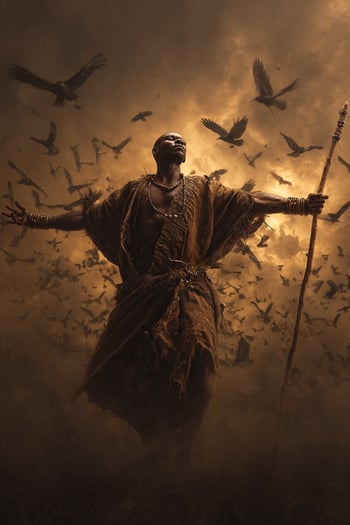
Description:The Karazalikar (🔊 KARE-uh-zal-lih-KAR) inhabit southern Otan. They have formed a matriarchal society that is deeply rooted in their ubiquitous animist religion of Backsism.
Overview:The Karazalikar are the matriarchal heart of southern Otan, a people whose national identity is inextricably bound to a profound and unique spiritual mandate. Their culture is built upon the fundamental belief that females are born with complete, luminous souls, whereas males enter the world with fragmented spirits. This theological distinction dictates the entire social order; men must spend their lives in a disciplined process of study and religious penitence to "collect" the missing parts of their souls. Those who fail this spiritual task are considered "lost," denied both a place beside the gods in the heavens and the possibility of rebirth.
In this society, the elders serve as the vital pillars of the community, acting as the primary educators for males navigating their soul-trials and as supreme advisors for the nation at large. Every matter of importance, from local disputes to national policy, is brought before these seasoned mentors for consultation. At the apex of their political and social structure sits the Queen Mother, a title held by both tribal matriarchs and the sovereign ruler of the entire country. While men are permitted to serve in the bureaucracy and government, they are seldom granted access to the highest echelons of power or ultimate command.
The Karazalikar are physically characterized by deep, resonant skin tones that range from the warmth of cocoa powder to a rich, near-black luster. Their hair is consistently black, and their eyes are a deep brown, though the elders are marked by hair that has transitioned into distinguished shades of grey or stark white. While they utilize the common Otani language for trade, they remain spiritually distinct from their northern neighbors; rather than following Wodenism, they are devoted to the Baksist pantheon, worshipping earth-centric deities such as Ana and Jer.
This devotion to the Baksist gods fosters an intense, reverent connection to the natural world. This bond influences every aspect of Karazalikar's life, including their choice of vocation. When driven to a life of adventure, they have a natural inclination toward the paths of the ranger or the druid. Even in more settled professions, a Karazalikar will almost invariably choose a calling that allows them to exercise power through or maintain a close connection to the living forces of nature, viewing the preservation of the environment as a direct extension of their own spiritual survival.
Ontustiker Substrain
Description:The Ontustiker (🔊 on-TOO-stik-er) are the southern people of Otan. They are generally recognizable by their olive complexions, brown eyes, and thick black hair.
Overview:The Ontustikers are the resilient and devout inhabitants of the southern reaches, a people whose identity is forged by the stark extremes of the Caliphate of Ontustik. Their homeland is a country of dramatic contrasts, where lush, verdant riverbeds and fertile lake basins are carved into the heart of vast, unforgiving deserts. This geography has created a society of dual mastery; the Ontustikers are at once expert agriculturalists who coax life from the water’s edge and peerless survivalists capable of navigating the shifting sands of the deep arid wastes.
Physically, the Ontustikers are characterized by a wide spectrum of olive-toned complexions that range from light to exceptionally dark, with these variations appearing randomly across the Caliphate rather than being tied to specific regions. Their hair is typically thick and ranges from deep brown to a lustrous black, though it is often cosmetically or magically altered, and fades into distinguished shades of peppered grey or silver with age.
While their eyes are almost universally a warm, deep brown, the rare occurrence of green or grey irises is whispered to be a sign of a unique destiny. Beyond these cosmetic traits, they possess a distinct physiological advantage over their northern cousins: a remarkable natural resistance to sunstroke and heat exhaustion, allowing them to endure the rigors of the desert sun with a stoicism that baffles outsiders.
The true defining feature of an Ontustiker, however, is not found in their blood but in their soul. They are a people defined by an absolute, visible devotion to Aspan, the god of the sky, and the broader Aspanist pantheon. It is nearly impossible to find an Ontustiker whose clothing or person is not adorned with symbols of their faith. This religious influence creates a fascinating cultural paradox; Aspanist theology teaches both the supreme sovereignty of the gods and the radical responsibility of the individual. An Ontustiker is just as likely to shrug off a tragedy as the "Will of Aspan" as they are to immediately rise and apply their "Will to Power" to rectify the situation.
This balance between divine submission and human agency makes them one of the most stable and focused subcultures in Otan. Whether they are tending to the irrigation of a desert oasis or leading a pilgrimage across the scorched plains, the Ontustikers move with a sense of purpose derived from the belief that they are the chosen stewards of the sky-god’s domain. In the eyes of the Caliphate, the desert is not a barrier, but a sacred proving ground where the strength of one's faith and the sharpness of one's survival instincts are tempered into a single, unbreakable force.
Ortalykshilar Substrain
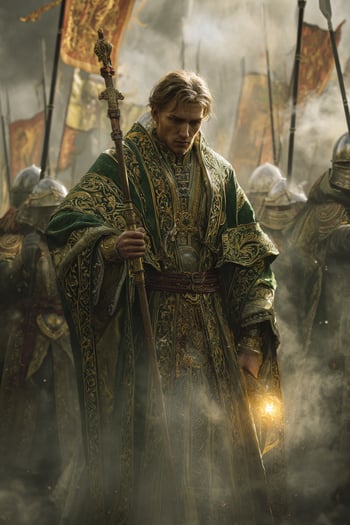
Description:The Ortalykshilar (🔊 or-TAHL-ik-shill-ar) are human central plains people and a melting pot of many other peoples of Otan. They occupy Ortalyk, the largest country in Otan.
Overview:The Ortalykshilar are the cosmopolitan heart of Otan, inhabiting the vast central plains that serve as the continent’s primary crossroads. Because of their geographic position, they have become a true melting pot, representing a demographic tapestry that includes nearly every physical trait found across the human nations. While an Ortalykshilar can possess any stature or skin tone, ranging from snow-white to medium brown, the most frequent phenotype observed in the central territories consists of fair-skinned individuals with sturdy, square jaws and hair that ranges from blonde to black, or vibrant red to deep chestnut brown.
This central location has fostered a culture defined by the "Center of the Universe" philosophy. Unlike more reclusive human strains, the Ortalykshilar are the most likely to maintain active business and personal relationships with non-human races. In the bustling markets of their major cities, it is common to see Ortalykshilar merchants negotiating with Aelfes, Dweorges, and Aydahar.
Remarkably, the Ortalykshilar have even begun to facilitate tentative diplomatic and trade ties with their former enemies, the Grendel, in the years following the Great War. This atmosphere of global commerce is anchored by the ubiquitous presence of the Kuulik Trade Company, which uses the central plains as the primary hub for its continental operations.
Spiritually, the Ortalykshilar are the primary custodians of Wodenism. Their capital, Kala Astanals, is revered as the holy city of the faith, housing the Great Temple from which the word of Woden is disseminated to the rest of the world. The Ortalykshilar view themselves not just as believers, but as messengers, carrying the tenets of their pantheon to every corner of Otan through trade and diplomacy. This religious conviction provides the moral backbone for their "Will to Power," framing their economic dominance as a form of divine mandate.
Linguistically, the Ortalykshilar are perhaps the most versatile people in the world. While the common Otani language is their mother tongue, the necessities of their "Center of the Universe" lifestyle mean that a significant portion of the population is multilingual. It is not unusual for an Ortalykshilar tradesman or diplomat to be fluent in the tongues of their various trading partners, allowing them to navigate the complex social and political waters of Otan with a grace that other, more isolated subcultures often lack.
Batistikar Substrain
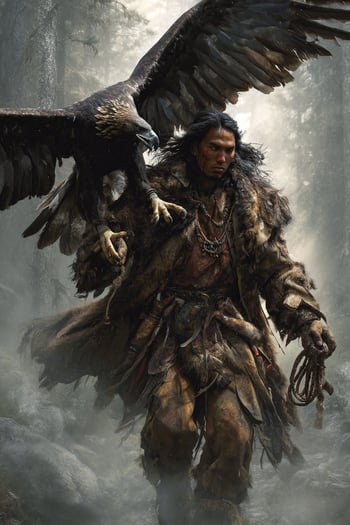
Description:The Batistiktar (🔊 bah-TIS-tih-KAR) are natives of northwestern Otan. Formerly a withdrawn people, they came to the world's attention that the Batistiktar were exceptional agriculturalists.
Overview:The Batistikar are the foundational providers of western Otan, primarily inhabiting the sprawling, fertile plains of the Republic of Batis. Once a largely reclusive and self-sufficient people, they were thrust onto the world stage by the sheer, undeniable scale of their agricultural success. There is a common adage in the grain markets that "for every handful of seed a Batistikar sows, they yield seven in return."
This preternatural talent extends beyond the soil to the art of animal husbandry; the Batistikar are famed for raising massive herds of bison and other high-yield livestock with a level of care and efficiency that borders on the magical. Historically, the Batistikar harvested only what they required for their own survival, but the fires of the Grendel War changed the trajectory of their nation. As their neighbors in Soltustik faced the desperate need for supplies to fuel the war effort, the Batistikar stepped forward as the breadbasket of the human alliance.
The Batistikar wartime contribution revealed their immense productivity to the wider world, and it was not long before the Kuulik Trade Company established permanent shipping routes to every major coastal city in Batis. Today, the Republic has shifted from isolation to a global hub of commerce, exporting massive surpluses of food by sea and land to Soltustik and Aelfgarad in exchange for the metals and magical components their own lands lack.
Spiritually, the Batistikar maintain a complex and layered identity. While some sporadically practice Wodenism to align with the broader human consensus, most prefer their own ancient, animistic traditions. Their faith is built upon a pantheon of gods representing the major wildlife species of Batis, a religion passed down through a vibrant oral tradition rather than holy texts. This lack of "bookishness" is compensated for by a staggering wealth of religious art; the bold, stylized symbols of the Wolf, Raven, and Orca are instantly recognizable to any native and are carved or painted onto nearly every home and sanctuary in the Republic.
Physically, the Batistikar are typically distinguished by their deep, earthy features. Tanned skin, brown eyes, and black hair are the standard, with both men and women often wearing their hair long as a sign of their connection to the natural world. Given their intimate bond with the land and its creatures, it is no surprise that those Batistikar who take up the life of an adventurer often excel as rangers, druids, or rogues. However, as with all human subcultures, these are merely trends; the Republic produces individuals of every possible coloration and calling, united more by their "Will to Power" over the wild than by any single physical trait.
Xigis Turgindar Substrain
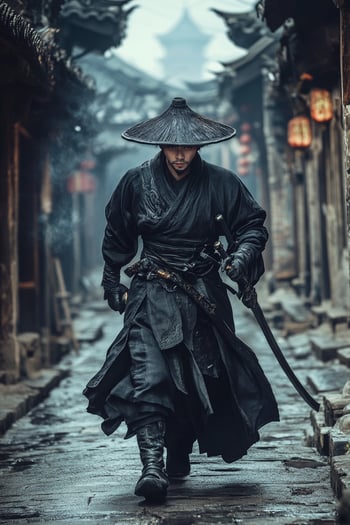
Description:The Xigis Turgindar (🔊 ZHEE-jeese tur-GHINN-dar) make their home in the easternmost nation of Otan. Their culture is steeped in tradition, and they are incredibly respectful of their ancestors.
Overview:The Xigis Turgindar represent the easternmost reach of human civilization on Otan, inhabiting a realm where the boundary between the present and the ancient is perpetually blurred. Their society is defined by a dense, intricate web of traditions and social protocols that appear far older than the two hundred and sixty years allowed by the Great Erasure.
To an outsider, every interaction, from the pouring of a drink to the signing of a trade contract, is layered with ceremony and specific accoutrements that suggest a history stretching back into a lost antiquity. This commitment to ritual is rooted in a profound reverence for their ancestors, whom they believe look down from the Heavens to evaluate the honor, conduct, and diligence of their living descendants.
This spiritual focus on perfection manifests physically in their culture as a near-worship of quality craftsmanship. The Xigis Turgindar are the preeminent artisans of Otan, producing textiles, ceramics, and metalwork of such staggering detail that they are considered the gold standard for trade goods across the continent. Their pursuit of excellence is not merely an economic drive but a moral imperative; to create a flawed object is to disrespect the lineage that taught the craft.
As a result of their craftsmanship, the Xigis Turgindar have established the most extensive and reliable trade routes in the world, stretching from the eastern coastlines of Xigis to the furthest western markets, ensuring that their influence is felt even in lands they have never conquered. Their reach rivals even the juggernaut Kuulik Trade Company.
The people of Xigis Turgindar possess a distinct physical presence, though they exhibit a broad range of skin tones that speak to the diverse geography of the eastern territories. Their hair is their most consistent feature, almost universally appearing in shades ranging from deep, dark brown to a lustrous, midnight black. While most possess dark eyes, rare and striking variations occur throughout the population; it is not uncommon to encounter individuals with piercing green, hazel, or even rare, golden-yellow eyes, which are often interpreted by the Sophists as a mark of a particularly potent ancestral "echo."
Governed by a complex bureaucracy that prizes intellectual merit as much as ancestral standing, the Xigis Turgindar move through the world with a quiet, disciplined confidence. They do not shout their superiority like the Ortalykshilar; they simply demonstrate it through the unbreakable strength of their porcelain and the sharp precision of their administrative records. In the eyes of a Xigis Turgindar, the rest of Otan is merely catching up to a standard of civilization that they have already perfected, even if they cannot remember the era in which they first achieved it.
Human Occupied Regions
Araldar
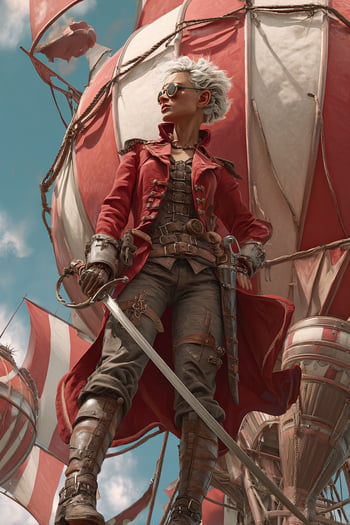
Description: The Araldar (🔊 ah-RAWL-dar) Coast is an island archipelago off Otan's western coast. The Araldar Coast is a collection of Baronies governed by its military, the Union of Araldar.
Overview: The west coast of Otan is capped with the Araldar archipelago, known more commonly as the Araldar Coast. The main island, Jagalik Island, is home to its premier city and port of Jagalik, with a total of 10 other islands making up the rest of Araldar's territory. These islands are populated by the Araldikar, a unique human substrain bound together by a shared maritime fashion sense, a highly distinct accent, and an unbreakable bond with the open sea.
Because of its unique location, Araldar formed a highly distinctive government: a naval stratocracy. To an outside observer, this might resemble a military junta or dictatorship, but it operates as a deeply militarized meritocracy. Leaders are subject to stern reviews, rigid quotas, and operational metrics that must be continuously maintained to hold leadership positions. Ambition is channeled strictly through service; there are no shortcuts to power here.
The Araldar Navy appoints governors to the various subregions of the nation, which they call Baronies. Each Barony, from the bustling shipyards of Jagalik to the outer reaches of Bezkat, Kit, and Segizayak, is required to produce men, timber, and materiel for the navy. This constant pipeline of resources keeps the islands safe and, more importantly, keeps trade afloat, both literally and figuratively.
With the West Coast of Otan being largely dominated by the anarchic Free States, these waters are generally considered highly unsafe for unescorted merchant travel. The Araldar Navy’s constant presence acts as the single stabilizing force in an otherwise lawless expanse of ocean, ensuring that goods from distant ports can safely reach their destinations.
Karazalik
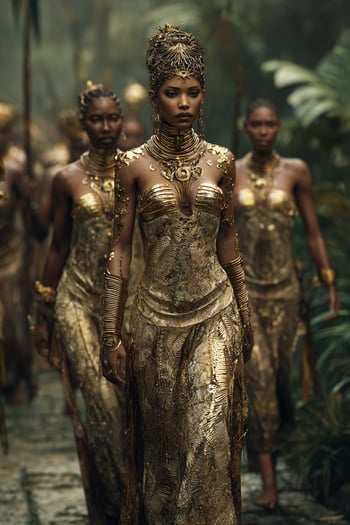
Description: The south-central nation of Karazalik (🔊 care-ah-ZAHL-ik) is populated by Humans, noted for their dark complexions and matriarchal society.
Overview: Of all the creatures who walk the lands of Otan, perhaps the most gentle to their surroundings are the Karazalikar. Their worldview stems from their Baksist religion, which holds that the entire world is a child born to the goddess Ana and must be nurtured and raised as such. The result is a people who ease their way through nature, rather than confront it, living in harmony with the environment around them.
The Karazalikar believe that women are born whole, but men are born without a soul. To collect the shards of their soul and enable them to traverse to the next life, men must perform acts of public duty and seek self-building education. They receive their education from elders who exchange care for knowledge. Whereas in other countries the youth can be a danger to society and the elderly a burden, Karazalik solves both problems at once through this single religious tenet.
As men regain their souls and complete their education, they may step into leadership roles. Of course, they defer to the Baksist Mothers who serve as the final arbiters on state and regional-level decisions, but these relationships are almost always collaborative partnerships as opposed to points of political tension.
With a large territory and three diverse ecological biomes, there is no shortage of adventure and exploration for a Karazalikar to spend their whole life in Karazalik. The people of Karazalik are gifted with the same proportion of Archetypal individuals as other nations, supported by skilled craftsmanship, abundant resources, and an unhurried culture that takes time to get things right. Their Archetypal schools rank among the best, and their diverse wildlife provides Archetypes with materials that can be found nowhere else.
Ontustik
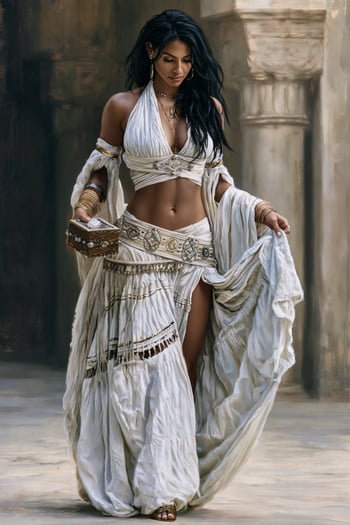
Description: The Caliphate of Ontustik (🔊 on-TOO-stik) is a southern nation bordering Karazalik. The Ontustikar people are the sole penitents (citizens).
Overview: The Caliphate of Ontustik is a realm of striking visual and cultural dichotomies, where the stark, unforgiving expanse of the southeastern desert is abruptly broken by ribbon-like, verdant riverbeds and sprawling, fertile lake basins. This dramatic geography has naturally forged a society of dual mastery. Ontustikers are at once highly sophisticated agriculturalists who manipulate every drop of water at the river’s edge and peerless survivalists capable of reading the shifting sands and enduring the deepest, most arid wastes of the continent.
Central to the identity of every Ontustiker is a profound, omnipresent devotion to Aspan, the god of the sky, and the broader Aspanist pantheon. This spiritual fervor is physically stamped across the landscape; every single settlement, from the smallest oasis outpost to the grandest trade hub, features a massive, towering ziggurat dedicated to the sky deities. These monumental terraced structures serve as the literal and figurative hearts of Ontustiker communities, dominating the skyline and drawing the eyes of the faithful upward toward Aspan’s domain.
The temporal and spiritual architecture of the Caliphate is governed by the Flowers of Aspan, a highly organized, matriarchal religious order. The tenets of Aspanism taught by this sisterhood are far from abstract theology; they function as a practical blueprint for survival and prosperity, meticulously guiding the population through the minutiae of daily life, law, and resource management. This divine hierarchy culminates in the coastal capital city of Anar, where the supreme divine leader, the Ninth Lotus of Aspan, reigns over the nation with absolute, unquestioned spiritual authority.
Ortalyk
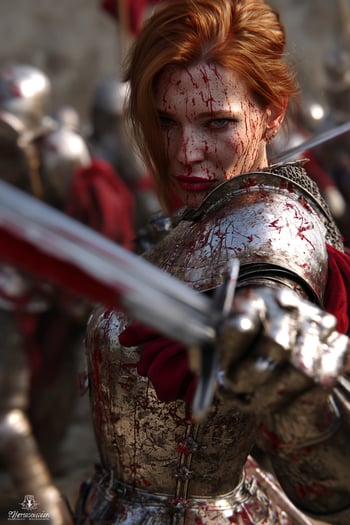
Description: The eastern and central Tsardom of Ortalyk (🔊 or-TAHL-ik) boasts the largest population and the richest economy of any nation in Otan. Its citizens are Ortalykshilar.
Overview: The Tsardom of Ortalyk stands as the undisputed titan of eastern Otan, a sprawling and majestic central nation whose territory stretches from the rugged western mountains down to the roaring eastern ocean. The land itself is a bountiful tapestry of dense, ancient deciduous forests and boundless, sun-drenched arable grasslands. These rich ecosystems are fed by mighty, churning rivers that carve their way eastward, acting as the lifeblood of the nation's immense agricultural and mercantile wealth.
It is within this fertile expanse that the Ortalykshilar thrive. These sturdy, exceptionally industrious humans have spent generations transforming their geography into power. Under the centralized, iron-willed rule of their Tzar, they have combined collective labor with an unwavering civic duty to forge the richest, most politically dominant empire on the continent. Where other nations struggle against hostile environments, the Ortalykshilar have mastered theirs, turning raw nature into a highly organized engine of state power.
At the heart of this empire lies the glittering port city of Kala Astanals, the nation's capital and a bustling metropolis home to many of the world’s most affluent and influential figures. Serving as a critical maritime gateway, it boasts a massive trading port and houses the largest, most formidable citadel in all of Otan. The city's staggering industrial sectors are surpassed only by the deep-subterranean foundries of the Dweorges, making Kala Astanals a smog-kissed beacon of manufacturing might.
Kala Astanals, the capital, is renowned for its unmatched institutions of higher learning. The grand academies and sophisticated magical colleges within its walls are globally unrivaled; it is widely accepted that virtually any known school of power, arcane art, or advanced philosophy can be mastered here. While Ortalyk's recent history is scarred by bitter, bloody conflicts with the draconic Aydahar to their south and the monstrous Grendel to their north, brilliant diplomacy and the historic Concord of Kala Astanals have miraculously transformed these former existential threats into highly lucrative trading partners.
Soltustik
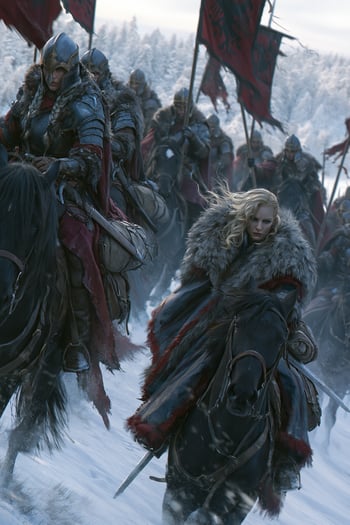
Description: The north-central Kingdom of Soltustik (🔊 salt-STIK) is ruled by the Muz Dynasty, from which the capital takes its name. It's known for its blond people and cold weather.
Overview: Nestled under the biting sky of Otan's extreme north, Soltustik stands as a rugged, fiercely traditional feudal nation. Forged by a harsh climate and even harsher history, the realm operates under a strict, unyielding social hierarchy where every lord, vassal, and serf knows their place in the grand chain of homage. This rigid order is not merely a political preference; it is a proven necessity for survival in a land where the winter cold reigns supreme and deadly threats loom perpetually over the horizon.
At the heart of the realm sits its absolute sovereign, Queen Kara Muz, a heroic figure whose lineage and tactical brilliance came to define the nation. It was under her steadfast guidance, and through the bitter, unyielding resolve of her people, that Soltustik stood as the unbreakable shield of the south during the devastating Grendel war. While other lands might have buckled under the bloodthirsty onslaught of the Grendel horde, the Soltustikers held their frozen strongholds, transforming their bleak landscape into a wall of iron and ice.
Today, Soltustik enjoys a hard-won, albeit tense, era of peace. The scars of the war remain etched deeply into both the landscape and the social fabric of the realm, but the nation stands triumphant. Held together by an obsessive religious devotion, an unquestioned feudal system, and a pragmatic division of labor, the kingdom endures as the ultimate bastion of northern grit.
Batis
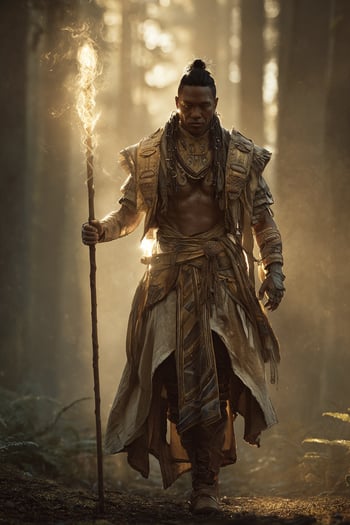
Description: The Batis (🔊 bah-TEESE) Republic is a large territory in north-central Otan. It is populated, primarily by the agrarian Batistikar people.
Overview: The Batis Republic stands as a testament to what humanity can achieve when perfectly attuned to the natural world. Unlike other realms across Otan that rely heavily on the overarching guidance or magical intervention of an Archetype, the Batis people have forged an entirely self-reliant agrarian society. Through an almost intuitive understanding of soil, weather, and fauna, their farmers consistently cultivate the highest-yielding crops on the continent. Their hunters and trappers navigate the wilderness with unparalleled efficacy, returning with abundant game, while their ranchers raise livestock noted for exceptional health and vitality.
Much of this unparalleled success is deeply intertwined with their spiritual life, which is profoundly rooted in the soil they till. The dominant faith, Janyarism, is an animistic religion that rejects abstract cosmic entities in favor of tangible animal gods representing the foundational aspects of human existence. The Batistikar people offer regular sacrifices and reverence to primordial figures such as the Great Bisan, the cunning Raven, and the watchful Wolf. Within Batis society, it is universally understood that these animal deities possess a far deeper, more practical insight into the intricate workings of ecosystems and agriculture than the grand pantheons of neighboring nations, guiding their devotees with grounded, pragmatic wisdom.
Geographically, this prosperous nation occupies the northwestern coast of Otan, blessed with a landscape where nearly half of the territory consists of remarkably fertile, arable grassland. This exceptional soil quality, combined with the innate talents of the population, results in a structural surplus of food. The Batis produce agricultural bounty at a rate that far outstrips their domestic capacity to process or consume it, turning their realm into a natural breadbasket for the surrounding regions.
| Copyright © 2021-2026 by Robyn Blaber and Will to Power Games. All rights reserved. Content on this website may not be reproduced without written permission of the copyright owner. |
